


Fluted Column Candlestick Lamps
These fluted column candlestick lamps bring classical architecture to the tabletop, combining sturdy metal shafts with stately proportions.
Fluted Column Candlestick Lamps
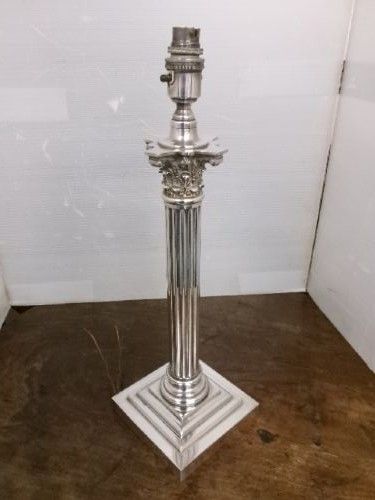
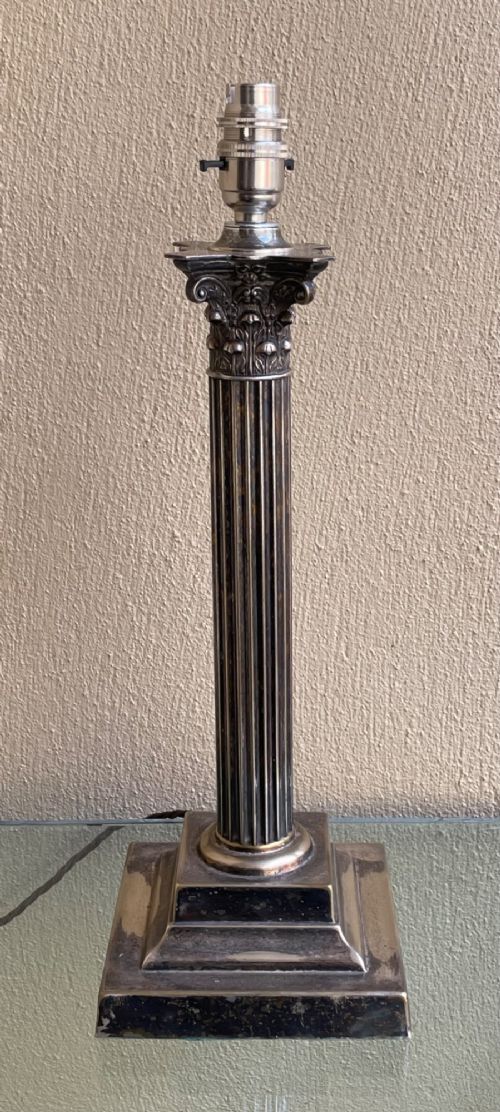
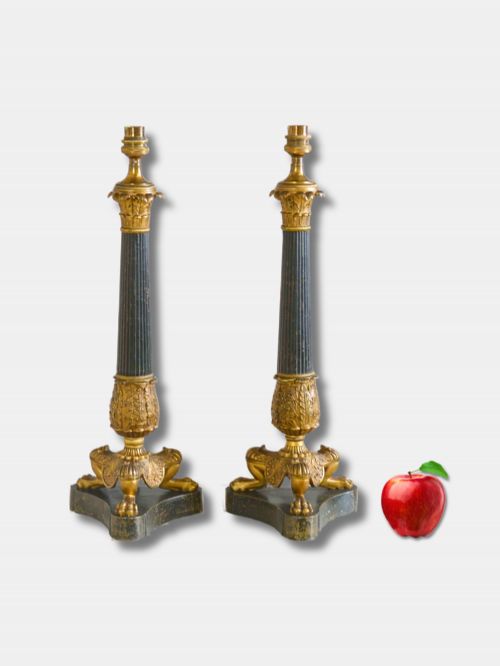
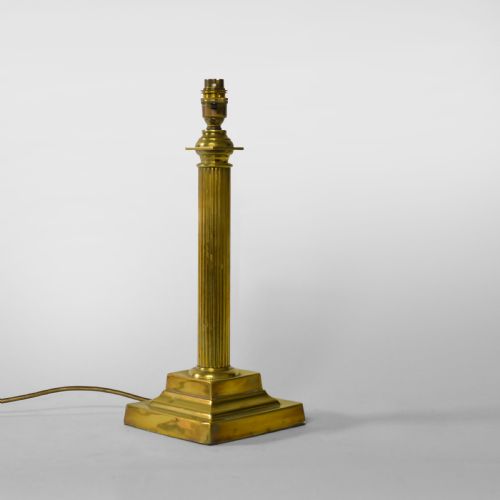
Fluted column candlestick lamps adapt architectural orders into domestic lighting forms, drawing heavily on Neoclassical and Victorian design traditions. These table lamps typically stand on square or stepped bases, occasionally supported by lions paw feet.
The selection here ranges from nineteenth century brass and silver plated specimens to early twentieth century examples incorporating porcelain de Paris or cut glass. Buyers most frequently encounter Corinthian and ionic column designs executed in silver plate or polished brass.
Many items originate from nineteenth century British and French workshops, utilising classical proportions derived from ancient temples. Pairs frequently survive from church or domestic contexts, often converted from earlier candlesticks into wired table lamps.
How They Were Made
Metals form the core of these pieces, utilising cast brass, bronze, and ormolu alongside silver plate on base metals. Selected examples incorporate marble or porcelain components to add weight and colour contrast to the shaft.
Casting techniques allowed makers to produce intricate capital details, such as the acanthus leaves on Corinthian columns, with crisp relief. Surface finishes vary from patinated bronze and gilt ormolu to bright silver plate.
Listings span the Victorian and Edwardian eras, alongside early twentieth century pieces, utilising brass, silver plate, bronze, marble, and porcelain.
What Varies in Quality
The refinement of the cast ornament on the capital and base determines the standing of an individual piece. Sharply defined acanthus leaves and well-modelled feet indicate superior workmanship compared to softer, worn castings.
Weight and material density also separate standard production from exceptional examples, as substantial bronze and heavy gauge brass provide better stability. The quality of the original plating or gilding dictates the richness of the finished surface.
The Fluted Column Candlestick Lamps Glossary
- Ormolu
- Gilded bronze, where a layer of gold amalgam is applied to a bronze base and heated to drive off the mercury. This technique creates a rich, matte yellow gold finish popular in French neoclassical decorative arts.
- Corinthian
- An architectural order identifiable by an ornate capital decorated with rows of carved acanthus leaves and scrolls. Lamps utilising this capital design emulate ancient Greek and Roman stone columns in metal.
- Ionic
- A classical column style distinguished by scroll-like ornaments known as volutes on the capital. This order provides a lighter, more restrained appearance than the heavier Corinthian style.
- Patinated bronze
- Bronze that has been chemically treated to alter its surface colour and create an aged tone. This finish protects the metal while offering a dark brown or greenish appearance.
Fluted Column Candlestick Lamps: Frequently Asked Questions
Are these converted from old candlesticks?
Many examples began life as oil lamps or ceremonial candlesticks before receiving modern electrical fittings. This adaptation allows period metalwork to function safely in contemporary interiors.
Evidence of conversion often appears around the burner or base where wiring enters the column. Such modifications are standard practice for lighting of this age.
How do I clean silver plated lamps?
Silver plate requires gentle treatment with a soft cloth and non-abrasive metal cleaner designed specifically for plated items. Vigorous rubbing can wear through the thin silver layer to the base metal beneath.
Keeping the surface free of dust and moisture prevents tarnishing and preserves the original finish. Avoid chemical dips that strip away patination.
Where should I place these lamps?
Their vertical proportions suit sideboards, console tables, and heavy timber desks where height balances large furniture. They work particularly well in pairs to frame a mirror or artwork.
Consider pairing them with simple fabric shades that do not compete with the decorative detail of the fluted shaft. Adequate clearance ensures the classical base remains visible.
How do I date a brass column lamp?
Dating relies on stylistic clues, manufacturing techniques, and the specific architectural order of the capital. Nineteenth century pieces often show hand-finished casting marks and heavier gauge metal.
Makers' marks or stamps near the base occasionally provide a specific manufacturer or retail outlet. Comparing the proportion and weight against dated examples helps narrow the period.