
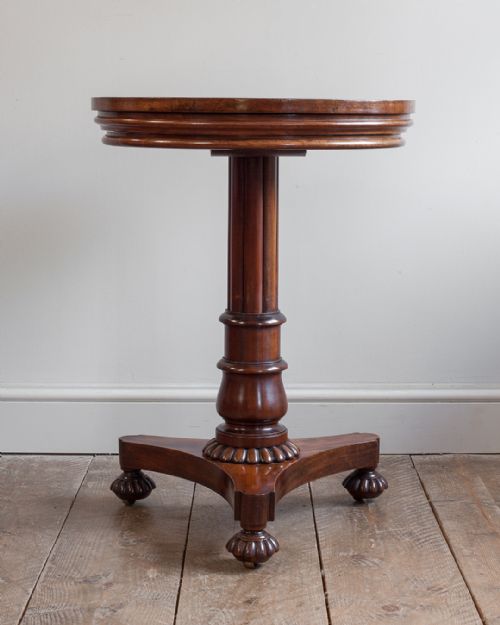
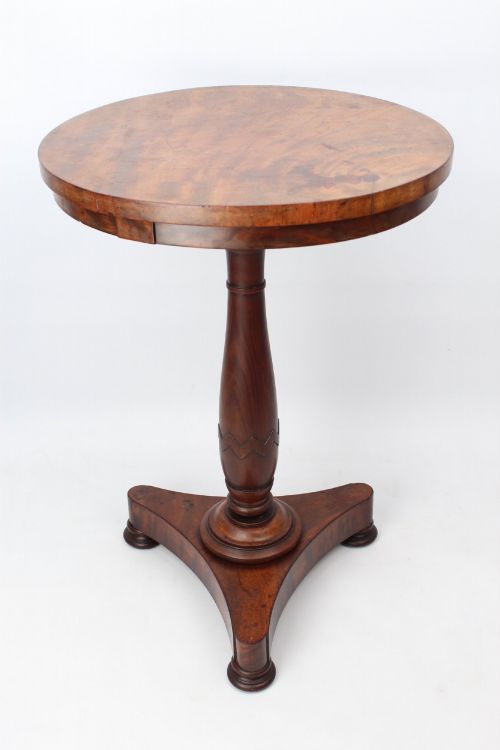
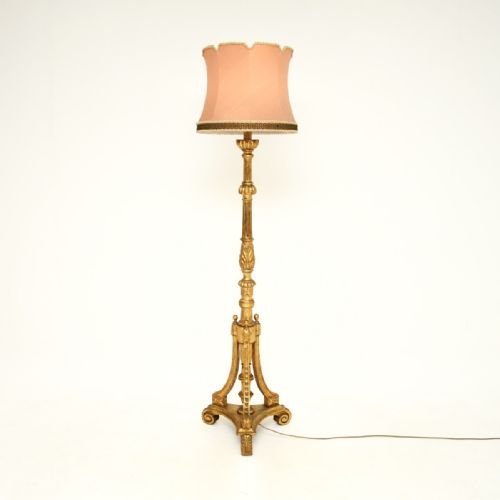
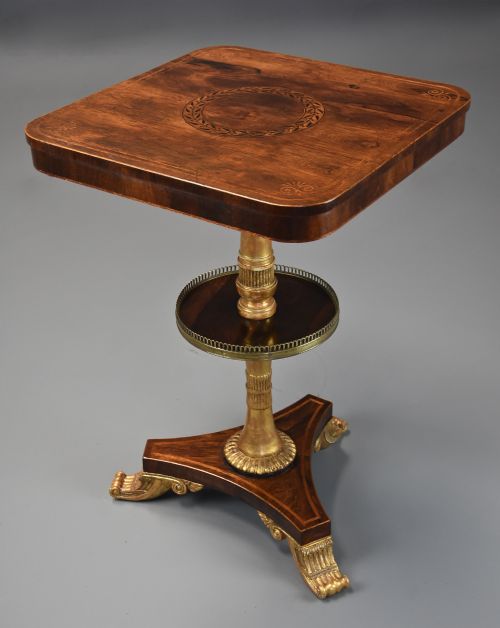




Triform Base Lamps
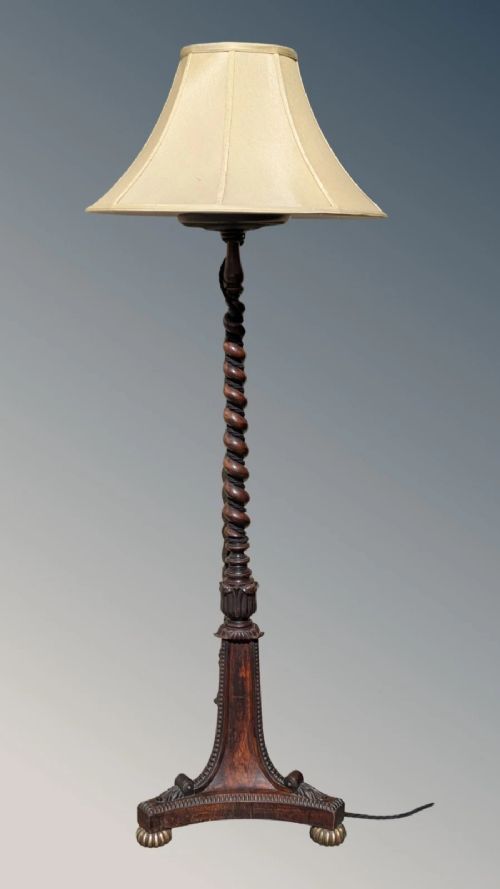
Triform base lamps bring architectural weight to a room, offering sturdy three-sided foundations that anchor lighting schemes with classic proportion.
Triform Base Lamps
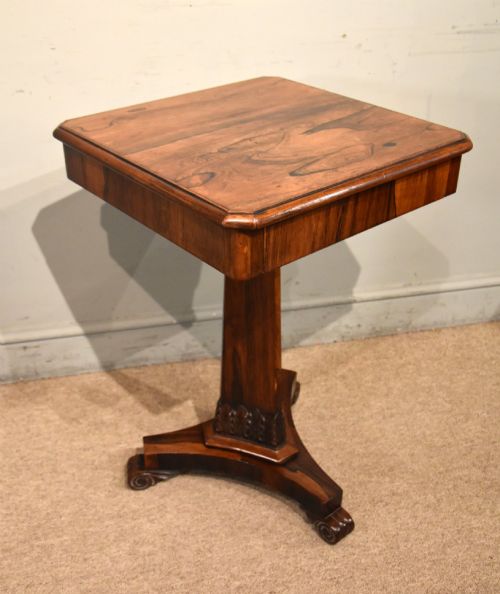
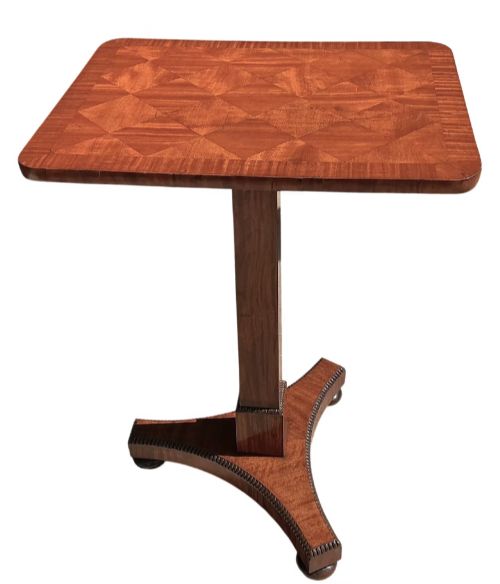
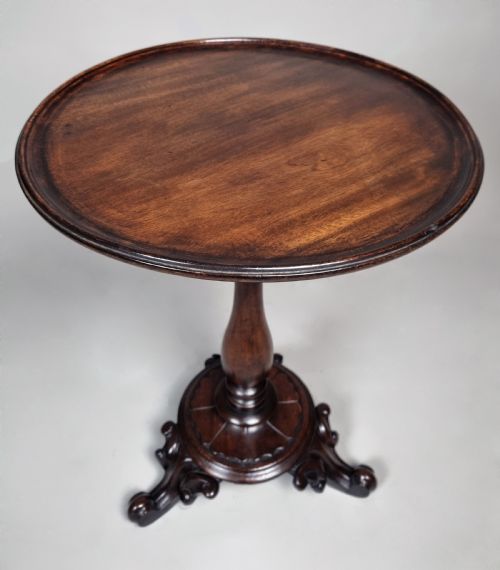
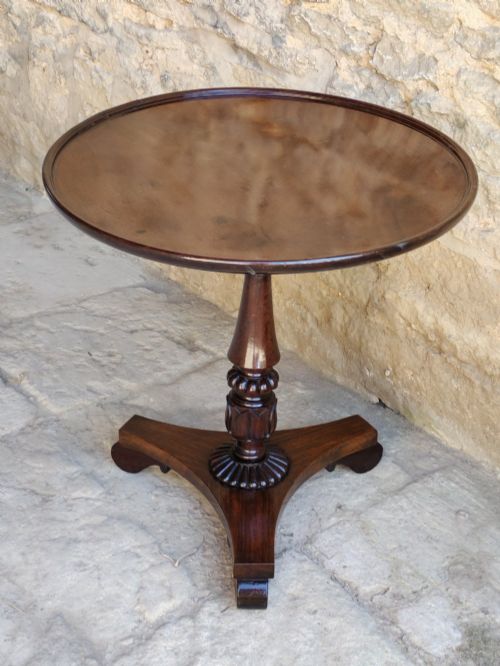
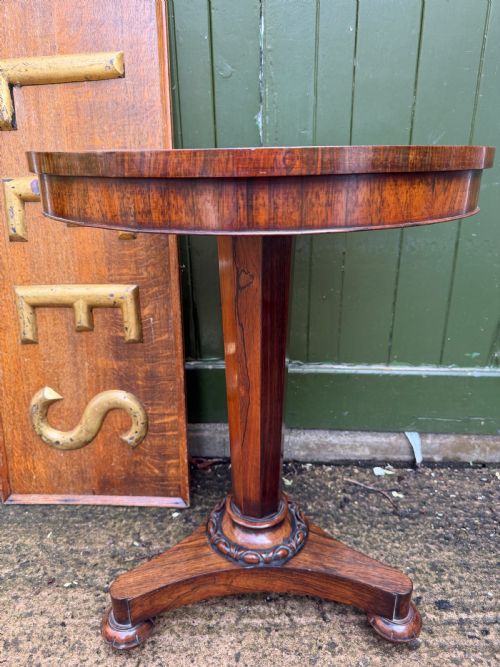
Triform base lamps draw upon forms seen in occasional tables, pedestals and lighting stands produced across the nineteenth and early twentieth centuries. The selection includes items originating from Regency, William IV and Victorian periods, alongside later standard and floor lamps.
Buyers encounter a mixture of converted candle stands, torcheres and occasional tables adapted for lighting, constructed in mahogany, rosewood, brass and giltwood. These pieces range from compact wine tables to taller floor-standing variations with distinct three-sided supports.
The aesthetic leans heavily on Neoclassical, French Empire and traditional English design vocabularies, making them versatile additions to both period interiors and modern settings.
Materials and construction
Timbers such as mahogany, rosewood and burr elm provide the primary structure for wooden examples, frequently enhanced by flame mahogany veneer or inset marble tops. Cabinet makers utilised traditional joinery for pedestals and three-way platforms to ensure stability beneath vertical shafts.
Metal components draw on brass, bronze, ormolu and silver plating, particularly in standard lamps and ecclesiastical candlesticks adapted for lighting. Giltwood appears on decorative floor lamps and tables, combining carved wooden cores with applied gold leaf finishes.
Listings span the nineteenth and early twentieth centuries, featuring woods like mahogany, rosewood and marble alongside brass and giltwood.
Assessing the pieces
Quality rests upon the crispness of the carving, the selection of figured timbers like rosewood or flame mahogany, and the integrity of the structural joints. Pieces exhibiting balanced proportions and refined mouldings distinguish themselves from simpler utility items.
The originality of surface patination and the harmony of combined materials, such as inset marble tops paired with ormolu or brass mounts, elevate the standing of an individual lamp or pedestal table.
The Triform Base Lamps Glossary
- Triform
- Having three sides or a triangular plan, typically describing a pedestal base or foot configuration. This layout provides a stable footprint for taller standards and tables.
- Guéridon
- A small French round table on a central pillar, frequently adapted to hold lamps or decorative objects. These tables often feature marble tops and veneered bases.
- Ormolu
- Gilded bronze or brass applied as a decorative mount on furniture and lighting fixtures. The technique involves mercury gilding on older pieces, producing a rich golden lustre.
- Pricket
- A sharp metal spike on a candlestick designed to hold a candle in place. Pricket sticks from ecclesiastical contexts frequently undergo conversion into tall table lamps.
Triform Base Lamps: Frequently Asked Questions
How do I identify a William IV lamp table?
William IV pieces display robust classical styling, typically featuring heavy circular tops, bold rosewood or mahogany grain, and triform plinths resting on scrolled feet.
Look for deep mouldings and substantial pedestal turnings that distinguish this era from lighter Regency designs.
What wood types appear most frequently?
Mahogany and rosewood dominate the wooden tables and standards, often highlighted by figured veneers, flame patterns or burr elm sections.
Secondary materials include giltwood, marble inserts and cast metal components that add weight and textural contrast.
How do I style a triform base lamp?
The triangular footprint allows these lamps or small pedestal tables to fit snugly beside seating or in corners where standard square bases prove too bulky.
Pair them with traditional side tables or use floor-standing versions to introduce vertical contrast in a room.