






Ecclesiastical Altar Lamps
Ecclesiastical altar lamps bring sanctuary light and centuries of liturgical craftsmanship straight into your home.
Ecclesiastical Altar Lamps
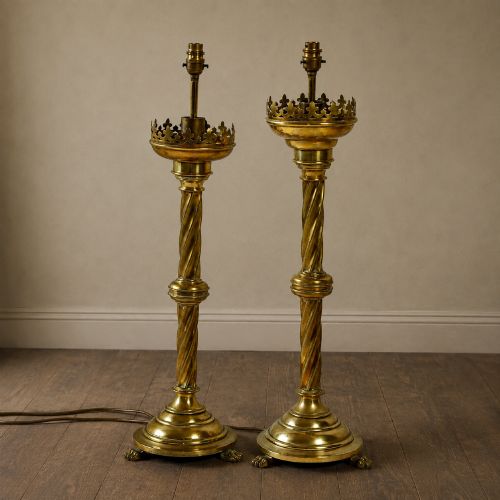
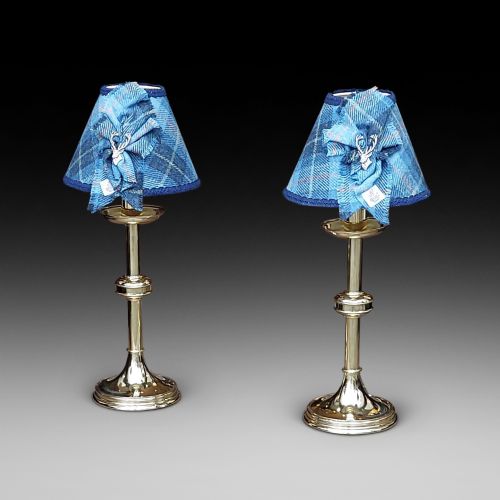
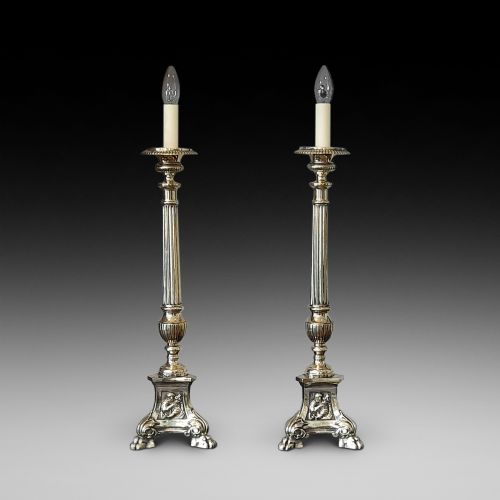
These ecclesiastical altar lamps are repurposed liturgical pieces, transitioning from churches and chapels into domestic settings as atmospheric table lamps and candlestands. Most examples appearing here date from the nineteenth century, including distinct Victorian pieces and French ecclesiastical designs.
The physical forms span heavy table lamps, converted pricket sticks, candlesticks, and multi-light candelabras. Buyers most frequently encounter sturdy brass constructions alongside striking giltwood and silver-plated variations.
Origins stretch across European traditions, encompassing French, Spanish, and Italian workshops. The aesthetic leans heavily into Gothic Revival and Baroque styling, reflecting the ornate ecclesiastical interiors of their origin.
Materials and construction
Metalworking dominates these pieces, utilising cast and turned brass, silver plate, and gilded bronze or ormolu. Workshops shaped these metals into robust shafts and bases capable of supporting heavy candles or later electrical conversions.
Conversion work forms a major part of their history, with nineteenth-century sticks and prickets thoughtfully adapted for modern electrical fittings while retaining their original form.
Judging quality
The distinction between ordinary and exceptional pieces lies in the crispness of the casting and the depth of the original gilding or plating. Superior nineteenth-century items display sharp architectural tracery in their Gothic Revival mounts rather than softened, mass-produced detailing.
Substantial weight and honest proportions elevate a piece, particularly in heavy brass or solid giltwood examples. The sensitivity of any later conversion work also matters, with the best pieces preserving the integrity of the original pricket or socket without unnecessary structural compromise.
The Ecclesiastical Altar Lamps Glossary
- Pricket stick
- A candlestick featuring a sharp central metal spike designed to hold a large wax candle in place. This form is common in church settings.
- Giltwood
- Timber that has been coated with a thin layer of gold leaf or gesso preparation. It appears frequently on Spanish altar pieces.
- Candelabra
- A branched lighting fixture holding multiple candles or lamp bulbs. These offer a grander silhouette than single candlesticks.
- Gothic Revival
- An architectural and decorative style drawing inspiration from medieval forms. It dominates nineteenth-century ecclesiastical metalwork.
Ecclesiastical Altar Lamps: Frequently Asked Questions
What is a pricket stick?
A pricket stick is a specific type of candlestick that uses an upward-pointing spike instead of a traditional socket. The base of the candle is pressed directly onto this spike.
This design originates from traditional church altars where large wax tapers were burned during services.
Are these lamps heavy?
Many ecclesiastical altar lamps are remarkably heavy due to their solid brass, cast bronze, or dense timber construction. They were originally built to remain stable on wide church altars.
This substantial weight makes them exceptionally stable when placed on side tables or desks at home.
How do I clean antique brass?
Antique brass benefits from gentle dusting and occasional cleaning with a soft cloth to preserve the accumulated patina of age. Avoid harsh chemical polishes that strip away historical character.
Leaving the darker patination intact usually highlights the cast details of nineteenth-century Gothic Revival pieces far better than a bright shine.