



Fluted Column Cabinet
A fluted column cabinet brings architectural order to a room, offering refined timber storage rooted in classical design.
Fluted Column Cabinet
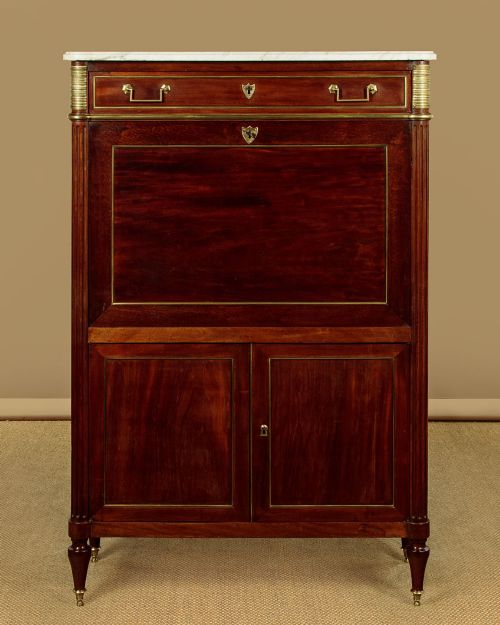
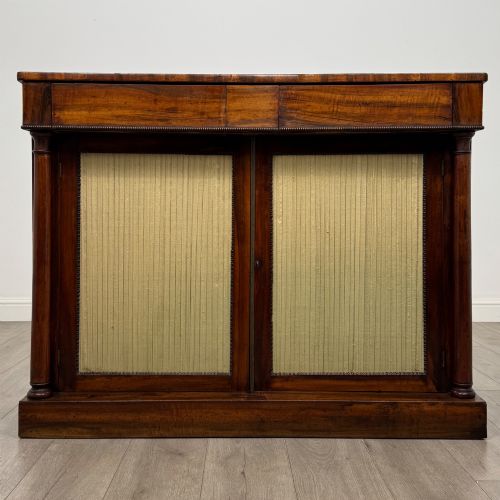
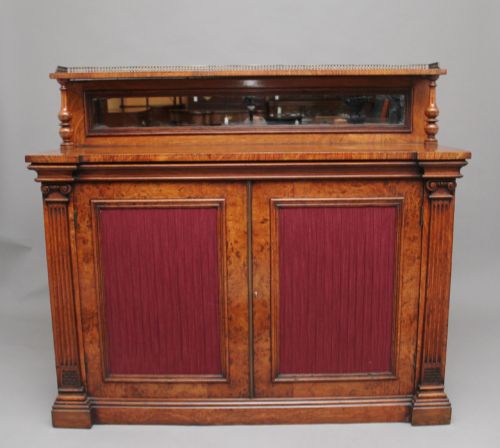
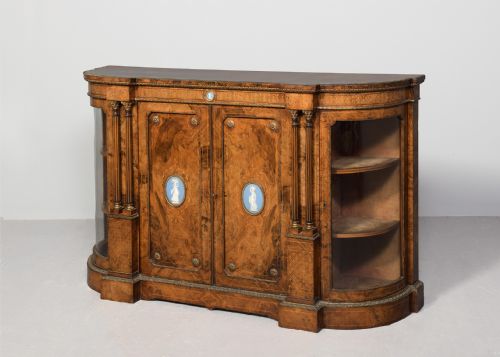
A fluted column cabinet draws upon classical architecture, taking forms such as side cabinets, bookcases, bedside tables, and sideboards. These pieces emerge predominantly from the nineteenth century, including the Victorian and Regency eras, alongside eighteenth-century Italian and Georgian examples.
You will most commonly encounter mahogany, walnut, and rosewood versions on this page, often detailed with brass mounts, glass doors, or marble tops. The architectural influence manifests through columnar supports and structured silhouettes.
The selection ranges from tall glazed bookcases and credenzas to compact bedside cabinets and cylindrical stands, reflecting a broad functional scope. Regional variations span English periods and Continental European workshops.
Materials and construction methods
Cabinet makers utilised dense hardwoods such as mahogany, rosewood, walnut, and pollard oak as the primary structural and visual medium. These timbers were often selected for rich grain patterns, including flame mahogany and burr walnut.
Decorative embellishments relied on contrasting elements like ormolu mounts, brass details, gilt metal, and inset leather. Marble tops and glazed door panels added textural contrast and utility to the architectural wooden framework.
Materials appearing across these architectural cabinets include mahogany, burr walnut, rosewood, marble, brass, and ormolu.
Distinguishing quality across the range
Quality reveals itself in the precision of the timber selection and the depth of the grain, particularly in figured veneers like flame mahogany or burr walnut. Superior examples display seamless integration of architectural motifs such as fluted columns and gilt mounts.
Construction integrity separates standard utility items from exhibition-grade pieces, showing in the weight of the brass hardware, the clarity of the glass, and the stability of marble surfaces. The finesse of the carving on structural columns dictates the aesthetic standing of the piece.
The Fluted Column Cabinet Glossary
- Fluted column
- A vertical pillar with shallow parallel grooves carved into its shaft. This architectural feature defines the aesthetic of the cabinetry.
- Vitrine
- A glass-fronted cabinet designed for displaying delicate objects or books. These pieces often incorporate glazed doors and fine timber frames.
- Ormolu
- Gilt bronze mounted on furniture as a decorative trim. This technique enhances the classical lines of nineteenth-century pieces.
- Pollard oak
- Timber taken from trees that were pollarded, creating a dense and highly textured burl grain. It is prized for distinctive surface patterns.
- Secretaire abattant
- A tall cabinet featuring a drop-front writing flap that conceals inner compartments. It combines desk functionality with vertical storage.
Fluted Column Cabinet: Frequently Asked Questions
What rooms suit a fluted column cabinet?
These cabinets work well in living rooms, studies, and bedrooms, serving as bookcases, sideboards, or bedside storage.
The architectural presence of the columns adds formal structure to an interior while providing practical enclosed shelving.
How do I date a fluted column cabinet?
Dating relies on identifying the primary timber species, construction techniques, and stylistic markers associated with periods like the Regency or Victorian eras.
Changes in hardware, such as brass mounts and locks, also offer clues to the approximate decade of manufacture.
Are these cabinets purely decorative?
Most pieces combine decorative classical design with robust storage, functioning as practical bookcases, sideboards, and bedside tables.
Internal configurations range from adjustable wooden shelves to enclosed cupboards and specialised writing surfaces.
What woods were used for these cabinets?
Cabinet makers predominantly used rich hardwoods including mahogany, walnut, rosewood, and pollard oak.
Many examples feature decorative veneers and are enhanced with secondary materials like marble tops, glass panels, and brass mountings.