

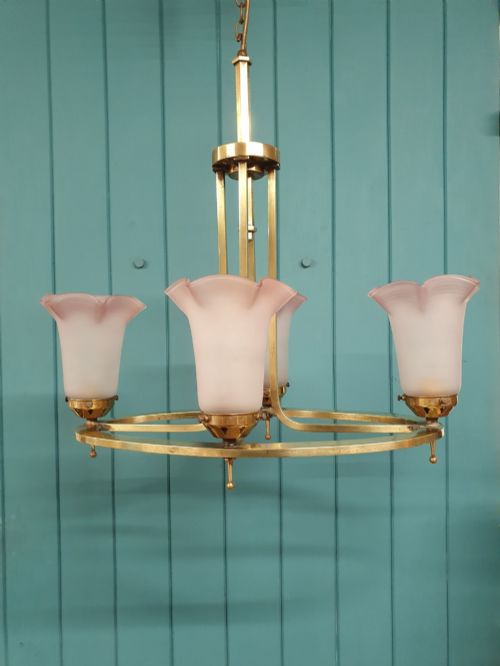


Fluted Brass Ceiling Pendant
A fluted brass ceiling pendant brings warm metal and patterned light to a room, offering the distinct character of early twentieth-century and Victorian interiors.
Fluted Brass Ceiling Pendant
A fluted brass ceiling pendant encompasses a range of overhead lighting fixtures suspended from ceilings to illuminate domestic and commercial spaces. The selection on this page draws primarily from the Victorian, Edwardian, and Art Deco periods, spanning the nineteenth and early twentieth centuries. These fixtures combine metal framing with glass or alabaster components to diffuse light effectively across a room.
Buyers will encounter various forms, including single pendant lights, multi-arm chandeliers, and individual shades paired with metal mounts. Materials such as brass, polished bronze, frosted glass, and opal glass dominate the listings, reflecting the industrial and decorative tastes of their respective eras. Origin points range from English workshops to French provincial designs.
The most common variants on this page feature moonstone glass, Holophane shades, or white alabaster dishes mounted on brass or bronze hardware. Pieces vary from diminutive shades suitable for smaller corridors to large multi-lamp chandeliers designed for principal reception rooms. Each iteration demonstrates the specific functional requirements of lighting before the mid-twentieth century.
How they were made
Makers utilised cast and spun brass alongside polished bronze to form the structural bodies, ceiling roses, and arms of these pendants. Metalwork was shaped to create decorative leaves, geometric Art Deco lines, or utilitarian industrial profiles, often leaving the warm metal exposed to develop a natural patina over time.
Shades were produced using specialised glass-forming techniques, resulting in frosted, opal, moonstone, and prismatic Holophane surfaces designed to soften glare and distribute illumination evenly. Alabaster was carved into solid translucent dishes for architectural lighting, while individual components were mechanically joined with threaded fittings and screws.
Fluted Brass Ceiling Pendant Retail Price Guide 2026
Typical asking prices for fluted brass ceiling pendant among the pieces listed under this phrase on Sellingantiques today, from the lower quarter to the upper quarter. They describe what is for sale here now, not the wider market.
Listings span the nineteenth and twentieth centuries, featuring brass, frosted glass, opal glass, moonstone glass, alabaster, and polished bronze across multiple styles.
What varies in quality
Quality in these pendants rests upon the weight and thickness of the brass or bronze castings and the integrity of the glass elements. Heavier gauge metals and deeply carved leaf designs or crisp geometric mouldings indicate superior workshop production, whereas thinner pressings sit at the simpler end of the range.
The standard of the glass shade heavily influences the overall character, with dense moonstone, layered opal, and complex prismatic Holophane patterns representing higher tiers of manufacture. Original matched components, intact patination on the brass, and substantial structural hardware distinguish the finer examples from later assembled alternatives.
The Fluted Brass Ceiling Pendant Glossary
- Fluted
- Having shallow parallel grooves running vertically along the surface of the metal or glass component. This shaping directs light and adds textural interest to the fixture.
- Holophane
- A brand of scientific glass featuring prismatic ribs designed to direct and diffuse light efficiently while reducing glare. It remains a hallmark of early industrial and commercial lighting.
- Moonstone glass
- A type of semi-translucent glass that resembles the milky appearance of the gemstone. It produces a soft, diffused glow when illuminated from within.
- Ceiling rose
- The decorative circular plate mounted flush against the ceiling to conceal the wiring junction and anchor the suspension rod or chain.
- Alabaster
- A fine-grained, translucent stone carved into bowls and dishes for lighting fixtures. It provides a warm, natural diffusion when lit.
Fluted Brass Ceiling Pendant: Frequently Asked Questions
How do I hang a heavy brass pendant?
These fixtures require secure anchoring directly into ceiling joists or the use of heavy-duty toggle bolts to support the weight of the metal and glass components. Professional installation by an electrician ensures the electrical junction box can safely bear the load.
Suspension height is typically adjusted using the original chain or brass rod, keeping the fixture high enough to clear head height while properly illuminating the table or floor space below.
Can I replace a broken glass shade?
Finding an exact period replacement for a broken shade can prove challenging due to the specific fitter diameters and historic manufacturing methods used across different eras. Collectors often search for period-correct alternatives that match the original material, such as opal or moonstone glass.
When substituting a shade, the gallery fitter size must match the brass collar precisely to ensure the piece mounts securely without wobbling or risking a fall.
How do I clean antique brass and glass?
Antique brass benefits from gentle dusting with a soft cloth rather than aggressive metal polishes that strip away historical patination and age. Preservation of the surface finish is generally preferred by collectors over a bright, modern shine.
Glass shades can be detached and washed in warm, soapy water to remove accumulated dust and smoke film, restoring their original translucency before being carefully reattached to the fixture.
How do I date a ceiling light?
Dating relies on observing stylistic markers, such as the geometric symmetry of Art Deco pieces from the nineteen-thirties or the organic leaf motifs common in Victorian and Edwardian designs. Materials like heavy polished bronze or early prismatic glass also point to specific decades of production.
Wiring methods and internal socket types provide further clues, though most antique fixtures are re-wired to meet modern safety standards before installation in a home.