
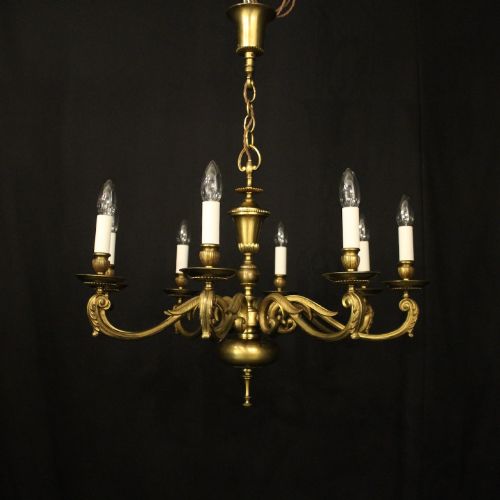


Edwardian 8 Light Chandelier
An edwardian 8 light chandelier brings grand illumination and period proportion to a high-ceilinged room.
How they were made
Construction relies heavily on cast and spun brass, bronze, and giltwood for the structural skeletons and ceiling mounts. Metal components hold together glass crystals, cut glass drops, and bevelled panes using traditional wire and pin methods.
Decorative glass elements include moulded domes, tapered bag frames, and cut crystal spikes attached to metal armatures. Gilding, silvering, and patination were applied to the metallic surfaces to achieve specific decorative finishes.
What varies in quality
Quality rests in the weight of the metal castings and the clarity of the glass or crystal components. Finer examples feature crisper chased detail on brass mounts, integrated lion masks or leaf decoration, and hand-cut glass prisms that refract light cleanly.
Subtlety of proportion and the integrity of the original hanging mechanisms separate standard production from superior examples. The method of glass dressing, from simple domes to complex multi-tier spike or bag arrangements, dictates the visual impact of the fixture.
Materials across these listings include cast brass, giltwood, bronze, and various cuts of glass from the Edwardian era and earlier.
G.E.C
The Edwardian 8 Light Chandelier Glossary
- Plafonnier
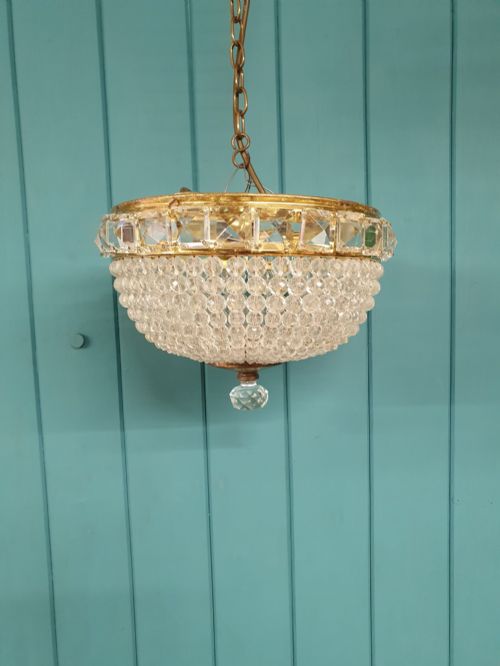
- A ceiling-mounted lighting fixture sitting flat or close against the ceiling surface. These enclosed or semi-enclosed bowls provide direct downward illumination.
- Bag chandelier
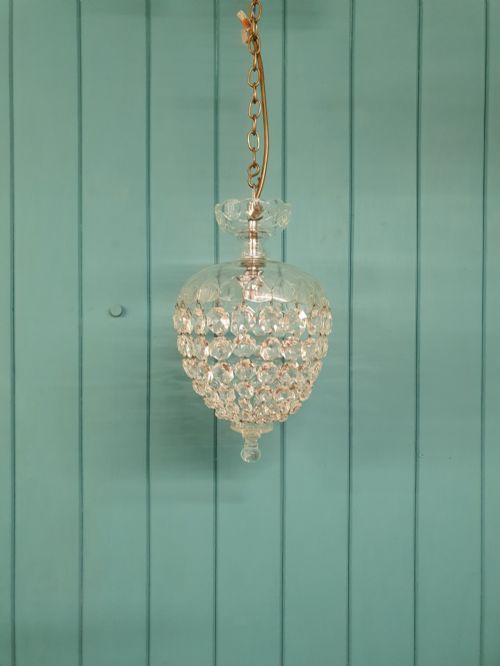
- A lighting fixture featuring a conical or tapered bag-shaped mesh of glass drops suspended from a metal ring. The lower section gathers into a dense cluster of crystals.
- Spike chandelier
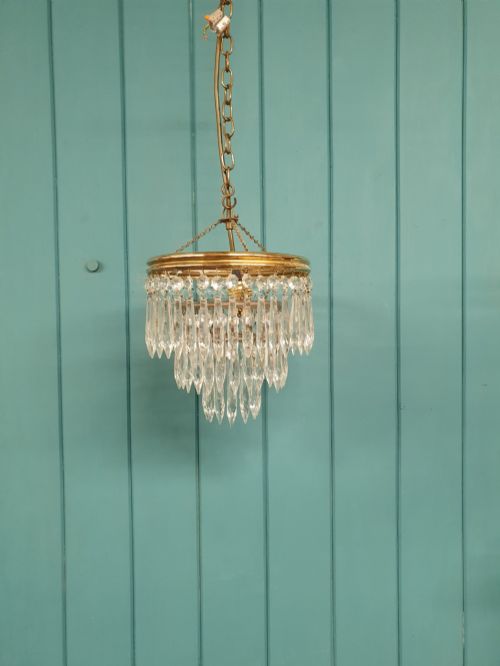
- A vertical hanging light characterised by central tiered spikes or spears of cut glass. These pieces rely on vertical glass arrangements to multiply the light output.
- Hall lantern
- An enclosed hanging light designed specifically for entrance spaces and corridors. They often utilise bevelled glass panes within brass or bronze frames.
- Giltwood
- Timber that has been coated with a thin layer of gold leaf or gold paint. This material appears on decorative carved portions of select period frames.
Edwardian 8 Light Chandelier: Frequently Asked Questions
How do I hang a heavy chandelier?
Suspension requires finding a ceiling joist or installing a heavy-duty steel brace box capable of supporting the combined weight of metal and glass.
Electrical connection should proceed via a professional electrician who can verify the wiring integrity of vintage fixtures.
Can modern bulbs be used?
Most period fittings accommodate standard contemporary screw or bayonet bulbs once the lampholders are inspected for safety. Low-wattage LED alternatives reduce heat output inside enclosed glass lanterns and bag chandeliers.
Matching the colour temperature of the bulbs to vintage lighting tones preserves the warm appearance of brass and crystal.
How should glass drops be cleaned?
Crystal and cut glass elements benefit from careful hand washing using warm water and a mild detergent solution while still attached, or removed one by one. Drying with a lint-free cloth restores maximum brilliance to the facets.
Harsh chemical cleaners should stay away from lacquered or patinated brass and bronze frames.
How do I date an antique chandelier?
Dating relies on examining the construction methods of the metal armature, the style of the glass cutting, and wiring components. Edwardian and Victorian pieces often show distinct cast brass detailing and specific screw thread types.
Stylistic cues such as Arts and Crafts restraint or Art Nouveau botanical motifs offer further chronological markers.