




Flowering Motif Vases
Flowering motif vases bring botanical design into a room, spanning bronze, glass and porcelain across the nineteenth and twentieth centuries.
Flowering Motif Vases
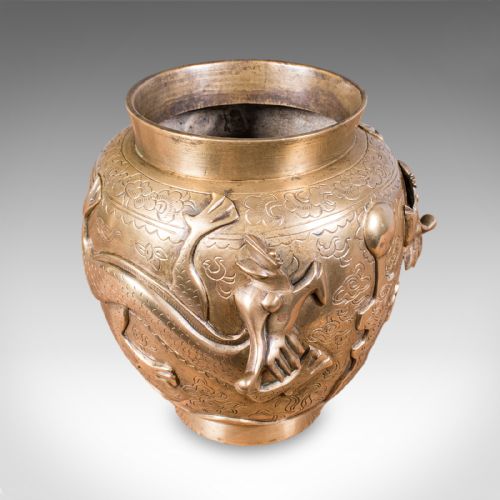
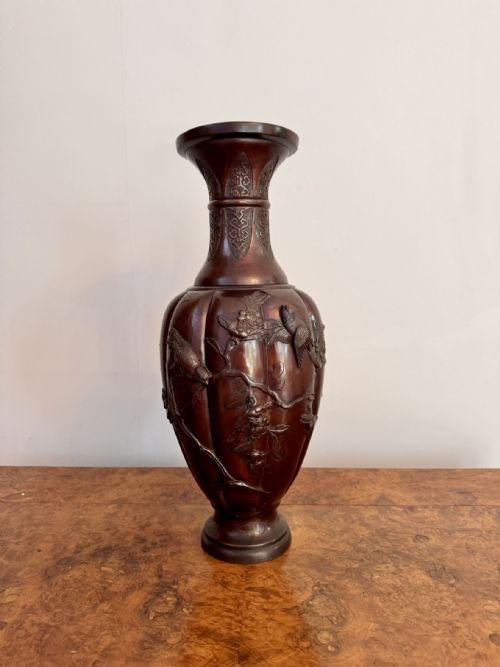
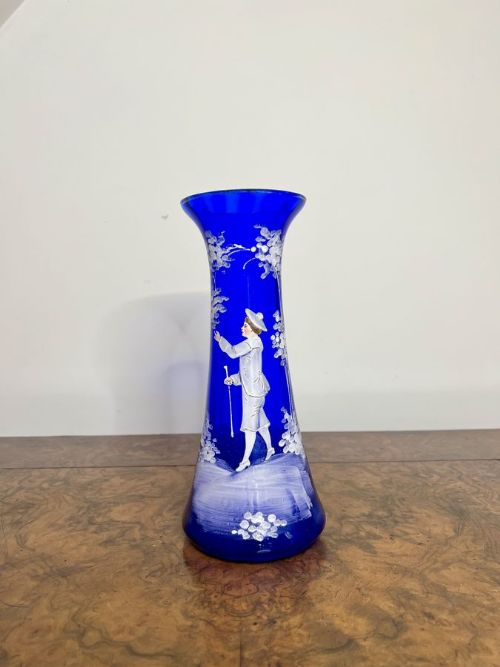
When you search for flowering motif vases, you encounter pieces decorated with blossoms, hydrangeas and birds alongside floral ornamentation. The selection on this page relies heavily on Japanese Meiji bronzes and European glass works from the Victorian era to the Art Deco period.
Formations range from modest posy vessels and stems to large urns and banjo shapes. Bronze examples often display cast bird and blossom details, whilst glass pieces utilise cameo cutting or opalescent moulding to render floral subjects.
How they were made
Makers utilised bronze, glass and porcelain, shaping metal through casting and hammering while glass was blown, cameo cut or moulded. Cloisonne examples employ fine wirework filled with enamel colours to build the floral design upon a metal base.
Surface treatments vary from patinated finishes on bronze to gold leaf highlights and layered glass acid etching. These techniques determine how light and shadow interact with the botanical motifs.
Flowering Motif Vases Retail Price Guide 2026
Typical asking prices for flowering motif vases among the pieces listed under this phrase on Sellingantiques today, from the lower quarter to the upper quarter. They describe what is for sale here now, not the wider market.
Materials represented across the selection include bronze, patinated bronze, brass, gold leaf, porcelain, enamel, glass, frosted glass and cameo glass.
What varies in quality
Quality rests in the crispness of the casting on metal vessels and the depth of the carving on cameo glass. Superior pieces show precision in every petal and bird feather rather than soft, generalised moulding.
The weight of the material and the sophistication of the finish separate standard items from exceptional examples. Balance in proportion and deliberate placement of the motif dictate the overall success of the piece.
Galle·Rene Lalique·Keith Murray·Stevens and Williams·Mary Gregory
The Flowering Motif Vases Glossary
- Cloisonne
- Enamelling technique where thin metal wires form compartments on a surface, which are then filled with coloured paste and fired. This method creates defined patterns of flowers and birds.
- Cameo glass
- Vessel formed of two or more fused layers of contrasting glass, with the outer layer carved away to leave a raised design. This technique allows for detailed botanical imagery.
- Meiji Period
- Japanese historical era spanning from eighteen sixty-eight to nineteen twelve, known for accomplished bronze casting and decorative arts exported to Europe. Pieces from this time frequently incorporate naturalistic motifs.
- Opalescent glass
- Milky, translucent glass that displays shifting tones of blue and orange when lit. It was utilised by makers such as Rene Lalique for tactile floral vases.
Flowering Motif Vases: Frequently Asked Questions
How do I clean an antique bronze vase?
Dust gently with a dry, soft cloth to preserve the patinated surface. Avoid water and chemical polishes which can strip the historical finish.
For stubborn residue, consult a specialist conservator rather than attempting aggressive cleaning at home.
Where should I display a glass floral vase?
Place the vessel near a natural light source to activate cameo carving, opalescent qualities or coloured glass tones. Ensure it rests away from high traffic edges where accidental knocks might occur.
Pairing the piece with neutral backgrounds allows the floral motifs to remain the visual focus of the room.
How can I tell a Meiji bronze from later pieces?
Examine the weight, the precision of the bird and blossom casting, and the depth of the patinated bronze surface. Meiji period works from the late nineteenth century show distinct hand-finishing details.
Signatures or seal marks on the base can also provide clues to the workshop origin.
What is the difference between porcelain and pottery vases?
Porcelain is fired at higher temperatures, resulting in a vitrified, non-porous body that often exhibits a bright white colour beneath the glaze. Continental porcelain lidded vases demonstrate this refined composition.
Pottery tends to be heavier, more opaque and slightly more porous unless heavily glazed.