



Florentine Style Lighting
Florentine style lighting brings ornate, gilded Italian character to a room through carved woodwork and intricate metalwork.
Florentine Style Lighting
When you search for Florentine style lighting, you encounter dramatic chandeliers, wall lights, girandoles, and lamps originating from periods spanning the eighteenth century to the mid-twentieth century. These fixtures derive their distinct visual language from Italian Baroque and Rococo traditions, rendered through regional craftsmanship.
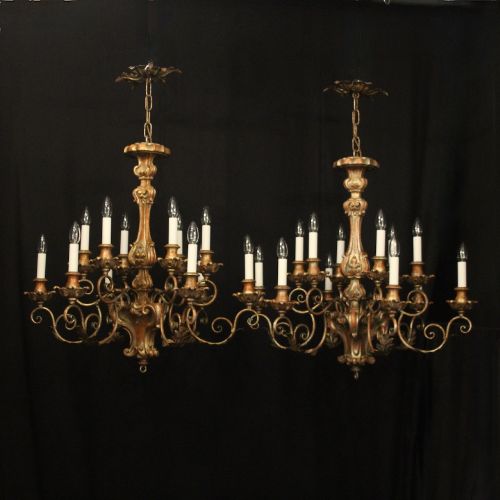
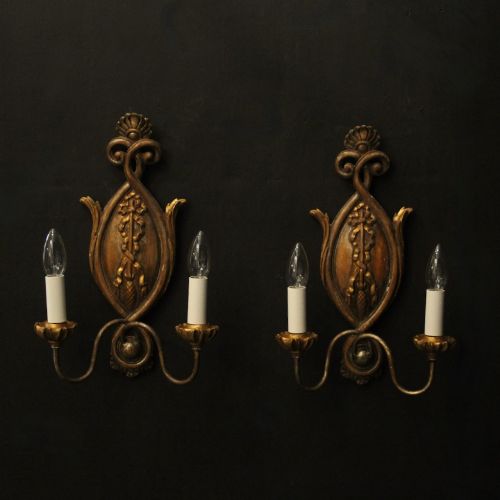
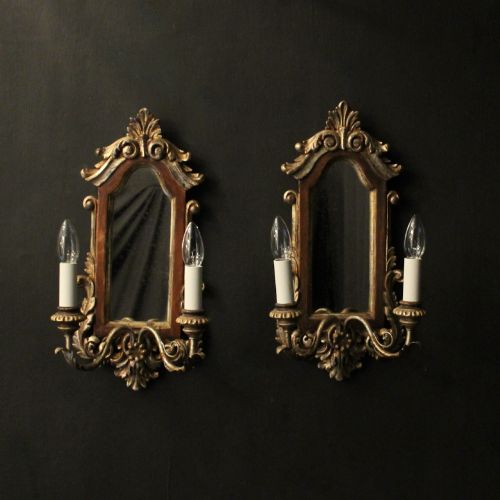
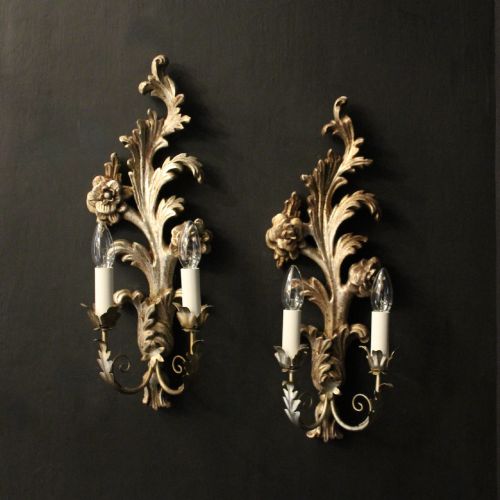
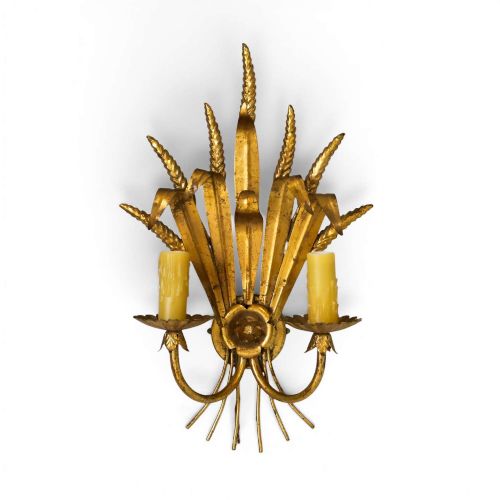
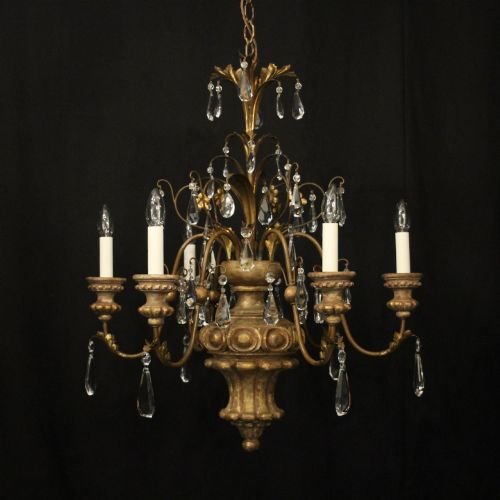
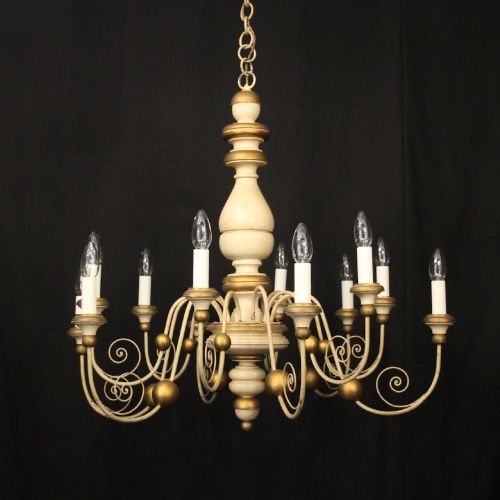
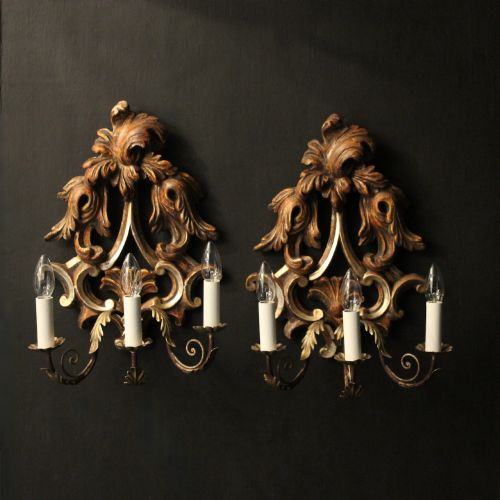
You are most likely to meet twentieth-century interpretations on this page, specifically multi-light chandeliers and pairs of twin or triple-arm wall lights dated around 1920 and 1930. These pieces frequently utilise carved giltwood, polychrome finishes, and glass beads to recreate earlier aesthetic forms.
The selection ranges from tall standard lamps and hanging lanterns to large multi-tiered chandeliers holding up to eighteen lights. Alongside these Italian works, related French and English pieces appear, sharing similar gilded metal and carved wooden vocabularies.
How They Were Made
The construction of these pieces relies heavily on wood and metal working techniques, with carved wood, gesso, and gilt metal forming the structural core of chandeliers and wall lights. Artisans shaped timber into elaborate scrolls and floral motifs before applying layers of gesso to prepare the surface for gilding or polychrome paint.
Gilding processes utilise gold leaf or silver gilt to achieve luminous metallic finishes, occasionally enhanced with silvered mecca techniques seen on altar-type candlesticks. Crystal and glass beads are integrated into many designs, dangling from frames to refract light across multiple candle arms or electric bulbs.
Florentine Style Lighting Retail Price Guide 2026
Typical asking prices for florentine style lighting among the pieces listed under this phrase on Sellingantiques today, from the lower quarter to the upper quarter. They describe what is for sale here now, not the wider market.
Some fixtures carry enough crystal beads to turn any modest dining room into a miniature Venetian palazzo.
What Varies in Quality
The calibre of these fixtures depends largely on the depth and precision of the wood carving, where hand-tooled details on giltwood arms and backplates exhibit superior definition compared to simpler moulded forms. Crisp foliage and sharply rendered structural elements separate masterworks from more routine decorative production.
Material integration also dictates quality, distinguishing fixtures that combine heavy carved giltwood, hand-applied polychrome pigments, and high-clarity crystal droplets from those utilising sparse ornamentation. The cohesion between the metal armature, the wooden elements, and the suspension components determines the structural integrity of the piece.
The Florentine Style Lighting Glossary
- Giltwood
- Wood that has been coated with gold leaf or a gold-coloured finish. This technique provides the signature metallic sheen seen across many traditional Italian frames.
- Girandole
- An ornamental branched wall light or sconce, frequently featuring a mirror backplate to amplify illumination. These fixtures often hold two or three candle arms.
- Gesso
- A plaster-like mixture applied to wood surfaces as a smooth base for gilding or painting. It allows craftsmen to sculpt fine relief details before applying gold leaf.
- Mecca
- A transparent golden varnish applied over silver leaf or silvered metal to simulate the rich tone of gold. This historical finish is characteristic of Venetian-style pieces.
- Polychrome
- Painted in several colours, often used alongside gilding to highlight carved floral motifs and sculptural details on Italian fixtures.
Florentine Style Lighting: Frequently Asked Questions
What is Florentine style lighting?
Florentine style lighting encompasses decorative lamps, chandeliers, and wall fixtures originating from Italy or inspired by Florentine artistic traditions. These pieces emphasise ornate wood carving, gilding, and multi-armed configurations.
They draw heavily on Baroque and Rococo design motifs, utilising materials like giltwood, crystal, and polychrome finishes to create a dramatic visual presence.
How were these chandeliers used?
Historically, these multi-armed fixtures provided primary illumination for grand rooms in Italian residences and civic buildings. They were suspended from high ceilings or mounted to walls to cast ambient light.
Today, they serve a similar purpose in domestic interiors, functioning as central decorative focal points while providing functional illumination through multiple candle arms or bulbs.
How do I live with giltwood lighting?
Living with giltwood fixtures involves placing them in spaces where their reflective metallic surfaces and intricate carvings can catch natural and artificial light. They anchor traditional rooms and create striking contrast in contemporary interiors.
Care requires gentle dusting with a soft brush to protect the delicate gold leaf and gesso layers from moisture and abrasive cleaning methods.
How can I tell the periods apart?
Dating these fixtures relies on observing material choices, electrical adaptations, and structural assembly techniques. Eighteenth-century pieces typically feature hand-carved altar-type elements and traditional joinery.
Twentieth-century interpretations from the 1920s and 1930s often incorporate wired electrical components alongside traditional giltwood and beaded crystal designs, reflecting historical revival trends.