

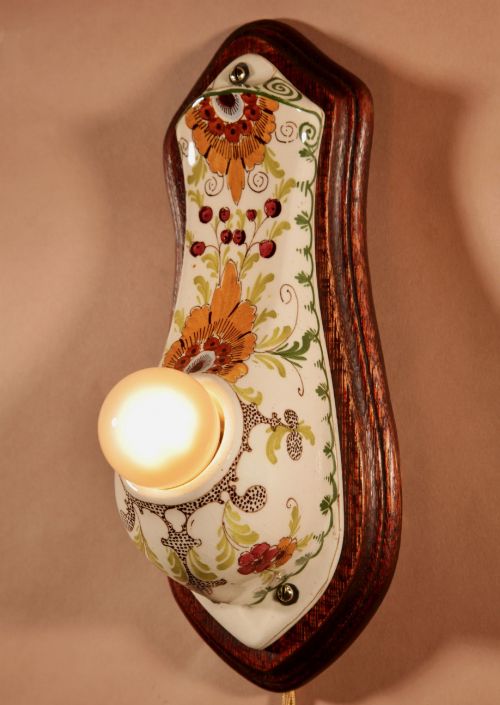


Floral Wall Lighting
Floral wall lighting brings botanical form and ambient illumination to interior spaces, encompassing sconces and lights adorned with blooms.
Floral Wall Lighting
Floral wall lighting comprises wall lights, wall sconces, and related fixtures shaped or decorated with botanical motifs. When you search for floral wall lighting, you encounter pieces designed to mount directly onto vertical surfaces while emulating flowers, foliage, and natural growth.
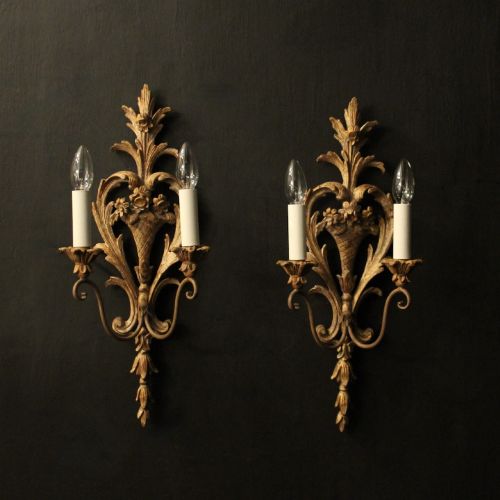
The selections span periods from the Victorian era through the 1950s, with notable representation from the 1900s, 1910s, 1920s, and 1930s. Common forms include twin-arm lights, single candle sconces, and multi-branch fixtures.
Origins and design styles vary widely, featuring French Chateau, French Rococo, Rococo Revival, Art Nouveau, Anglo-Indian, Florentine, and Mid-Century Modern aesthetics. French pairs and German porcelain designs recur frequently across the available items.
Materials and Construction
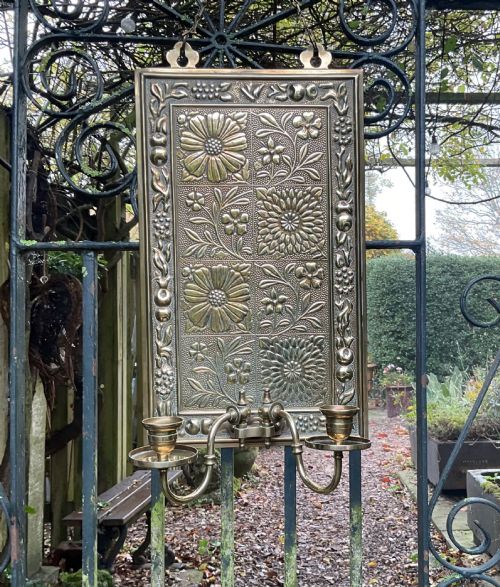
These fixtures utilise a diverse mix of metals, ceramics, and wood to render botanical shapes. Brass, wrought iron, gilt metal, and toleware provide structural armatures and leafy backplates, often shaped into curving stems and scrolling foliage.
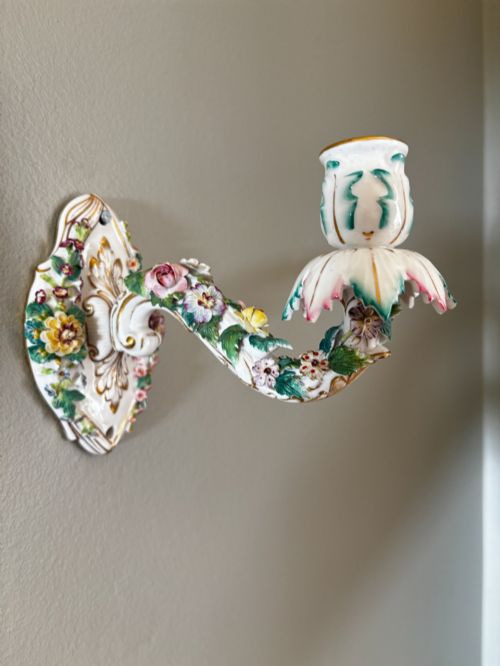
Porcelain, enamel, and glass components form the floral petals and blossoms, sometimes paired with mirrored panels to enhance light reflection. Giltwood and carved wood appear in specific regional styles like Florentine and French provincial pieces.
Floral Wall Lighting Retail Price Guide 2026
Typical asking prices for floral wall lighting among the pieces listed under this phrase on Sellingantiques today, from the lower quarter to the upper quarter. They describe what is for sale here now, not the wider market.
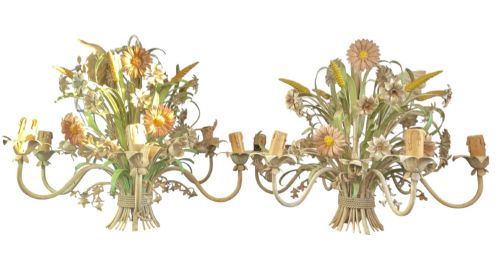
Green daisy wall lights from France bring a perpetual spring meadow indoors, regardless of the weather outside.
Assessing Quality
Quality rests in the articulation of the botanical elements and the integration of materials. Hand-painted polychrome details on porcelain petals and enamel leaves separate finer examples from mass-produced utilitarian fittings.
The harmony between the metal armature and the decorative floral components dictates the visual success of each piece. Heavy casting in brass or iron provides stability, whilst delicate modelling in ceramic flowers shows greater artisan skill.
Meissen·Von Schierholz
The Floral Wall Lighting Glossary
- Sconce
- A wall-mounted light fixture designed to hold candles or electric lamps. These often project forward on curved arms.
- Toleware
- Painted or enamelled sheet metal items popular in domestic lighting and decorative accessories. This technique allowed makers to render bright floral colours on metal leaves.
- Giltwood
- Wood carved and covered with a thin layer of gold leaf or gilt powder. Florentine and French makers utilised this finish for ornate wall lights.
- Art Nouveau
- An international style of art and architecture prominent around 1900, characterised by intricate linear designs and flowing natural forms. Botanical motifs within this movement heavily influenced floral lighting.
Floral Wall Lighting: Frequently Asked Questions
How are floral wall lights mounted?
These fixtures attach directly to wall surfaces using brackets or backplates suited to their weight. Wiring or candle placement occurs during installation.
Heavier items like iron or carved wooden sconces require secure wall anchors, whilst lighter brass or porcelain pairs use standard mounting hardware.
What periods do these lights represent?
The available lighting spans from the Victorian era and the 1890s through the 1950s. Art Nouveau and 1930s French designs are particularly common.
Earlier pieces often feature hand-carved wood or delicate porcelain, while mid-century examples incorporate simpler metalwork.
Can these sconces use modern electricity?
Many historical wall lights are adapted for modern electrical systems by professionals. Candle sconces may remain unlit or be retrofitted with miniature bulbs.
Checking the internal wiring status before installation ensures compatibility with current domestic electrical standards.
Where should wall sconces be placed?
Sconces typically mount on either side of mirrors, fireplaces, or architectural doorways to provide balanced illumination. Hallways and living spaces also benefit from their directional glow.
Placement height depends on ceiling clearance and the intended diffusion of light across the room.