
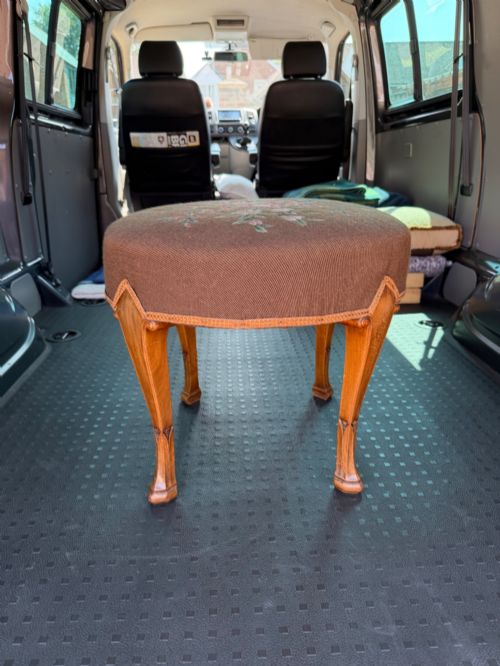
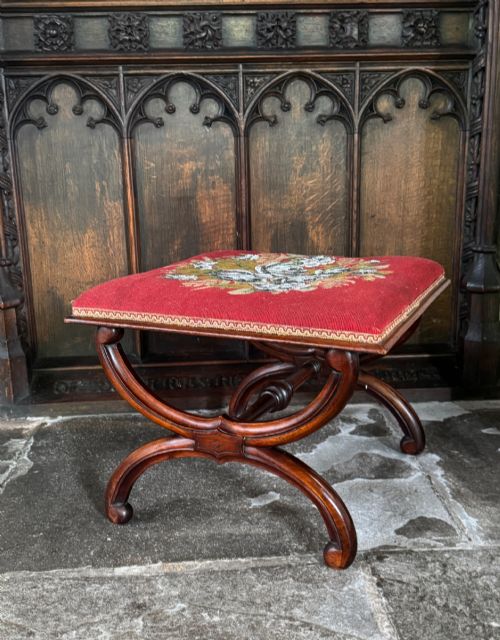
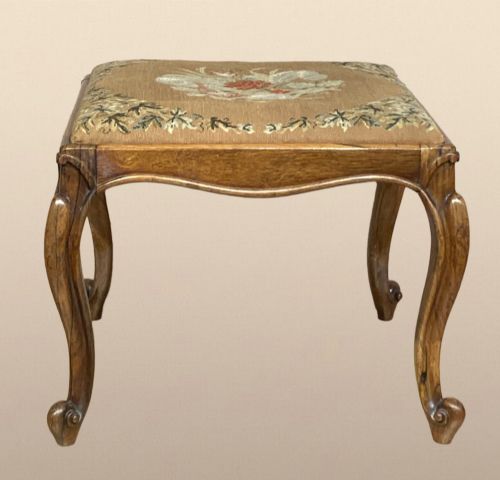


Floral Vanity Stool
A floral vanity stool brings charm to a dressing area, offering a low seat upholstered in patterned textiles.
Floral Vanity Stool
A floral vanity stool serves as a seating choice for dressing tables and bedrooms, appearing in forms such as dressing stools, footstools, and ottomans. When searching for a floral vanity stool, buyers encounter pieces spanning from the mid nineteenth century through to the nineteen thirties.
The selection includes Victorian rosewood and walnut frames alongside Edwardian mahogany and Art Deco sycamore designs. Queen Anne style influences and French revival frameworks appear frequently among the listings.
Upholstery defines these pieces, utilising tapestry, needlework, beadwork, and modern floral fabric covers. Frameworks range from simple wooden legs to carved cabriole supports and X frames.
Materials and construction methods
Cabinetmakers utilised hardwoods such as walnut, mahogany, rosewood, oak, and sycamore to build the structural frames. Turning, carving, and painting formed the decorative wooden elements of the seats.
Textiles form the primary upholstery medium, incorporating wool, velvet, tapestry, and printed fabrics. Traditional stuffing and needlepoint techniques secure the floral covers to the wooden bases.
Walnut is the predominant wood seen across these listings, accompanied by mahogany, rosewood, and oak.
Distinctions in craftsmanship and preservation
Superior examples display crisp hand carving on walnut or mahogany frames, while simpler pieces rely on plain turned legs. The precision of the joinery and the integrity of the timber determine the structural standing of each stool.
Upholstery quality ranges from original handworked needlepoint and beadwork to replaced floral covers of varying textile weight. Pieces retaining their early or period fabric work demonstrate greater historical character than later restorations.
The Floral Vanity Stool Glossary
- Cabriole leg
- A furniture leg that curves outward at the knee and tapers inward toward the foot. This shape originates from traditional furniture design and frequently appears on Victorian frames.
- Needlepoint
- A type of canvas work embroidery executed with wool yarn. It provides the decorative floral surface seen on many period seat covers.
- X frame
- A structural base formed by intersecting curved or straight wooden members. This geometric configuration supports the upholstered top of the stool.
- Ottoman
- A low upholstered seat without arms or a back. These pieces function as footstools or dressing seats in domestic settings.
- Tapestry
- A thick textile woven with decorative pictorial or floral designs. This material is often employed for durable antique upholstery.
Floral Vanity Stool: Frequently Asked Questions
What is a floral vanity stool used for?
These pieces provide functional seating positioned in front of a dressing table or vanity mirror. They also serve as decorative footstools or small occasional seats in bedrooms and dressing rooms.
Their compact proportions allow them to slide beneath dressing tables when not in use. The padded tops ensure comfort during personal grooming routines.
How do I date a floral vanity stool?
Dating relies on identifying the timber species, leg profiles, and structural characteristics associated with specific periods. Victorian and Edwardian examples often feature walnut or mahogany frames with turned or carved supports.
Later nineteen thirties pieces introduce sycamore or oak construction alongside geometric styling. Comparing the upholstery technique and fabric type also assists in determining the age of the piece.
Are the floral covers original?
Many surviving pieces feature replacement covers utilising new floral fabric, Liberty prints, or traditional tapestry. Original needlepoint and beadwork seats do occur on Victorian and Edwardian examples.
Listings specify whether a stool retains its historical upholstery or has received a restored top cover. Buyers should check the item details for notes on recent re-upholstery work.
How do I care for antique upholstery?
Protect the fabric from direct sunlight to prevent fading of the floral dyes and threads. Regular gentle vacuuming with a soft brush attachment removes surface dust without damaging the textile fibres.
Avoid placing heavy objects on the padded seat to maintain the loft of the internal padding. Professional textile cleaning is recommended for antique needlework and vintage tapestries.