


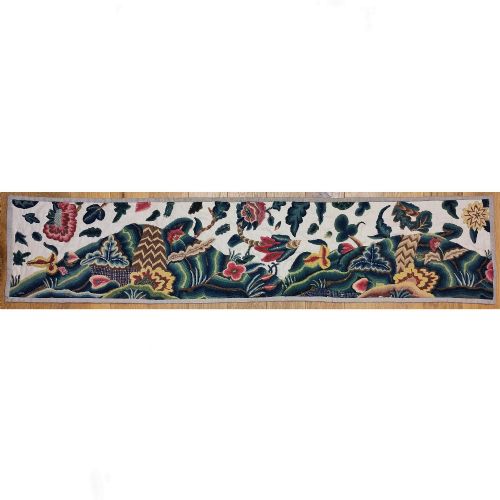
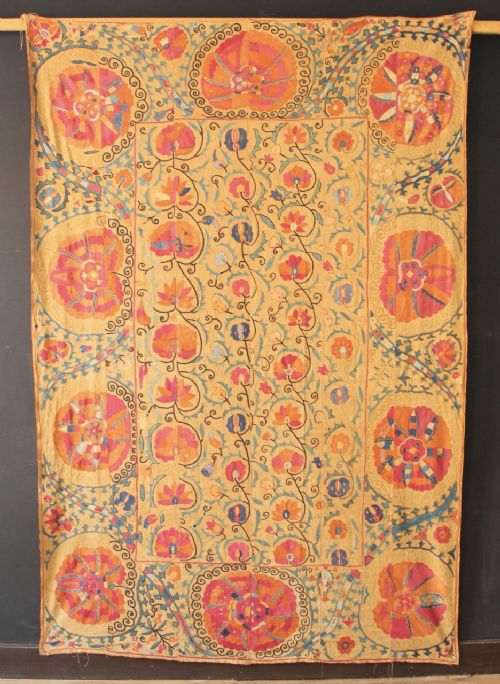


Floral Tapestry Hanging
A floral tapestry hanging brings warmth and texture to an interior, drawing the eye with woven or embroidered botanical motifs.
Floral Tapestry Hanging
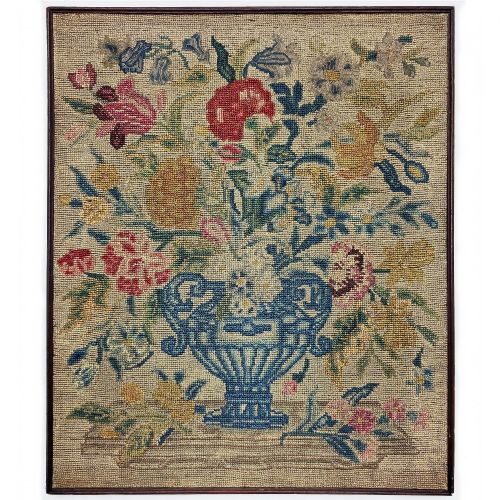
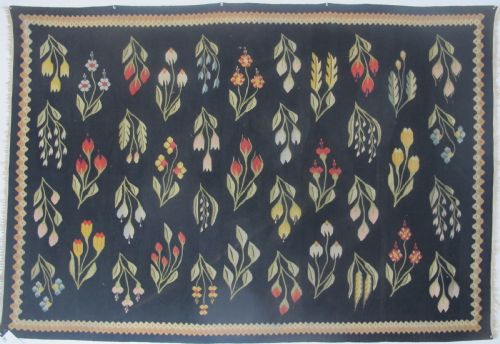
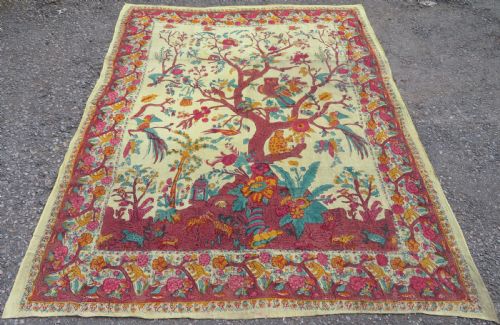
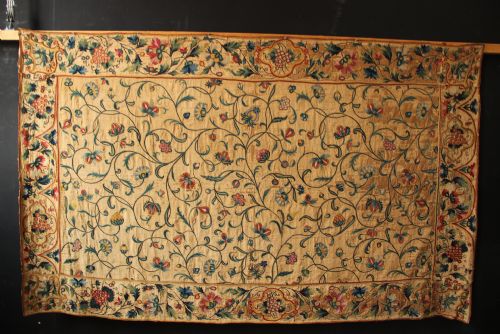
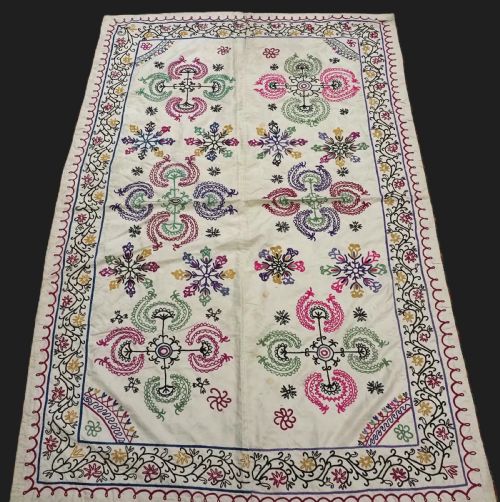
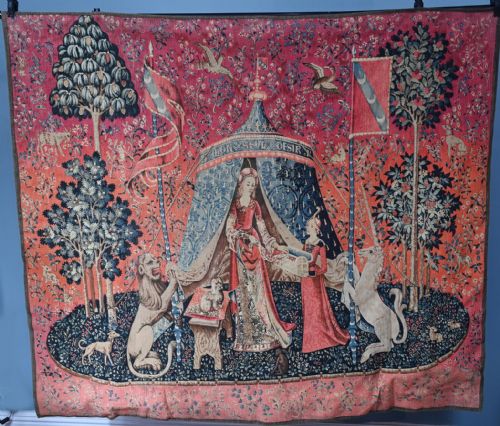
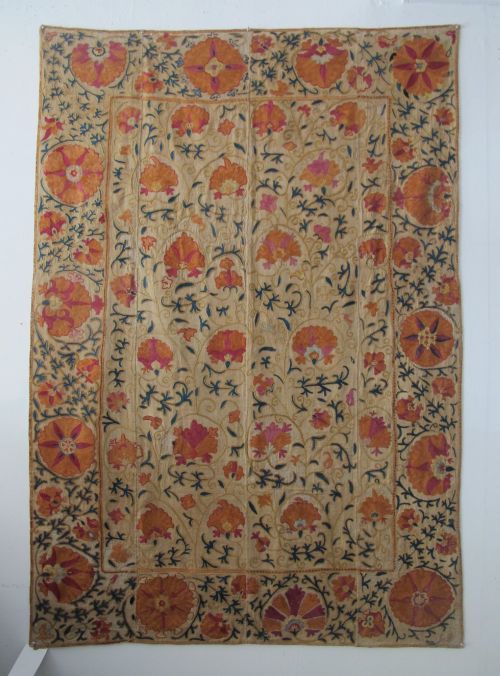
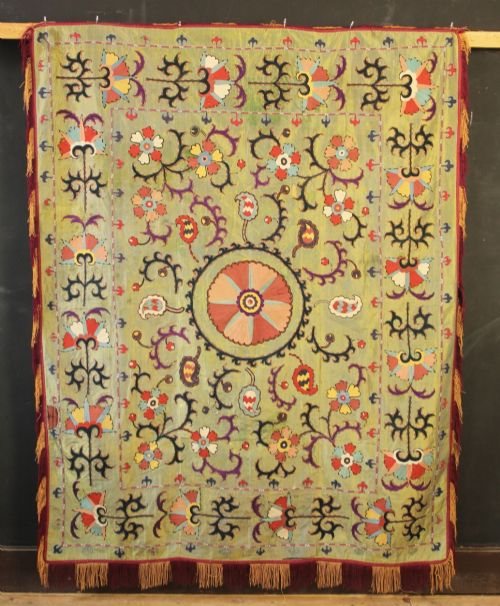
A floral tapestry hanging encompasses woven wall coverings, embroidered textiles, and crewelwork panels originating from various regions including Europe, Central Asia, and India. These textiles range from grand French Aubusson and verdure landscapes to intricate Uzbek Suzanis and English floral panels.
The selections available span multiple centuries, extending from sixteenth-century European fragments through nineteenth-century productions into twentieth-century examples. Buyers encounter diverse regional styles such as French Rococo, Central Asian folk art, and seventeenth-century English crewelwork.
Forms vary from large wall coverings and entre-fenêtre panels designed for specific architectural spaces to smaller cushion covers and bed covers utilised vertically on walls. Each piece serves primarily as a decorative textile intended for interior display.
How they were made
Construction methods rely heavily on textile arts, combining hand embroidery with weaving techniques on various foundations. Silk, cotton, wool, and linen serve as the primary grounds for stitches and woven structures.
Natural dyes impart colour to the threads, creating enduring palettes across Central Asian suzanis and European tapestries. Artisans frequently employed silk embroidery threads on cotton or linen grounds, alongside heavy wool yarns for crewelwork and verdure tapestries.
Floral Tapestry Hanging Retail Price Guide 2026
Typical asking prices for floral tapestry hanging among the pieces listed under this phrase on Sellingantiques today, from the lower quarter to the upper quarter. They describe what is for sale here now, not the wider market.
Listings span periods from the sixteenth century to the twentieth century, incorporating silk, cotton, wool, and linen.
What varies in quality
Quality rests upon the density of the stitching or the complexity of the weave, alongside the fineness of the materials used. Fine silk threads on delicate cotton or linen foundations indicate higher execution standards.
The sophistication of the design and the clarity of the botanical or architectural motifs distinguish superior examples from simpler regional output. Well-rendered floral layouts and balanced compositions demonstrate greater artisan skill.
The Floral Tapestry Hanging Glossary
- Crewelwork
- A type of embroidery utilising wool yarn on a linen or cotton twill fabric. This technique creates textured, raised floral and scrolling designs.
- Aubusson
- A style of hand-woven tapestry originating from the French town of Aubusson. They frequently depict pastoral scenes, verdure landscapes, or architectural floral frames.
- Verdure
- A tapestry genre dominated by green foliage, trees, and landscapes, often featuring small birds or animals amongst dense leaves. These textiles were popular in European wall decoration.
- Entre-fenêtre
- A tall, narrow tapestry specifically designed to hang on the wall space between two windows. Their proportions dictate a vertical orientation of the floral or architectural design.
Floral Tapestry Hanging: Frequently Asked Questions
How do I hang a textile securely?
Heavy textiles require even weight distribution along the upper edge to prevent distortion of the fabric fibres. A professional conservator can attach a stabilizing sleeve or Velcro heading for safe wall mounting.
Smaller panels can be mounted on padded wooden stretchers or displayed behind glass within custom frames. Direct sunlight should be avoided to protect natural dyes from fading over time.
What is a nim suzani?
A nim suzani is a half-sized version of the traditional Central Asian embroidered hanging. These smaller formats were often produced more quickly or for specific domestic spaces.
Despite their reduced dimensions, they share the same vibrant silk embroidery and botanical design vocabulary as their larger counterparts.
How do I clean an antique textile?
Antique textiles require specialist conservation cleaning rather than standard domestic washing methods. Water immersion can damage aged natural dyes and weaken fragile silk or cotton foundations.
Surface dust may be gently removed using low-suction vacuum techniques through a protective mesh screen. Professional textile conservators should handle any deep cleaning or structural repairs.
Where were suzanis made?
Suzanis were historically produced across various urban and regional centres in Uzbekistan, including Bukhara, Samarkand, and Shakhrisabz. Each region developed distinct colour palettes and floral compositions.
Families created these large embroidered panels for domestic use, celebrations, and matrimonial ceremonies.