
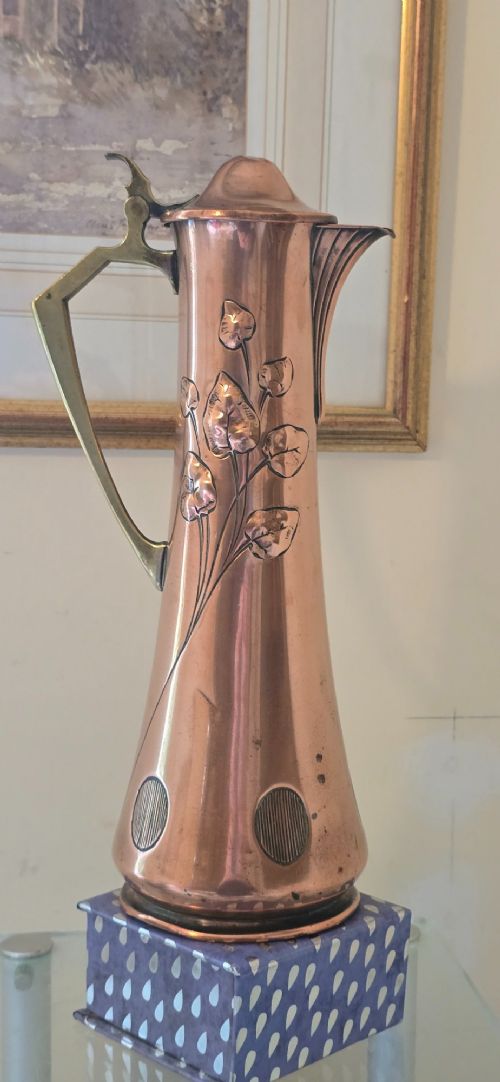
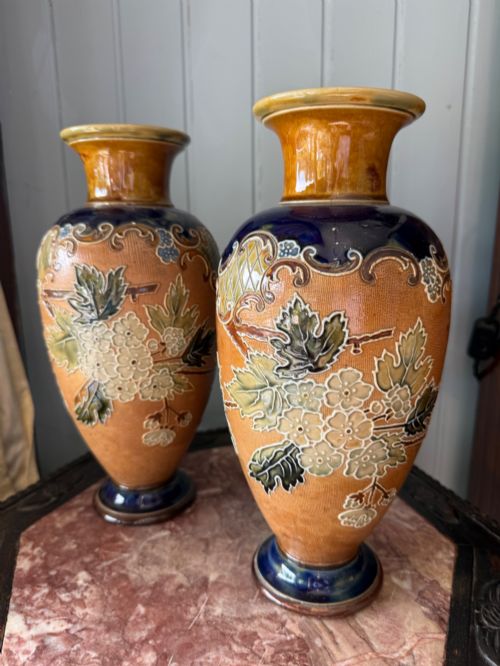
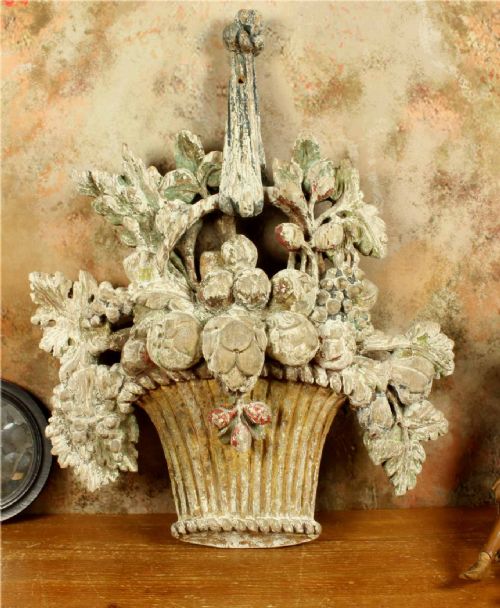
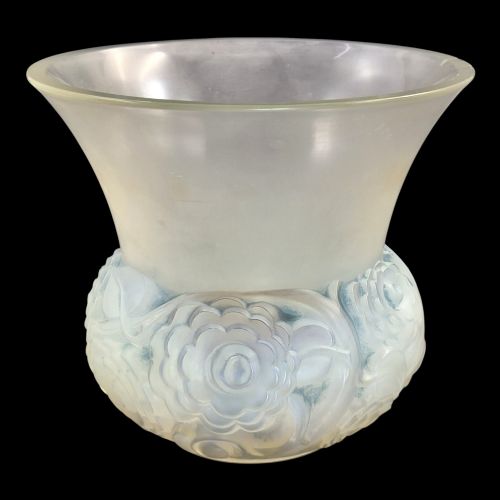


Floral Relief Art
Floral relief art brings three-dimensional botanical ornament into interior spaces through carved wood, moulded ceramics, and worked metal.
Floral Relief Art
Floral relief art encompasses objects where flowers, foliage, and natural forms emerge in raised ornament from a flat or curved ground. When you search for floral relief art, you encounter everything from architectural wood carvings and temple panels to domestic ceramics, glass vessels, and metalware.
The pieces on this page span several centuries and styles, drawing heavily on Victorian, Art Nouveau, and Art Deco aesthetics alongside earlier nineteenth-century production. You will most frequently meet vases, wall panels, pitchers, and decorative frames utilising botanical motifs.
Materials and methods
Makers utilised a range of hard and soft materials, applying specialist techniques to achieve raised botanical detail. Wood and hardwood panels show hand carving, while ceramics employ moulding, glazing, and faience or majolica techniques to build up floral forms.
Metalwork relies on copper, brass, pewter, and bronze often worked in relief designs or beaten surfaces. Glass pieces incorporate cameo, souffle, or opalescent moulding to create tactile floral textures across the vessel body.
Listings feature items spanning the 1800s, Victorian period, and early twentieth century, incorporating ceramic, wood, glass, and copper.
Assessing quality and execution
Quality rests primarily on the crispness and depth of the modelling or carving, separating master craftsmanship from routine production. In wooden panels and stonework, sharp undercut details and naturalistic proportions distinguish superior examples from simpler, flatter work.
For ceramics and glass, the success of the glaze, the clarity of the cameo layers, and the integration of the floral relief with the object's form dictate overall excellence. The best pieces display a complete harmony between the material used and the botanical subject rendered.
Royal Doulton Lambeth·René Lalique·Royal Dux Bohemia·Burmantofts Faience·Paul Nicholas for D'Argental
The Floral Relief Art Glossary
- Relief
- Sculpture or ornament where figures or designs project from a flat background. High relief stands out significantly, while low relief remains closer to the plane.
- Cameo glass
- A form of art glass produced by fusing layers of different colours together and then carving or etching away parts of the outer layer to create a raised design.
- Majolica
- A type of earthenware decorated with opaque coloured glazes over a tin-enamelled background. It often depicts natural subjects including flowers, leaves, and birds in vibrant tones.
- Faience
- Tin-glazed earthenware produced in Europe, particularly associated with ornamental pottery and architectural tiles. The term covers various glazed ceramic bodies with painted or moulded decoration.
- Opalescent glass
- Glass containing ingredients that cause it to milky-glow or change appearance under different lighting conditions. It was favoured by twentieth-century makers for tactile relief items.
Floral Relief Art: Frequently Asked Questions
What is floral relief art?
Floral relief art refers to decorative items and panels featuring raised plant and flower motifs across various materials. These pieces range from functional vessels to architectural woodwork.
Makers across the nineteenth and twentieth centuries applied these botanical designs to everyday objects and decorative wall art.
How do I date these pieces?
Dating relies on identifying stylistic markers, manufacturing techniques, and materials characteristic of specific periods like Art Nouveau or the Victorian era. Examining maker marks and signatures provides further chronological context.
Comparing the handling of the floral motifs against known period standards helps establish the likely decade of production.
Where were these pieces displayed?
Many wooden panels and ceramic plaques were integrated directly into nineteenth-century domestic and architectural interiors as wall decoration. Vases, frames, and centrepieces stood upon tables, mantels, and sideboards.
Smaller items functioned as decorative accents within formal reception rooms and domestic living spaces.
How do I care for mixed material items?
Care depends entirely on the primary material of the piece, whether wood, ceramic, glass, or metal. Gentle dusting with a dry cloth suits carved wood and dry surfaces.
Glass and glazed ceramics tolerate careful cleaning with appropriate solutions, while metalwork requires avoiding abrasive agents that damage surface patination.