

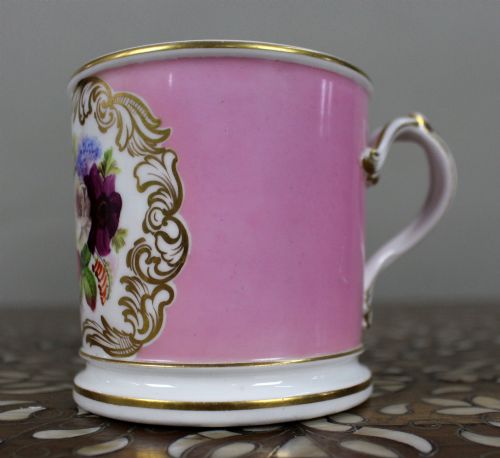
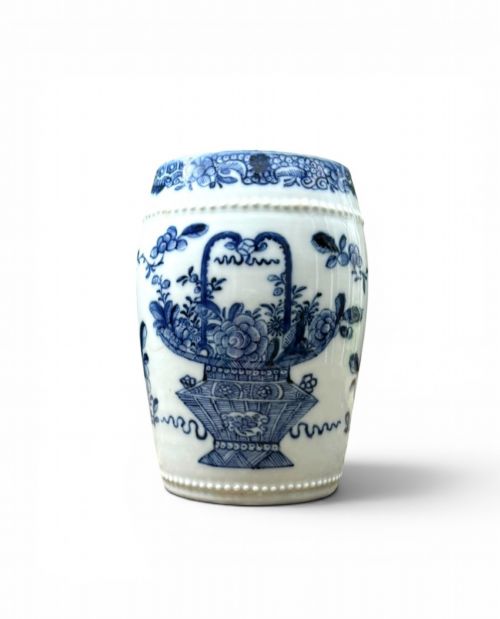
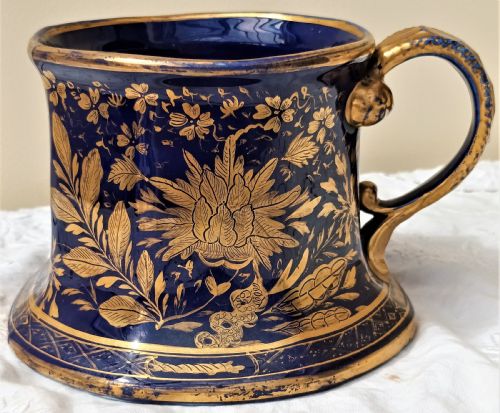
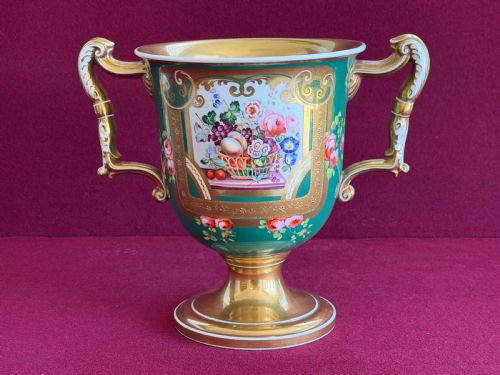


Floral Porcelain Mug
A floral porcelain mug brings hand-painted botanicals and delicate ceramic forms directly to the table.
Floral Porcelain Mug
A floral porcelain mug covers everything from eighteenth-century Chinese export vessels to nineteenth-century English cabinet pieces and loving cups. Collectors find standard coffee cups, tankards, and mini tygs alongside large commemorative loving cups.
The material spans soft and hard-paste porcelain, ironstone, and enamel decorations enhanced by gold leaf and gilt accents. Origin points stretch across English factories like Royal Worcester, Liverpool, and Lowestoft, alongside French Old Paris workshops and Chinese Qianlong period pieces.
The prevailing styles move through Georgian, Regency, Victorian, and Edwardian eras, incorporating French Rococo Revival and Qing Dynasty aesthetics. Each vessel displays distinct floral motifs painted across various grounds such as rose pompadour and green.
How they were made
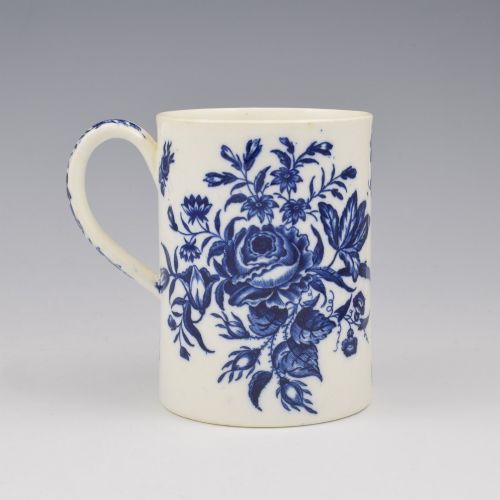
Potters shaped hard-paste and soft-paste porcelain or ironstone into mugs, tankards, and barrel forms before firing the bodies at high temperatures. Cobalt underglaze was often applied beneath the clear glaze to establish foundational blue designs.
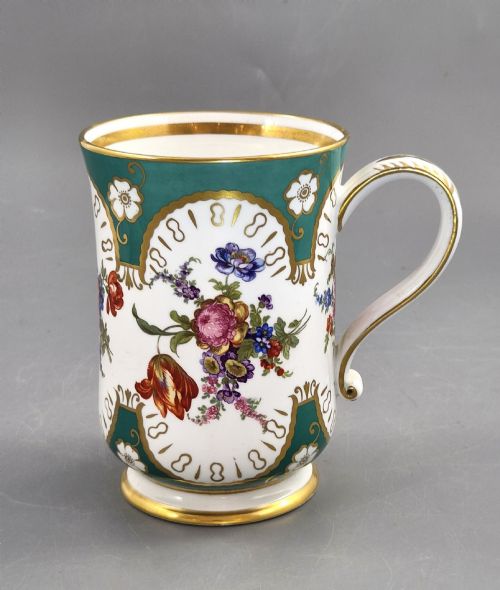
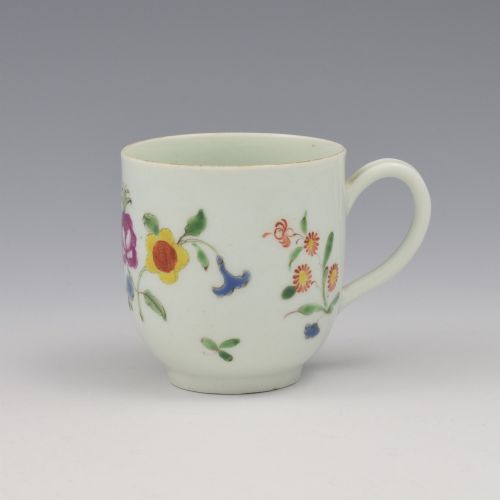
Painters then added polychrome enamel colours by hand, depicting detailed floral arrangements across the ceramic surface. Guilders completed the process by applying gold leaf and gilding to rims, handles, and borders.
Floral Porcelain Mug Retail Price Guide 2026
Typical asking prices for floral porcelain mug among the pieces listed under this phrase on Sellingantiques today, from the lower quarter to the upper quarter. They describe what is for sale here now, not the wider market.
Miniature tygs prove that even seventeenth-century drinking habits could be shrunk down for polite Victorian display cabinets.
What varies in quality
The precision of the hand-painted brushwork distinguishes standard factory production from exceptional artistic output. Finer vessels display intricate floral details and controlled enamelling that remain crisp across the curved surface.
The application of gold leaf and gilding indicates the grade of the piece, with thicker, burnished layers lasting better than thin washes. The clarity of the porcelain body and the refinement of the moulding further separate ordinary mugs from desirable cabinet cups.
Royal Worcester·Richard Chaffers·Grainger Worcester·Mason's Ironstone·H & R Daniel·Lowestoft Porcelain
The Floral Porcelain Mug Glossary
- Hard-Paste Porcelain
- A dense, durable ceramic composed of kaolin and petuntse fired at high temperatures. It resists scratching and provides a smooth white ground for enamel painting.
- Loving Cup
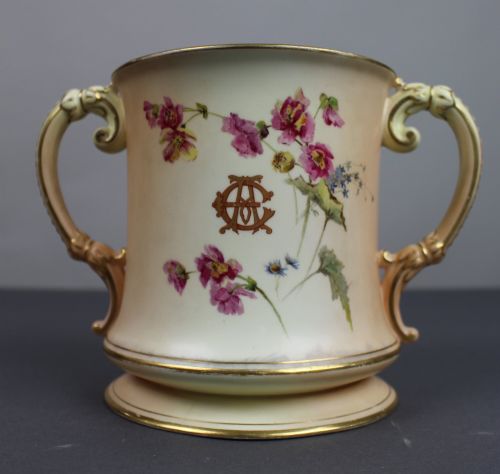
- A large drinking vessel featuring two or three handles, designed to be passed among guests. These pieces often commemorate specific places or events.
- Tyg
- A traditionally English multi-handled drinking vessel resembling a mug. Miniature versions appear in later porcelain production.
- Enamel
- Opaque glass-based colours fused to the porcelain surface through secondary firing. This technique produces vibrant floral hues that endure over centuries.
- Cobalt Underglaze
- Pigment applied to the ceramic body before glazing and firing. The resulting blue decoration sits safely beneath the glassy surface layer.
Floral Porcelain Mug: Frequently Asked Questions
What is a loving cup?
A loving cup is a large drinking vessel fitted with multiple handles so it can be passed around a group. They were traditionally used at banquets and celebrations.
Many examples feature commemorative inscriptions, local landmarks, or detailed floral painting that marked important occasions.
How can I tell the period?
Dating relies on identifying factory marks, paste compositions, and stylistic traits associated with Georgian, Victorian, or Edwardian eras. Hand-painted palettes and gilding styles shift noticeably between the eighteenth and twentieth centuries.
Comparing potting techniques and form shapes against documented workshop examples helps narrow down the decade of manufacture.
What is a tyg?
A tyg is a sturdy drinking vessel featuring three or more vertical handles arranged around the body. This historic form allowed multiple people to share the vessel securely.
Miniature porcelain versions served as decorative cabinet items rather than functional drinking vessels in later periods.