

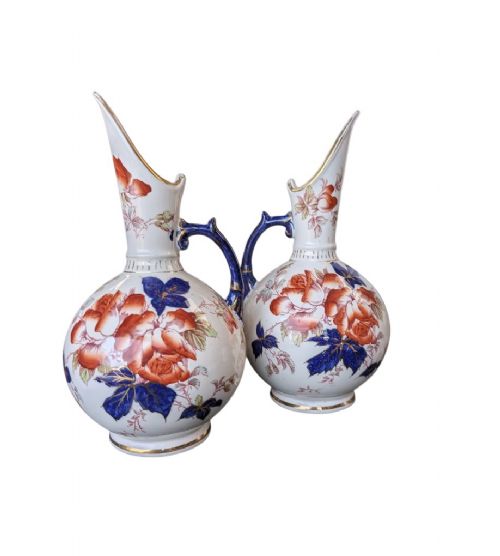


Floral Painted Ceramic Ewer
A floral painted ceramic ewer brings hand-painted botanical charm and classical shape to a mantelpiece or side table.
Floral Painted Ceramic Ewer
A floral painted ceramic ewer takes the traditional pouring vessel form and decorates the surface with hand-painted flowers, foliage, and botanical motifs. These pieces span the Victorian and Edwardian periods, stretching back through the nineteenth century into the Georgian era.
Victorian examples dominate the selection, appearing alongside Japanese Imari interpretations, Rococo Revival styling, and Edwardian neoclassical pieces. Buyers encounter everything from large cabinet display items down to smaller cream jugs and wine ewers.
How They Were Made
Potters shaped these vessels using ceramic bodies such as porcelain and hard-paste porcelain, sometimes casting bronze or metal components for handles and mounts. The surfaces then received hand-painted botanical details, floral panels, or flower encrustations.
Finishing touches involved the application of gold leaf, gilding, and enamel to accentuate handles, rims, and painted reserves. Kiln firing fixed the colours and glazes, resulting in the blush ivory and white-glazed bodies seen across the periods.
Floral Painted Ceramic Ewer Retail Price Guide 2026
Typical asking prices for floral painted ceramic ewer among the pieces listed under this phrase on Sellingantiques today, from the lower quarter to the upper quarter. They describe what is for sale here now, not the wider market.
Some ewers double as scent bottles, proving the Victorians liked their fragrance delivered with maximum theatrical pouring.
What Varies in Quality
The finesse of the hand-painting distinguishes standard production from superior output, particularly in the rendering of petals, leaves, and gilded accents. Crisp detailing on moulded handles and balanced proportions in the pedestal base indicate higher workshop standards.
Material choice and finishing complexity set the tier of the piece, with complex enamel work, heavy gilding, and blush ivory grounds marking out the finer manufactories.
Royal Worcester·John Rose Coalport·Doulton Burslem·Rockingham·Minton·Staffordshire
The Floral Painted Ceramic Ewer Glossary
- Ewer
- A large jug or pitcher with a wide spout and handle, traditionally used for pouring water but collected for its decorative shape.
- Blush Ivory
- A specific ceramic body finish developed by Victorian potteries, featuring a soft matte cream ground often decorated with pastel floral painting.
- Hard-paste Porcelain
- A durable ceramic material composed of kaolin and petuntse, fired at high temperatures to produce a vitrified, translucent body.
- Gilding
- The application of gold leaf or powdered gold onto the ceramic surface or handle to highlight decorative elements.
- Imari
- A decorative style originating in Japan, characterised by cobalt blue, iron red, and gold colour palettes applied to ceramics.
Floral Painted Ceramic Ewer: Frequently Asked Questions
What is a floral painted ceramic ewer?
A floral painted ceramic ewer is a decorative pouring vessel adorned with hand-painted botanical motifs, flowers, and gilding. These pieces serve primarily as display objects rather than functional tableware.
Originating largely from nineteenth-century potteries, they combine classical vessel shapes with detailed floral artwork across porcelain and pottery bodies.
How do I date a ceramic ewer?
Dating relies on maker marks stamped or painted on the base, alongside stylistic clues such as Victorian Rococo revival shaping or Edwardian neoclassical lines. Material finishes like blush ivory also point to specific manufacturing decades.
Examining the type of porcelain body and the style of hand-painted decoration helps narrow down the period of production.
Where should I display my ewer?
These decorative vessels suit prominent display locations such as mantelpieces, side tables, or enclosed cabinet shelves where the hand-painted details remain visible. Pairs look striking when balanced on pedestals or matching surfaces.
Keeping them away from direct sunlight preserves the vibrancy of the enamel colours and gold leaf gilding.
How do I clean an antique ewer?
Dusting gently with a soft, dry brush or cloth maintains the surface without risking the hand-painted floral decoration or fragile gilding. Avoid submerging antique ceramics in water, particularly pieces with enamel or gold leaf accents.
Professional restoration advice should be sought if deeper cleaning becomes necessary due to accumulated grime.