

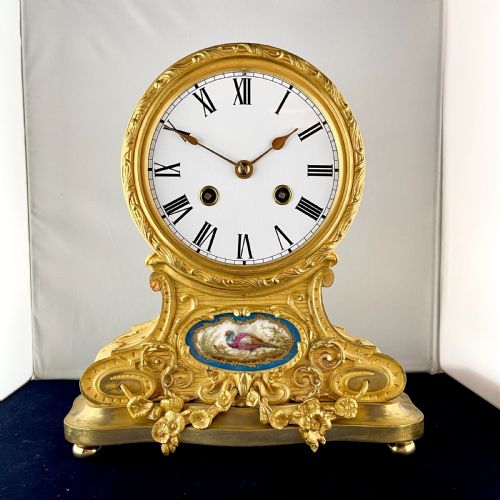


Floral Mantel Clock
A floral mantel clock brings the organic grace of hand-painted porcelain, enamel flowers, and botanical marquetry straight onto the drawing room shelf.
Floral Mantel Clock
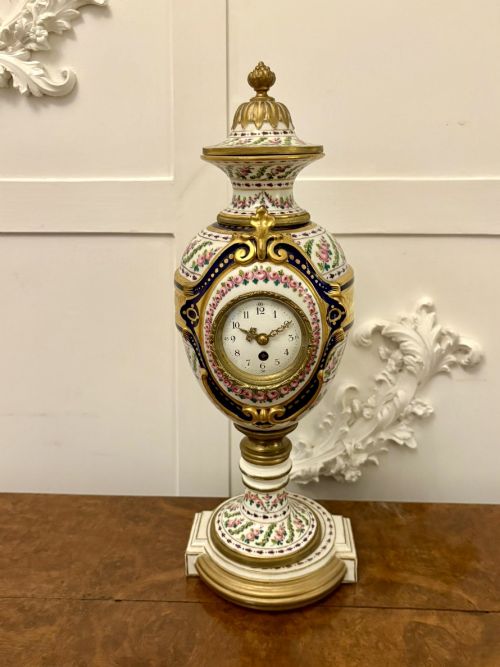
A floral mantel clock sits on the fireplace or shelf as both a timekeeper and an ornamental centrepiece. These pieces combine mechanical clockwork with botanical decoration, appearing as porcelain urns, gilt bronze drums, and inlaid wooden cases.
The versions most commonly met on this page date from the nineteenth century, including Victorian productions and Edwardian iterations. Makers deployed hand-painted porcelain panels, champleve enamel flower designs, and delicate floral marquetry to soften the heavy architectural lines of domestic timepieces.
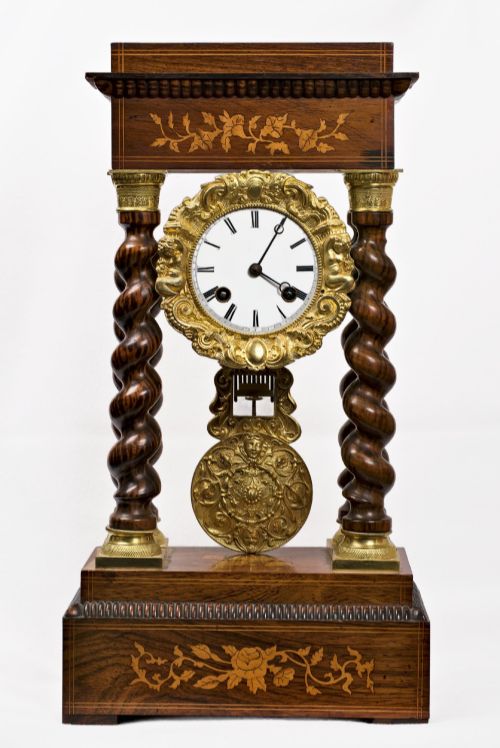
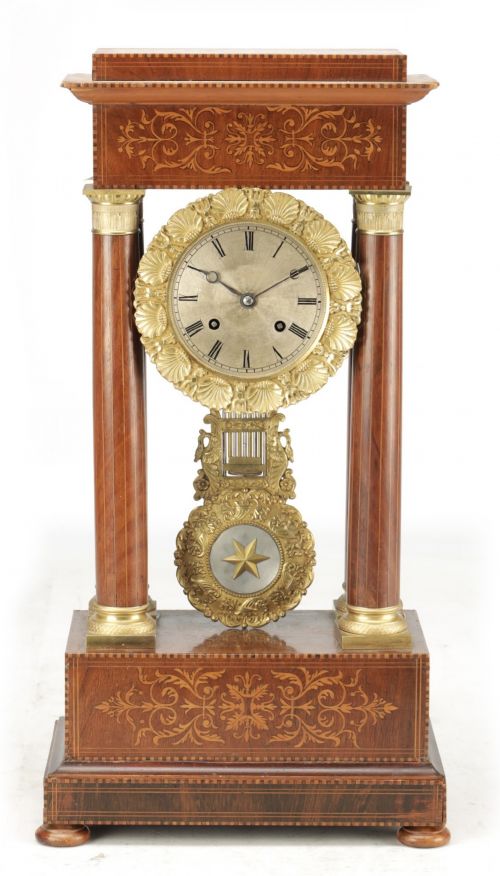
Forms range from compact boudoir clocks and carriage clocks to grander clock garniture sets flanked by matching vases or sidepieces. Buyers encounter French portico clocks, regulator styles, and bracket clocks, each incorporating floral motifs into the dial, case, or surrounding ornamentation.
Materials and Construction
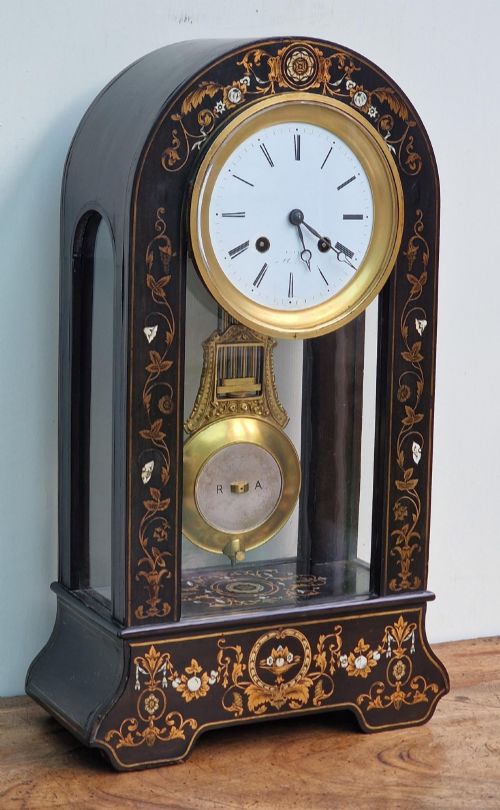
Craftsmen built the structural cases of these timepieces using hardwoods like rosewood, mahogany, satinwood, and ebonised timber. Marquetry inlay added floral patterns into the wood grain, while brass and ormolu mounts provided structural borders and decorative feet.
The visual focal point often relies on ceramic media, specifically hand-painted porcelain and enamel. Artisans fired floral scenes directly onto porcelain urns, clock faces, and dial surrounds, frequently pairing the ceramics with gilt bronze or brass casings.
Movements within these cases demanded precise metalworking, utilising brass gear trains and escapements driven by springs or weights. Carriage clocks and smaller boudoir timepieces integrated glass panels to expose the regulated mechanical action while protecting the delicate internal components.
Floral Mantel Clock Retail Price Guide 2026
Typical asking prices for floral mantel clock among the pieces listed under this phrase on Sellingantiques today, from the lower quarter to the upper quarter. They describe what is for sale here now, not the wider market.
Listings feature nineteenth-century and Edwardian pieces constructed from porcelain, brass, gilt bronze, and rosewood.
The Spectrum of Quality
The distinction between ordinary and superior pieces rests on the execution of the decorative work and the sophistication of the movement. Hand-painted porcelain panels with subtle colour blending and crisp detail elevate a piece above standard factory-stamped ceramic faces.
Cabinetwork similarly divides the range, separating simple veneered boxes from finely figured rosewood cases featuring intricate marquetry and fire-gilded ormolu mounts. The inclusion of matching garniture sets or complex striking and repeating movements further elevates the standing of an individual clock.
Henry Marc·Leroy and Fils·Savory and Fils A Paris·Marti·Malecot of Paris·Meissen
The Floral Mantel Clock Glossary
- Garniture set
- A clock accompanied by matching decorative pieces, such as urns or vases, designed to be displayed together on a mantelpiece.
- Champleve
- An enamelling technique where troughs are carved into a metal surface and filled with coloured vitreous enamel to form floral or geometric patterns.
- Ormolu
- Gilded bronze used for decorative mounts and architectural details on French and English clock cases.
- Marquetry
- Inlaid wood veneers arranged in patterns or floral pictures across the surface of a clock case.
- Carriage clock
- A small, portable spring-driven timepiece with a carrying handle and glass panels, often featuring enamel floral dials.
Floral Mantel Clock: Frequently Asked Questions
What is a clock garniture?
A clock garniture consists of a central timekeeper flanked by two matching decorative objects, such as porcelain urns or vases. These sets were designed to create a balanced display across a fireplace mantel.
The matching sidepieces often repeat the floral motifs, gilt bronze mounts, or painted porcelain panels found on the main clock case.
How do I wind a nineteenth century mantel clock?
Most nineteenth-century mechanical clocks utilise a key inserted into winding holes on the dial to tension the internal springs. Care must be taken not to over-wind the movement.
Different arbours control the timekeeping and the striking train, requiring separate attention depending on whether the movement is an eight-day or a simpler timepiece.
Are these clocks suitable for daily use?
These antique timepieces function well in modern homes provided they receive proper mechanical servicing and are placed on a stable, level surface. Many feature reliable eight-day movements that require minimal weekly adjustment.
Due to their delicate painted porcelain and exposed gilt bronze, placement away from direct heat sources and strong sunlight preserves the original decorative surfaces.
How are French clocks told apart from English ones?
French mantel clocks from this era frequently employ ornate materials like ormolu, painted porcelain urns, and champleve enamel, leaning toward Rococo Revival and architectural portico styles. The movements were often produced by volume makers and stamped with specific foundry marks.
English clocks tend to favour timber cases such as mahogany, rosewood, and inlaid satinwood, prioritising cabinet-making traditions alongside dial signatures from domestic retailers.