




Floral Leaded Glass
Floral leaded glass panels and windows combine coloured glass and metalwork to bring botanical designs into architectural settings.
Floral Leaded Glass
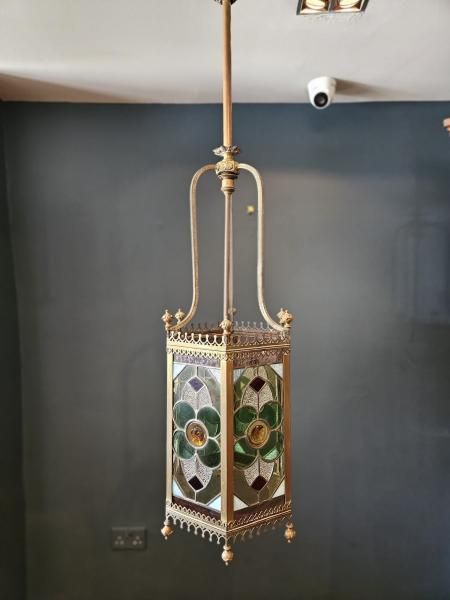
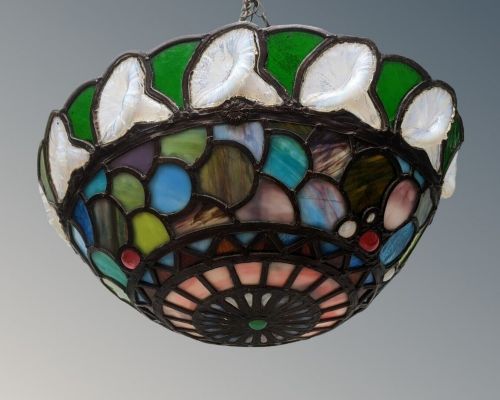
When you search for floral leaded glass, you encounter architectural salvage and decorative objects produced across the Victorian, Edwardian, and Art Nouveau periods. These pieces include windows, panels, lanterns, ceiling lighting, and decorative boxes.
The most common forms on this page are stained and leaded glass windows and panels featuring hand-painted flowers, swags, and bullseyes. You also find doors, caskets, and ceiling lights incorporating glass and lead.
Origins span the nineteenth century through the 1920s, with Victorian Gothic, Pre-Raphaelite, and Tiffany styles appearing alongside simpler domestic installations.
How they were made
Maker construction relies on glass, lead, and enamel, often set into wood or bronze frames with brass fittings. Artisans combined stained and painted glass with lead cames to hold intricate floral compositions together.
Many panels incorporate hand-painted floral details alongside amber bullseyes, fusing pigments to the glass surface through kiln firing before assembly.
Floral Leaded Glass Retail Price Guide 2026
Typical asking prices for floral leaded glass among the pieces listed under this phrase on Sellingantiques today, from the lower quarter to the upper quarter. They describe what is for sale here now, not the wider market.
Site listings feature items utilising wood, bronze, brass, and enamel alongside traditional glass and lead.
What varies in quality
Quality rests upon the intricacy of the hand-painted floral motifs and the complexity of the lead work. Superior pieces display finely rendered petals and balanced compositions across multiple sections.
The choice of materials also divides the range, distinguishing simple domestic glass panels from bronze caskets and large architectural windows featuring specialised enamel work.
S Theeman·Sir Edward Burne-Jones
The Floral Leaded Glass Glossary
- Came
- A grooved strip of lead used to hold pieces of stained glass together in a window or panel. These flexible strips form the structural grid of the design.
- Bullseye
- A small, circular centre piece of blown glass with a raised lump in the middle, frequently incorporated into leaded windows for texture.
- Stained glass
- Glass that has been coloured by the addition of metallic salts during its manufacture, or subsequently painted with enamels and fired.
- Architectural salvage
- Building elements rescued from structures slated for demolition, including the windows and doors listed here.
Floral Leaded Glass: Frequently Asked Questions
How were floral leaded glass windows originally installed in homes?
These windows served as exterior or interior glazing in residential properties, often placed in front doors, transoms, or reception rooms.
They allowed natural light to enter living spaces while providing decorative privacy through coloured and painted glass.
What periods do these pieces typically date from?
The inventory spans the nineteenth century through the 1920s, with notable representation from the Victorian and Edwardian eras.
Stylistic influences include Victorian Gothic, Art Nouveau, and Pre-Raphaelite designs.
Can ceiling lighting and decorative boxes be used safely today?
Ceiling lights and lanterns require standard electrical rewiring to meet modern safety compliance before installation in a room.
Decorative boxes and caskets function immediately as tabletop storage or display items.
How do I care for antique leaded glass panels?
Clean the glass surfaces gently with a soft cloth and mild, non-abrasive solution to protect the delicate hand-painted floral details.
Avoid applying harsh chemicals to the lead cames or painted enamel areas.