



Floral Inlay Sideboard
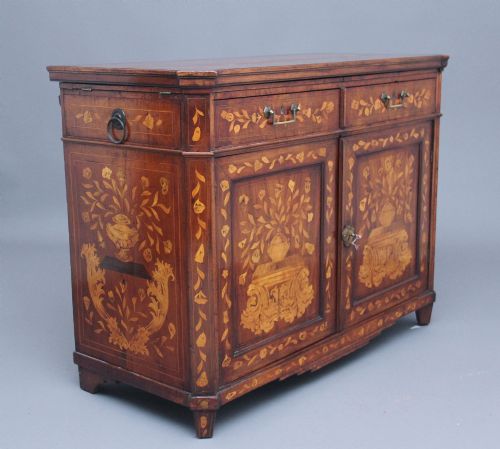
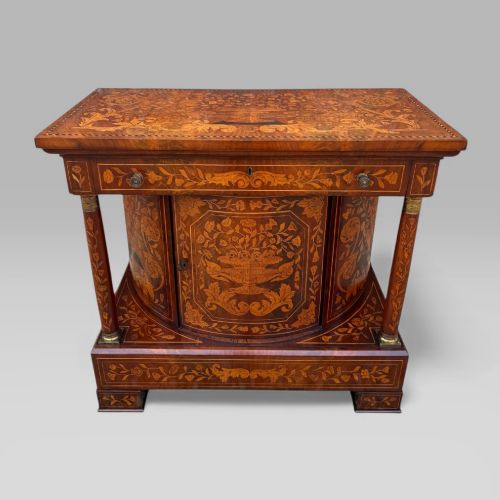
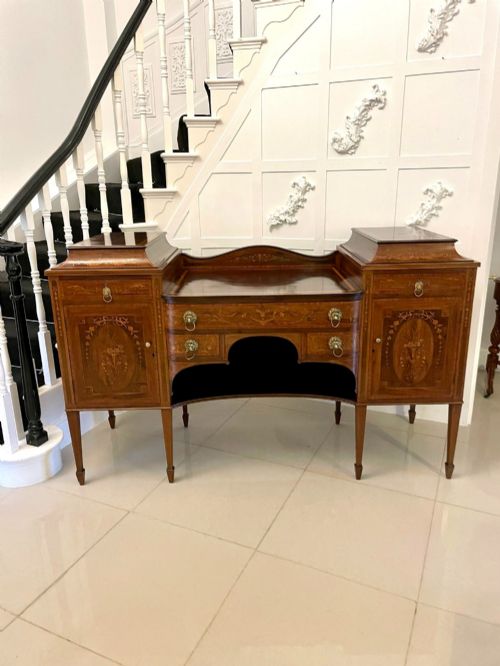
A floral inlay sideboard brings together figured timbers and meticulous marquetry to anchor a principal room.
Floral Inlay Sideboard
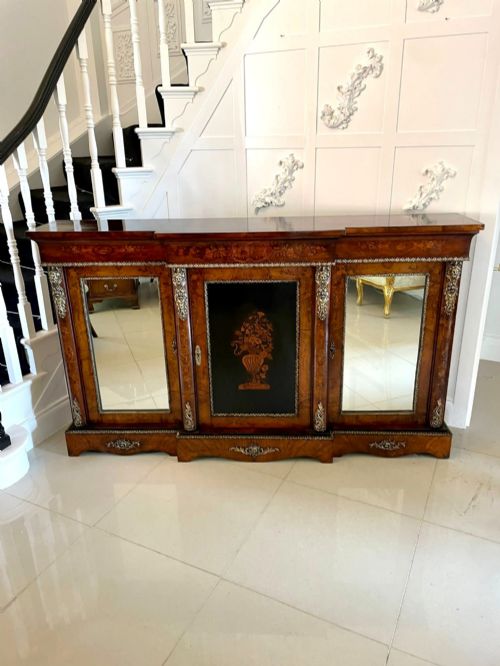
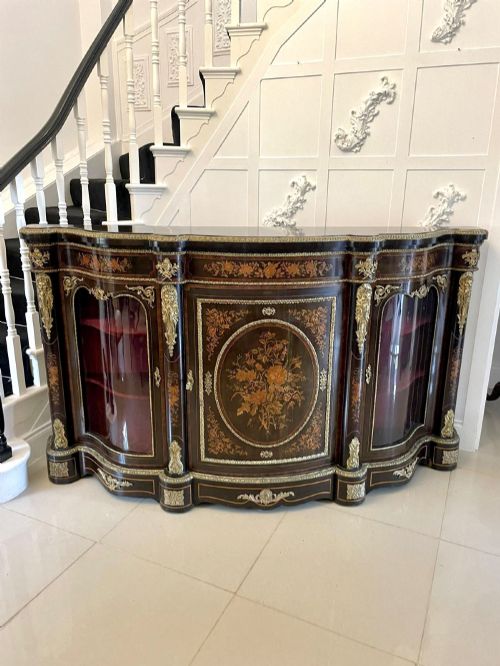
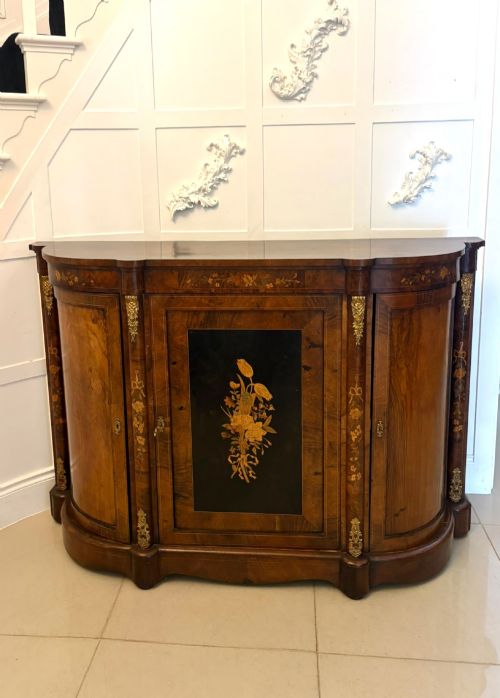
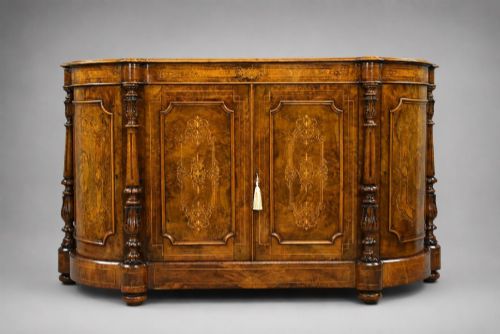
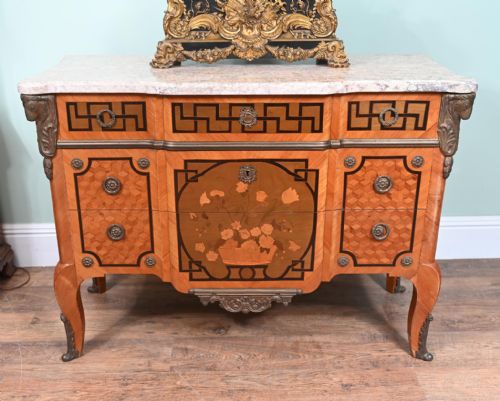
A floral inlay sideboard serves as a substantial storage piece and a focal point within a dining room or parlour. Buyers seeking a floral inlay sideboard will frequently encounter Victorian credenzas and side cabinets produced during the nineteenth century. These pieces combine floral marquetry motifs with timbers such as walnut, mahogany, and satinwood, often shaped in serpentine or breakfront outlines.
The form developed across several decades, absorbing French revival tastes alongside domestic Sheraton Revival revivals. Makers utilised glazed central doors, flanking cupboards, and marble tops to elevate the utility of the furniture into a display surface. Surviving examples demonstrate how cabinetmakers adapted floral decoration to suit the curving fronts of credenzas and the rectilinear proportions of larger sideboards.
Construction and materials
Workshops constructed carcases in pine or oak before applying veneers of burr walnut, mahogany, or kingwood to the visible surfaces. Marquetry panels were assembled by cutting dyed and natural wood veneers together, creating contrasting floral and botanical sprays. Craftsmen then fitted ormolu mounts, brass stringing, and sometimes marble tops to complete the exterior.
The integration of ebonised finishes and gilt bronze highlights provided depth to the floral designs. Cabinetmakers relied on precise hand-sawing for the marquetry elements, embedding the delicate wood pieces into ground veneers before polishing the entire surface to a high gloss.
Birds frequently join the botanical displays, peeking out from the floral marquetry and painted cupboard doors.
Distinctions in craftsmanship
Quality separates standard production items from exhibition-standard pieces through the depth of the timber figuring and the complexity of the marquetry. Superior examples display finely shaded floral petals and leaves cut from varied wood species rather than repetitive stamped or painted substitutes. The integration of mounts, such as cast ormolu, reflects the initial investment in the piece.
Proportion and structural ambition also dictate standing, with serpentine and breakfront shapes requiring greater skill from the joiner. The selection of matched burr walnut or satinwood veneers across expansive doors creates a coherent visual field that lesser furniture avoids.
Hewetsons London
The Floral Inlay Sideboard Glossary
- Marquetry
- A technique where different coloured wood veneers are assembled to form pictorial designs, particularly floral motifs. This method contrasts with inlay, which involves sinking pieces into a solid ground.
- Credenza
- A low cabinet or sideboard, typically enclosed by doors and frequently featuring curved glass side panels. Victorian examples often incorporate intricate floral marquetry across the central doors.
- Ormolu
- Gilded bronze mounts applied to the angles, feet, and friezes of cabinet furniture. These metal enrichments protect vulnerable corners and accent the timber tones.
- Serpentine
- A furniture front curved with a convex centre flanked by concave ends, creating a flowing contour. This shape demands advanced carpentry techniques during the carcase construction.
- Burr walnut
- Timber taken from walnut tree growths, yielding intricate, swirling grain patterns highly valued for veneering. It forms the ground for many floral marquetry cabinets.
Floral Inlay Sideboard: Frequently Asked Questions
What is a credenza?
A credenza is a low storage cabinet designed for display and serving, originating from the nineteenth century in various revival styles.
These pieces usually feature a combination of solid doors and glass-fronted compartments, decorated with marquetry or ormolu mounts.
How do I date a sideboard?
Dating relies on examining the secondary timbers, construction methods, and stylistic cues such as Victorian or Sheraton Revival influences.
Materials like burr walnut and specific marquetry patterns also point towards particular decades within the nineteenth century.
Where should I place one?
These sideboards suit dining rooms, living spaces, or wide hallways where their surface and storage capacity can be utilised.
They function well against plain walls that allow the figured timber and floral marquetry to stand out.
Are marble tops original?
Many nineteenth-century credenzas and side cabinets were manufactured with fitted marble slabs to provide a durable display surface.
These tops are typically heavy and rest directly on the wooden carcase, secured by the weight of the stone and surrounding mouldings.