
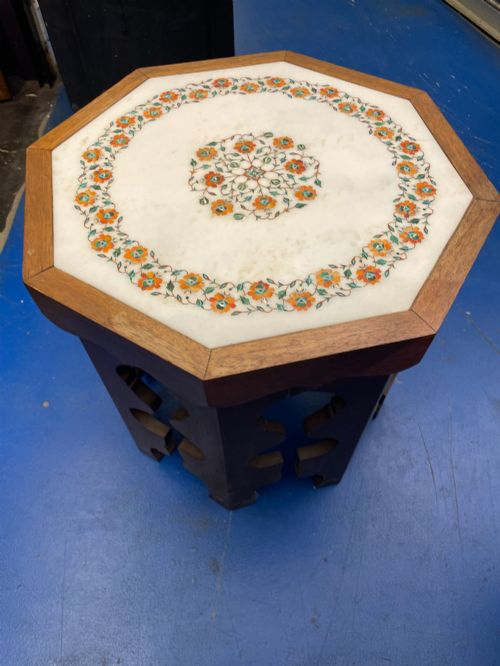
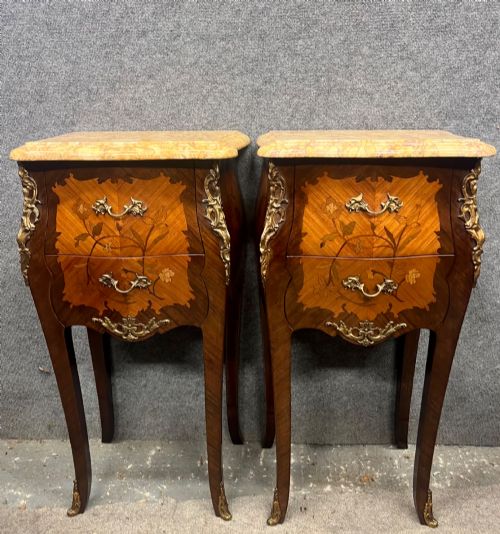
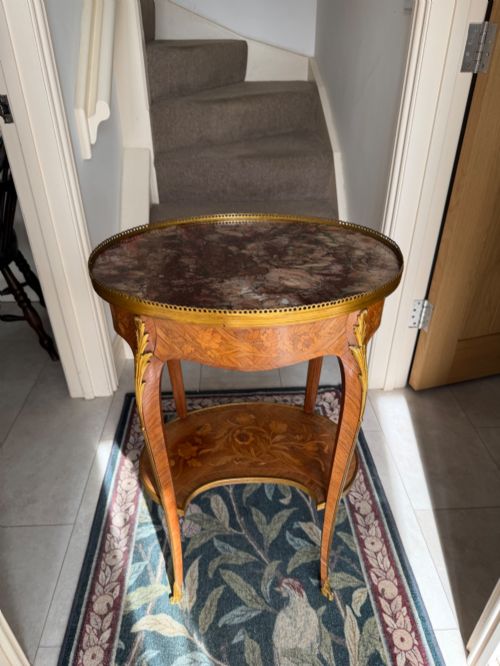
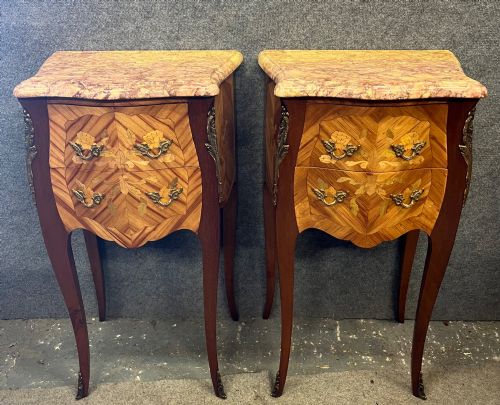
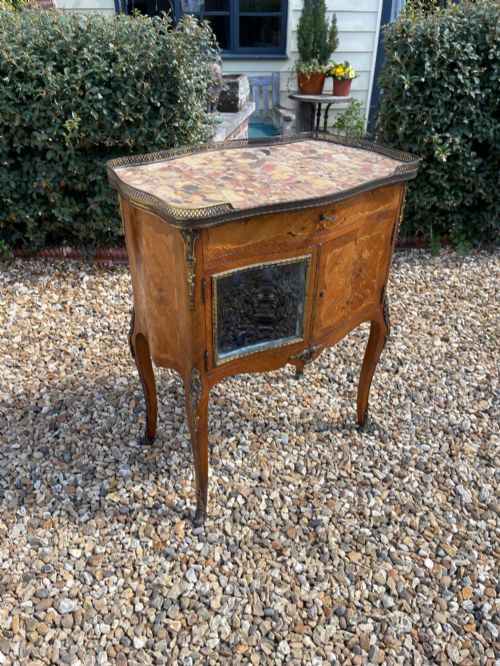


Floral Inlaid Marble Table
These floral inlaid marble table pieces combine stone tops with wood frames, offering a striking centrepiece for any room.
Floral Inlaid Marble Table
A floral inlaid marble table brings together hard stone surfaces and detailed woodwork across various historical periods. The selection on this page draws heavily from nineteenth century Italian workshops and later Victorian iterations.
Buyers frequently encounter occasional tables, bedside chests, and larger centre tables within this category. These forms range from French Rococo Revival consoles to Anglo-Indian chess tables.
Origins stretch from European ateliers to Kashmir, each region applying distinct geometric and botanical motifs onto the stone or timber. Such diversity allows a buyer to find pieces suited to formal reception rooms or private chambers.
Materials and construction methods
Construction relies upon solid timbers such as mahogany, walnut, and kingwood, often shaped into serpentine or demi-lune forms. Brass and ormolu mounts frequently accent the woodwork.
The defining feature involves stone tops set with semi-precious stones using pietra dura techniques. Craftsmen cut individual floral segments meticulously before fitting them flush into the marble base.
The listings here feature pieces predominantly from the nineteenth century, including Victorian, French Rococo Revival, and Italian Pietra Dura examples.
Distinctions in craftsmanship and design
Quality rests upon the precision of the stone cutting and the tightness of the joinery within the floral motifs. Superior examples display seamless integration between the semi-precious stones and the surrounding marble.
The refinement of the supporting timber frame also dictates the tier of the piece. Finely turned mahogany, intricate marquetry inlay, and cast ormolu mounts elevate the status of an occasional table significantly.
The Floral Inlaid Marble Table Glossary
- Pietra dura
- An Italian technique of inlaying cut and polished coloured stones to create pictorial designs. This method produces durable floral patterns with smooth, polished surfaces.
- Marquetry
- The art of applying pieces of veneer to a structure to form decorative patterns. Craftsmen use various woods to achieve tonal depth in foliage designs.
- Ormolu
- Gilded bronze applied as mounts to furniture pieces. This material provides metallic contrast against dark woods and pale marble tops.
- Demi-lune
- A half-moon shape characteristic of console tables designed to sit flush against a wall. This profile saves floor space while offering surface display area.
- Kingwood
- A dense, heavily figured timber native to Brazil utilised in fine cabinetmaking. Its rich dark grain complements inlaid floral motifs.
Floral Inlaid Marble Table: Frequently Asked Questions
Where should I place a floral inlaid marble table?
These tables function well as focal points in entrance halls or drawing rooms where lighting highlights the stone inlay. Smaller bedside chests and occasional versions suit sitting rooms as lamp surfaces.
Keep them away from direct heat sources to protect the underlying timber frames and veneer from drying out over time.
How do I clean the marble top safely?
Use a soft, damp cloth with neutral soap to wipe the surface gently. Avoid acidic cleaners or lemon-based products that can etch the marble or damage the stone inlay.
Dry the surface immediately with a clean microfiber cloth to prevent water spots from forming on the polished stone.
What is pietra dura?
Pietra dura is an inlay technique utilising cut and fitted semi-precious stones to create detailed botanical or geometric images. Artisans shape jaspers, agates, and marbles to form permanent floral pictures.
This method requires immense patience and skill, resulting in durable decorative panels found on fine nineteenth century tables.
How can I tell the period of these tables?
Dating relies upon examining the secondary woods, the style of the brass or ormolu mounts, and the complexity of the stone work. Victorian and nineteenth century Italian pieces often exhibit heavier ebonised frames or specific regional floral motifs.
Construction marks and dovetailing methods inside drawers also offer clear indicators of the era in which the piece was assembled.