


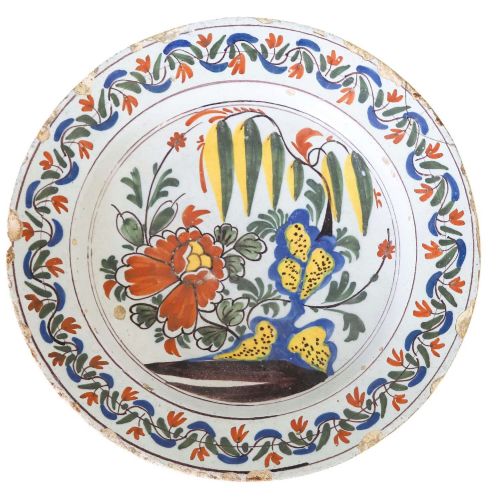


Floral Delft Charger
These floral delft charger plates are tin-glazed earthenware dishes that bring 18th-century hand-painted botanical motifs into modern rooms.
Floral Delft Charger
A floral delft charger is a broad ceramic plate meant for display rather than dining, produced in both English and Dutch workshops during the eighteenth century. You will frequently find pieces carrying cobalt blue, manganese, or polychrome pigments arranged in floral and geometric patterns.
The objects span centuries from 1700 to 1800, encompassing Dutch Delftware, Georgian contexts, and Dutch Baroque styles. Platters, charger plates, and decorative plates make up the main variations you encounter on this page.
How they were made
Potters shaped local clay into earthenware bases, firing the ceramic before coating the surface in an opaque white tin glaze. Artisans then applied cobalt pigment and other colours directly onto this absorbent glaze layer before the final firing.
The Grand Feu technique allowed colours to fuse with the tin glaze at high temperatures, creating the characteristic glossy finish seen across Dutch and English output.
Floral Delft Charger Retail Price Guide 2026
Typical asking prices for floral delft charger among the pieces listed under this phrase on Sellingantiques today, from the lower quarter to the upper quarter. They describe what is for sale here now, not the wider market.
Listings feature earthenware chargers spanning the 18th century, utilising tin-glaze, cobalt pigment, and clay across Dutch and English styles.
What varies in quality
The precision and fluidity of the hand-painted floral decoration dictate the visual success of each charger, separating standard production from skilled artisan work. Cobalt depth and the smooth application of the tin glaze across large earthenware surfaces also mark out finer examples.
Larger charger formats require superior control during the firing process to prevent warping, meaning surviving wide plates often represent more ambitious technical achievement.
De Witte Ster
The Floral Delft Charger Glossary
- Charger
- A large decorative plate or platter traditionally displayed on walls or dresser plate racks rather than used at the table. These oversized earthenware pieces dominate collections from the eighteenth century.
- Tin Glaze
- An opaque white ceramic glaze containing tin oxide that provides a smooth canvas for hand-painted pigments. This material defines the core aesthetic of delftware.
- Cobalt Pigment
- A blue metallic oxide used under the glaze to paint botanical and geometric designs. It produces the deep blue tones characteristic of early delft plates.
- Grand Feu
- A high-temperature kiln firing technique that fuses pigments directly into the raw tin glaze. This process requires great skill from the potter.
- Polychrome
- The use of multiple colours alongside blue or manganese in ceramic decoration. These multi-coloured floral patterns appear frequently on Dutch and English plates.
Floral Delft Charger: Frequently Asked Questions
How do I hang a delft charger?
Display these large plates securely using coated wire wall hangers that grip the rim without causing friction damage to the tin-glazed earthenware.
Ensure the wall fixing supports the weight of the ceramic platter safely away from high-traffic areas.
Were these chargers used for dining?
Eighteenth-century chargers served primarily as decorative display pieces on sideboards and dresser shelves rather than functional tableware for food.
The soft tin-glaze surface remains vulnerable to cutlery marks and modern dishwashing methods.
How do I tell English from Dutch delft?
Dutch pieces often utilise brighter polychrome palettes and specific grand feu firing techniques, while English workshops developed distinct local clay bodies and glaze compositions.
Comparing the foot rim structure and the tone of the tin glaze helps distinguish between the two regional traditions.
What is manganese on delftware?
Manganese is a metallic pigment that produces rich purple, brown, or plum tones in hand-painted floral motifs on eighteenth-century chargers.
Potters used it alongside cobalt blue to add warmth and contrast to botanical designs.