





Flatweave Tribal Cushion
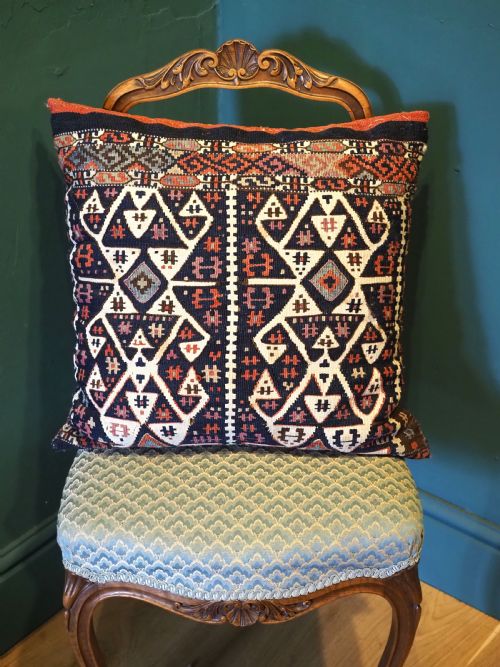
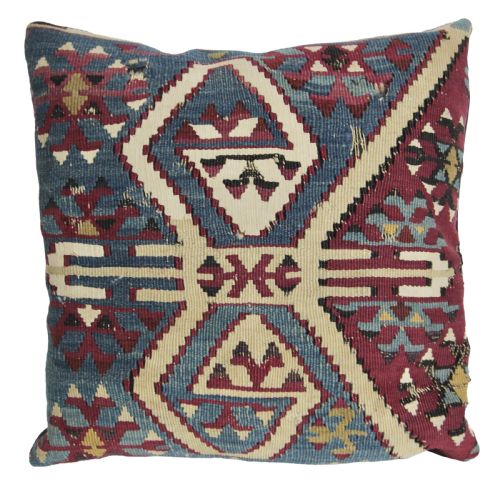
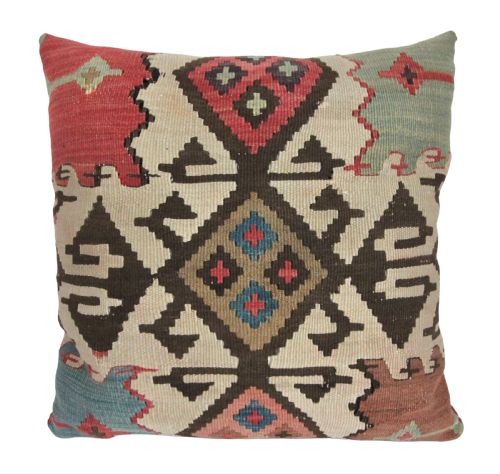
These flatweave tribal cushion pieces are historic nomadic bag faces and saddlebags repurposed for modern interiors.
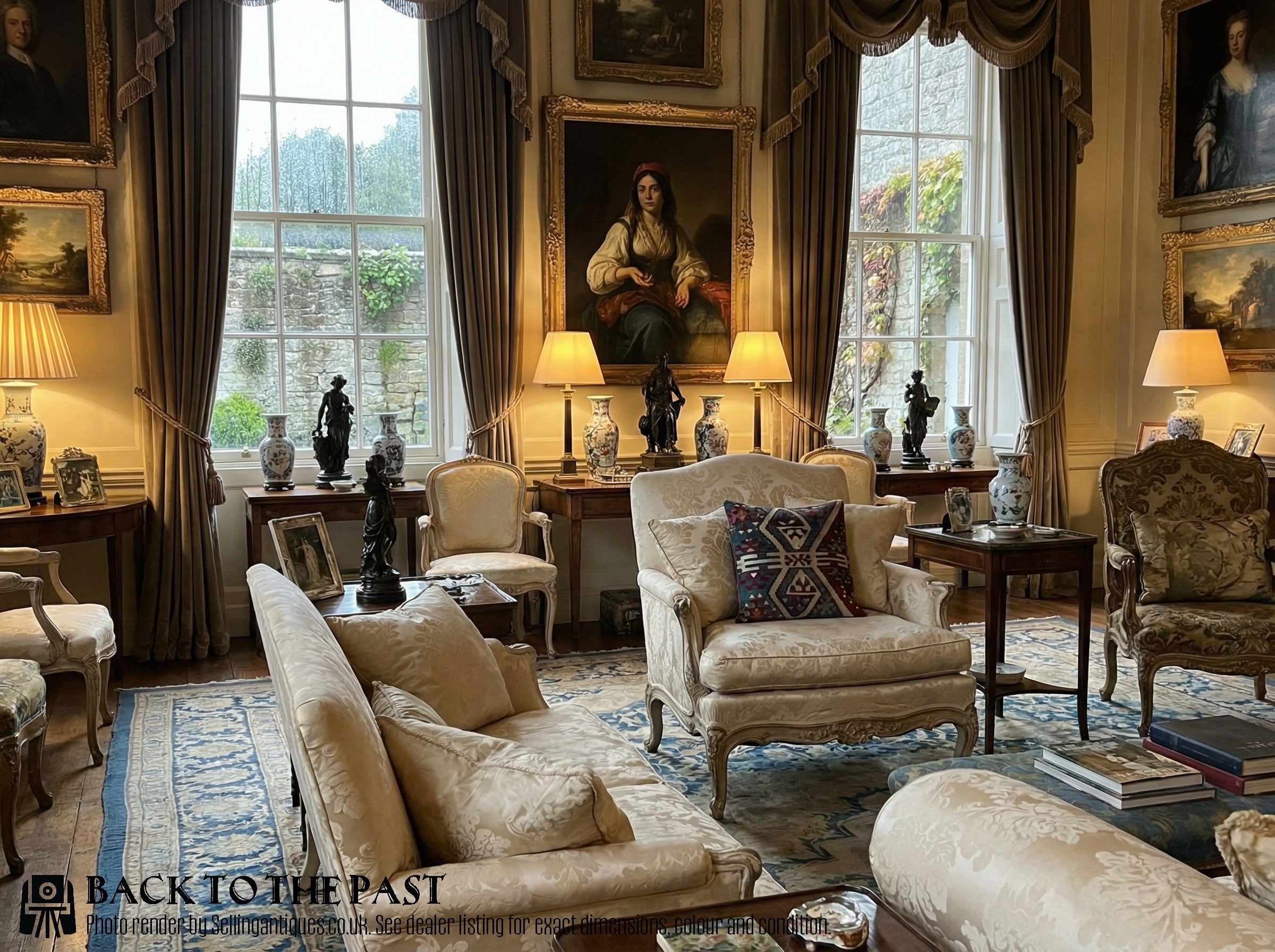
Flatweave Tribal Cushion
A flatweave tribal cushion brings authentic textile heritage into a room, typically formed from repurposed nomadic utility pieces. When searching for a flatweave tribal cushion, buyers encounter nineteenth and early twentieth century examples originating from Persian, Anatolian, and Central Asian weaving traditions.
Most pieces seen here originate as transformed saddlebags, storage bags, wheat sacks, and mafrash panels. Makers constructed these items for practical nomadic life, utilising durable flatweave and soumak techniques that now lend themselves well to decorative floor and sofa cushions.
The selection ranges from simple banded village flatweaves to intricate tribal bag faces displaying birds, dragons, and geometric motifs. These textiles carry the distinct regional designs of groups such as the Shahsavan, Bakhtiari, Afshar, and Yomut Turkmen.
How They Were Made
Weavers relied principally on hand-spun wool and cotton, frequently incorporating goat hair for structural durability along edges and backs. Natural dyes and vegetable dyes provided the rich palette seen across these textiles, sourced from local plants and minerals.
The construction relies on flatweave methods such as kilim and soumak work, where weft threads create sharp geometric patterns or textured surface designs. Artisans completed many pieces with original plain weave backs, tassels, and sturdy structural stitching.
The listings span several decades between the mid-nineteenth century and the early twentieth century.
What Varies in Quality
The calibre of a flatweave tribal cushion rests upon the tightness of the weave and the clarity of the design motifs. Finer wool preparation and skilful handling of natural and vegetable dyes produce greater depth and longevity in the textile.
Context and completeness elevate certain pieces, particularly those retaining original backs, tassels, and identifiable regional iconography such as animal or dragon forms. The skill of the nomad weaver dictates the precision of the banded weft work and the balance of the overall composition.
The Flatweave Tribal Cushion Glossary
- Kilim
- A flatweave textile produced without a pile by tightly interweaving warp and weft strands. This technique creates a lightweight, durable fabric suited to storage bags and cushions.
- Soumak
- A brocade-like flatweave technique where working threads wrap over and under the warp strands, adding texture and strength. It often appears on Shahsavan bag faces with intricate geometric patterns.
- Mafrash
- A large rectangular storage container or bedding bag made by nomadic groups. Panels from these items are frequently converted into cushions.
- Torba
- A small horizontal storage bag traditionally used in nomadic tents for household items. They feature distinct banded designs and flatweave structures.
- Tacheh
- A traditional wheat sack or grain bag woven by Luri and Bakhtiari tribes in Western Persia. These sturdy utilitarian objects translate well into decorative textiles.
Flatweave Tribal Cushion: Frequently Asked Questions
What is a flatweave tribal cushion?
A flatweave tribal cushion is a decorative home accessory made from historic nomadic textiles such as saddlebags, grain sacks, and storage pouches.
These repurposed items preserve genuine tribal weaving techniques and regional designs from the nineteenth and early twentieth centuries.
How were these bags used originally?
Nomadic tribes utilised these woven pieces for transporting and storing household possessions, grain, and personal belongings during seasonal migrations.
Items like saddlebags and wheat sacks were constructed for daily practical endurance before later being adapted into cushions.
How do I care for a flatweave cushion?
These antique wool and cotton textiles require gentle maintenance, such as light surface vacuuming without a rotating brush.
Professional specialist cleaning is recommended for any deeper maintenance to preserve the natural and vegetable dyes.
How are different tribal styles identified?
Distinct regional patterns, colour palettes, and weaving structures help identify the specific groups who made the textiles.
For instance, Shahsavan pieces often feature soumak work and animal motifs, while Bakhtiari examples display unique wheat sack structures from Western Persia.