

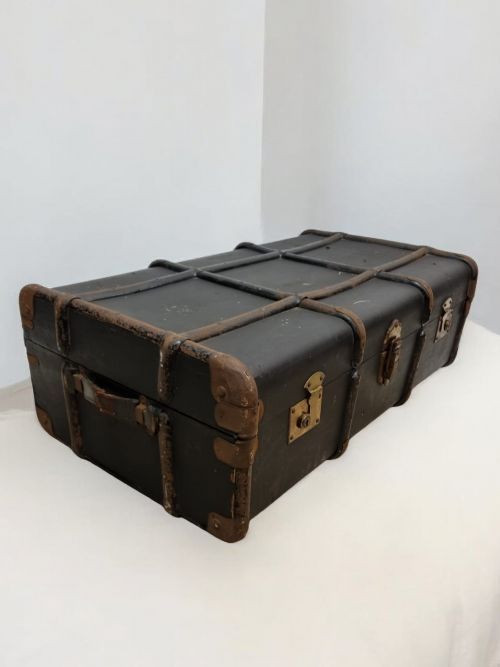


Flat Top Travel Trunk
A flat top travel trunk is a sturdy piece of luggage built for transit, offering practical storage with a distinct historical character.
Flat Top Travel Trunk
A flat top travel trunk is a functional piece of luggage designed to withstand the rigours of transit while providing substantial storage within the home. When exploring flat top travel trunk options, buyers encounter sturdy forms that date from the nineteenth century through to the early decades of the twentieth century.
The pieces appearing on this page span the Victorian, Edwardian, and Art Deco periods, alongside early twentieth century utility and industrial travel styles. Most examples take the form of travelling trunks, coffers, and chests, which reflect the changing demands of long distance journeys and domestic storage.
Originating from both British makers and notable Parisian luggage houses, these trunks range from utilitarian pine storage boxes to fitted luxury travel luggage. Buyers searching for a flat top travel trunk will find that these items double as functional furniture pieces in modern interiors.
How they were made
Construction relies heavily on robust timbers such as pine, combined with structural reinforcements made from iron, brass, and metal to endure heavy handling during transit. Surfaces are often wrapped in canvas or leather and finished with fabric linings internally.
Makers integrated functional hardware including original metal locks, catches, and protective corner brackets to secure the lids and edges. Painted finishes and specialised fittings further distinguish these items, showcasing the practical craftsmanship of nineteenth and twentieth century workshops.
Flat Top Travel Trunk Retail Price Guide 2026
Typical asking prices for flat top travel trunk among the pieces listed under this phrase on Sellingantiques today, from the lower quarter to the upper quarter. They describe what is for sale here now, not the wider market.
Listings feature items constructed from wood, brass, canvas, metal, leather, pine, iron, and fabric across multiple nineteenth and twentieth century periods.
What varies in quality
Quality rests upon the integrity of the original hardware and the survival of the primary materials, whether the piece is constructed from simple painted pine or high grade covered timber. Intact metal fittings, working locks, and original canvas or leather surfaces elevate an example above standard utility items.
The presence of specialised internal fittings, original linings, and notable maker signatures further separates standard travel chests from exceptional luggage pieces. Trunks retaining their unpolished patination and complete structural components demonstrate superior survival through decades of use.
Louis Vuitton·Aux Etats Unis
The Flat Top Travel Trunk Glossary
- Steamer trunk
- A lower profile luggage piece designed to fit beneath a ship cabin berth or in restricted cargo spaces during transit. These trunks became popular during the expansion of ocean liner travel in the late nineteenth and early twentieth centuries.
- Travelling coffer
- A large chest or box intended for transporting bulky possessions and clothing over long distances. They often feature robust wooden construction and iron carrying handles.
- Campaign style
- Furniture and luggage designed to be easily packed, transported, and reassembled for travel. This approach influenced the practical layout and hardware of many nineteenth century trunks.
- Original hardware
- The contemporary metal locks, hinges, handles, and brackets fitted to a trunk during its manufacture. Surviving original hardware is a key indicator of an untempered piece.
- Fitted interior
- Internal compartments, trays, or specialised storage sections built into a trunk to organise clothing and personal items during travel.
Flat Top Travel Trunk: Frequently Asked Questions
What is a flat top travel trunk?
A flat top travel trunk is a rigid storage chest designed for journeys by train, ship, or carriage, featuring a level upper surface that allowed multiple pieces of luggage to be stacked together during transit.
In contemporary interiors, these trunks serve as functional coffee tables, end of bed storage chests, or decorative focal points that retain their historical utility.
How do I date a travel trunk?
Dating relies upon examining the combination of materials, construction methods, and hardware styles. Victorian and nineteenth century examples often utilise solid pine with heavy iron bracing, whereas 1920s pieces may incorporate canvas coverings, specialised locks, and early industrial fittings.
Maker labels, patent stamps, and stylistic cues associated with Art Deco or Edwardian periods also provide reliable chronological markers for these items.
Were these trunks used on ships?
Many trunks from this era were built specifically for maritime voyages, serving passengers travelling across ocean liners and steamships where luggage needed to withstand rough handling and damp environments.
Flat top variants were particularly useful because their level lids allowed porters and staff to stack them securely in cargo holds and cabins.
How do I clean a canvas trunk?
Cleaning requires a gentle approach to preserve the historical surface, typically involving a soft brush to remove dust and debris from the canvas or leather exterior without introducing excess moisture.
Harsh chemical cleaners and abrasive scrubbing should be avoided to protect original finishes, painted details, and vintage metal hardware from accidental damage.