
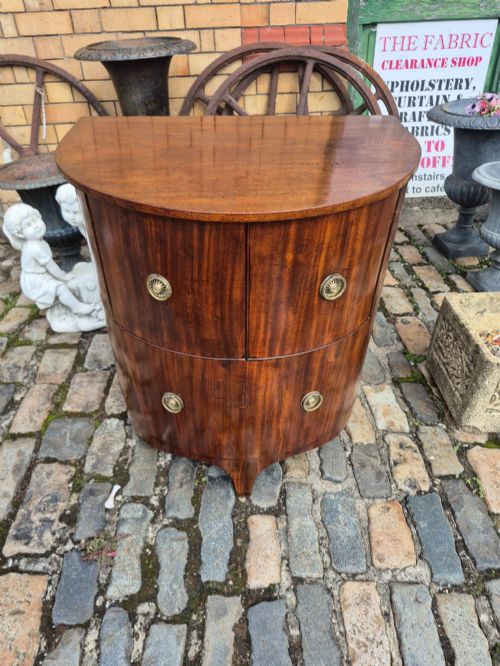
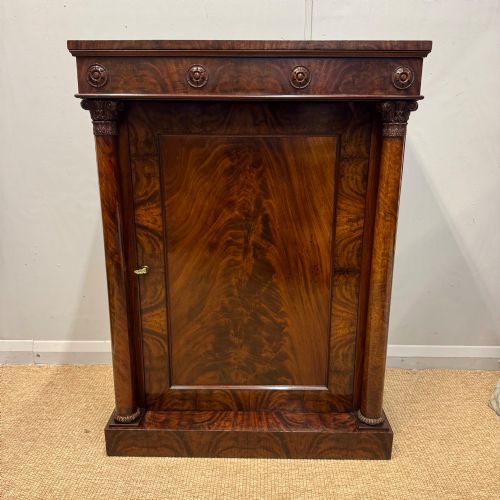
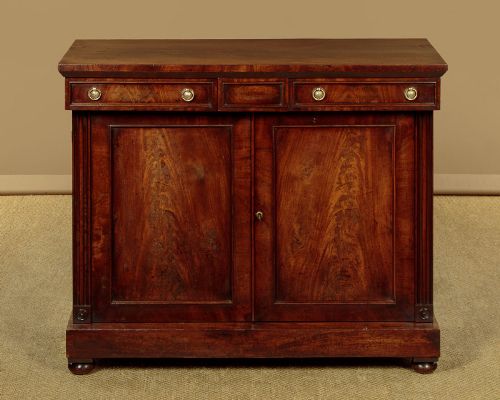
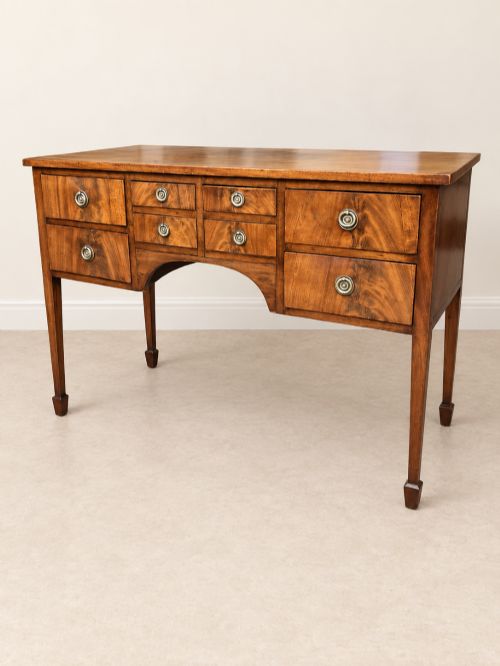
Flamed Mahogany Credenza
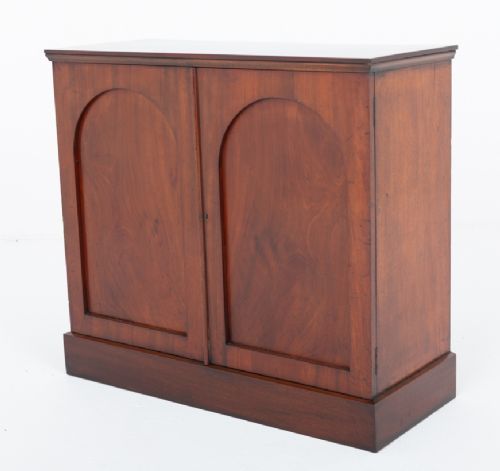
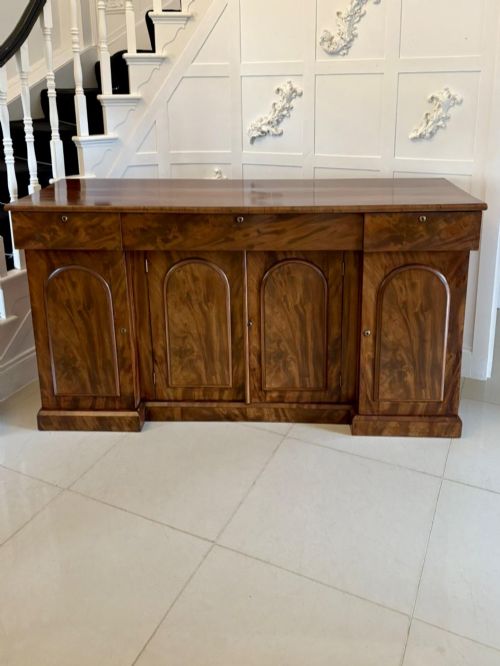
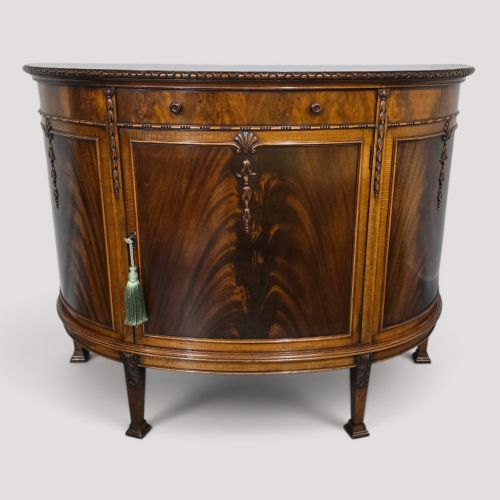
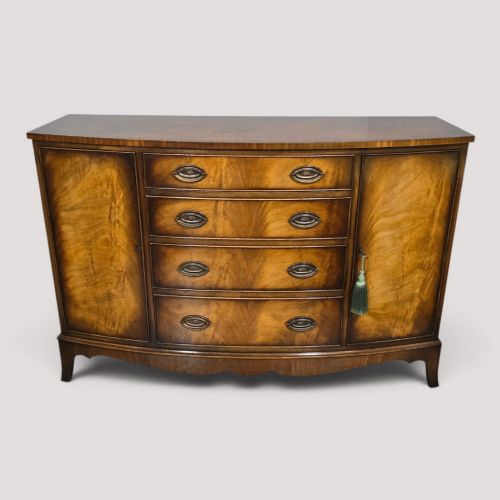
A flamed mahogany credenza brings rich figuring and substantial presence to a room, offering both display space and deep storage.
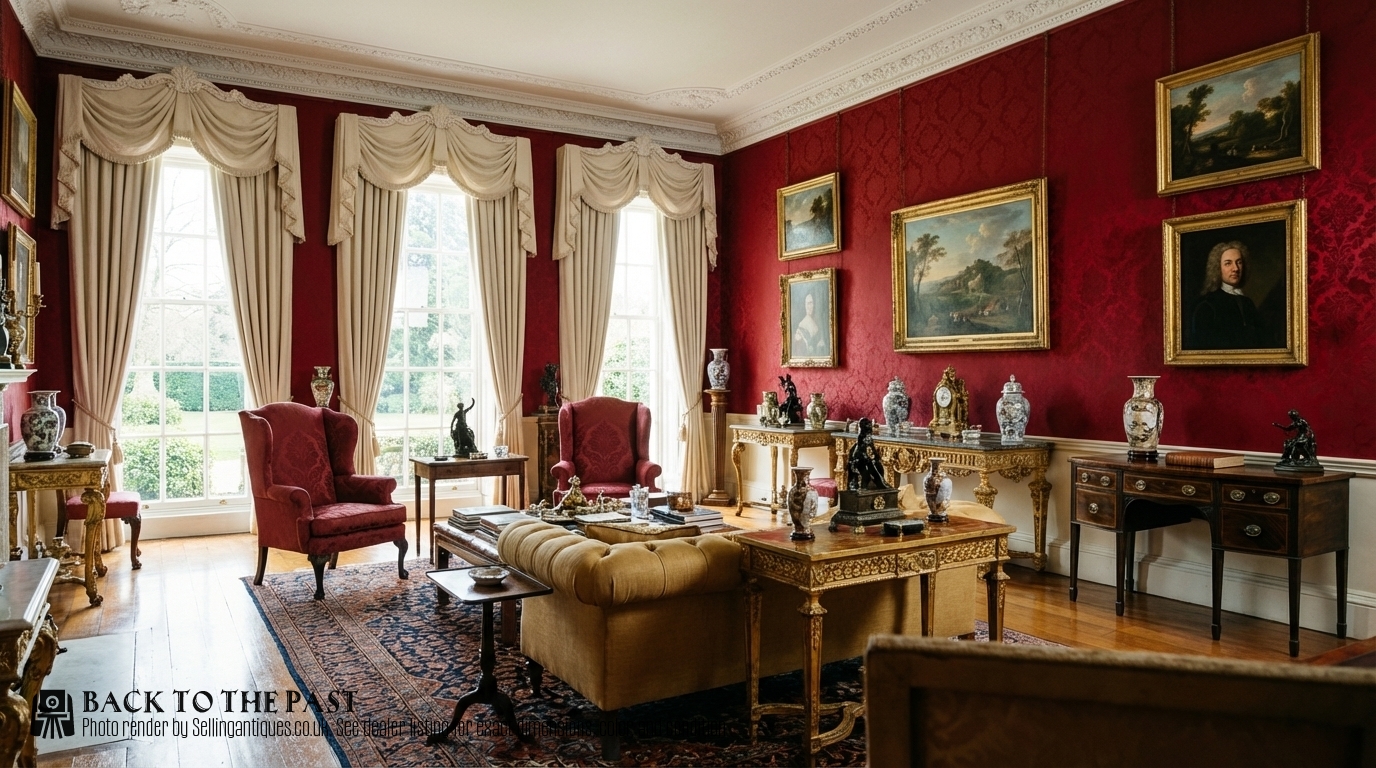
Flamed Mahogany Credenza
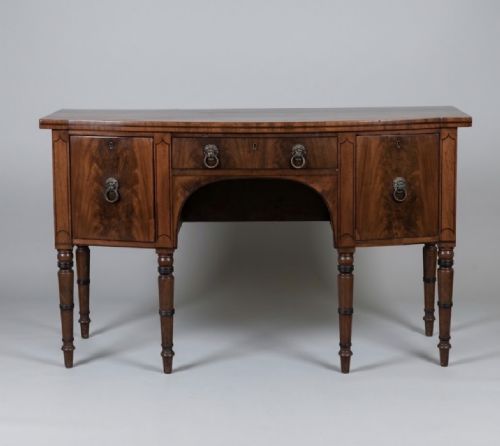
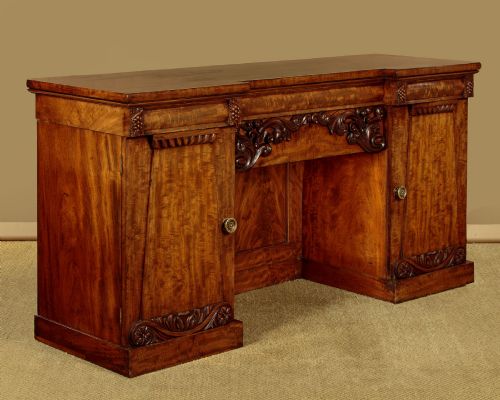
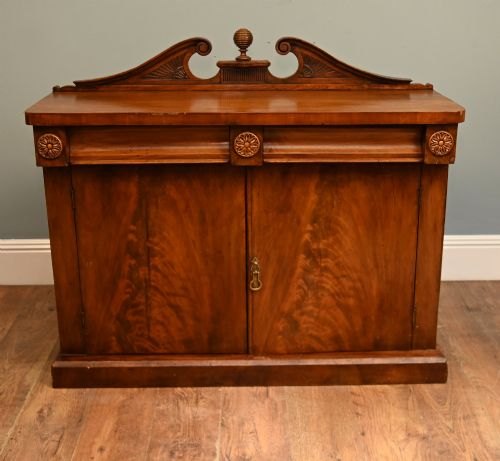
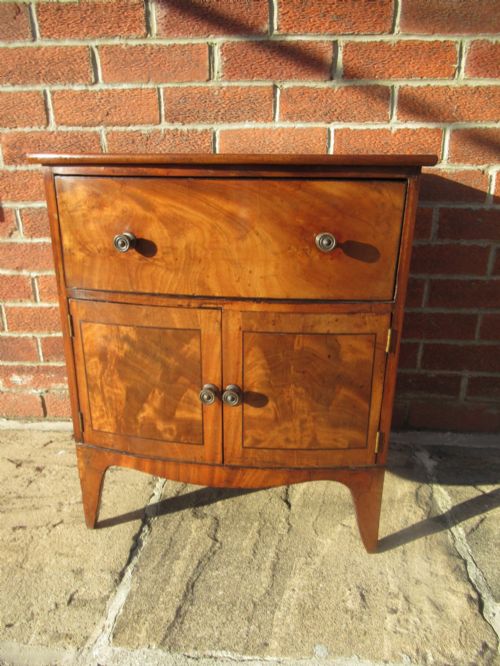
A flamed mahogany credenza sits within a broad family of large dining room and parlour storage furniture, most frequently appearing in listings as sideboards, side cabinets, and chiffoniers. These pieces emerge predominantly from nineteenth-century periods, including the Regency, William IV, and Victorian eras.
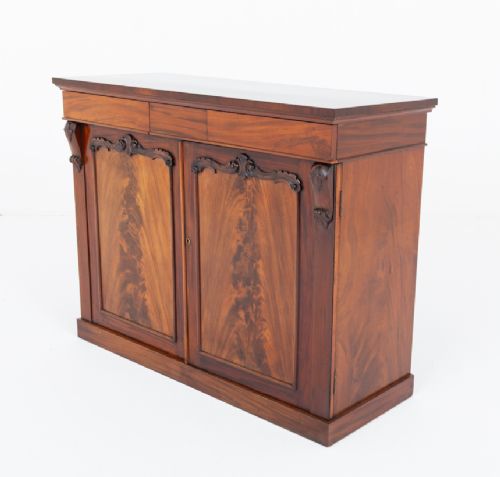
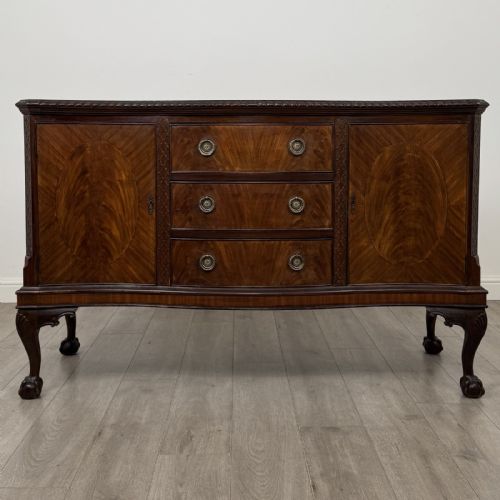
The form functions primarily to store dining porcelain, linen, and silver while presenting a formal architectural surface to the interior. Buyers encounter varieties ranging from bow-fronted sideboards to low two-tier chiffoniers and breakfront cabinets.
Origins stretch from Georgian workshops to Edwardian production, with Scottish and English cabinetmakers providing the bulk of the surviving stock. Pieces span several decades of construction, from crisp Regency lines through to heavier Victorian proportions.
Materials and construction methods
Makers built these cabinets using solid wood carcases overlaid with thin layers of timber veneer, selecting flame mahogany or figured mahogany for the primary visual surfaces. This veneer technique allowed craftsmen to arrange symmetrical grain patterns across large drawer fronts and cupboard doors.
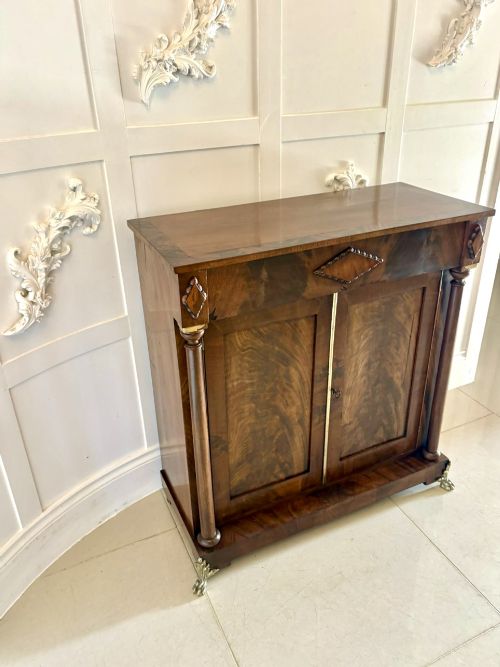
Secondary structural elements incorporate oak and general wood supports, whilst brass handles, hinges, and occasional lion paw feet provide functional and decorative hardware. Glass panels appear in select cabinet doors and bookcase upper sections, framed by moulded mahogany timber.
Several items stand firmly on carved lion paw feet, ready to pounce across the dining room.
Factors determining quality
The standard of a piece depends heavily on the intensity and symmetry of the wood grain selected for the front elevation. Highly figured veneers matched across multiple doors command greater attention than plain timber surfaces.
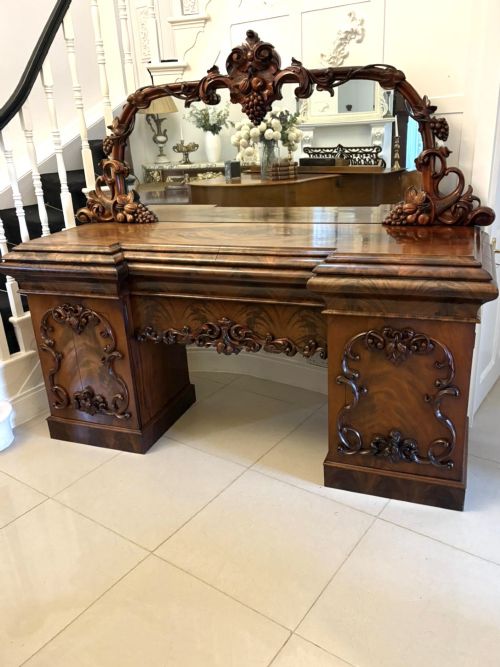
Construction rigour shows in the precision of the drawer dovetails, the stability of the carcase joints, and the retention of original brass hardware. Carved details, such as mirror backs or paw feet, demonstrate the level of craftsmanship invested by the workshop.
Whytock And Reid·Gillows·Henry Dasson
The Flamed Mahogany Credenza Glossary
- Flame mahogany
- A veneer cut from the fork of the mahogany tree where the branch meets the trunk. This method yields a distinctive, rippled flame pattern prized for optical depth.
- Credenza
- A low dining room cabinet or sideboard used for serving food and storing tableware. The term aligns with various side cabinets and sideboards in historic records.
- Chiffonier
- A compact sideboard featuring enclosed shelving beneath, sometimes surmounted by a tier or a mirror back. These pieces suit smaller reception rooms.
- Breakfront
- A piece of furniture where the central section projects forward from the flanking cupboards or drawers. This architectural layout creates shadow lines across the front.
- Bow front
- A convex curved front elevation popular in Regency and Georgian cabinet making. It softens the rigidity of rectangular room corners.
Flamed Mahogany Credenza: Frequently Asked Questions
Where should I place a sideboard?
These large cabinets suit dining rooms, long hallways, or spacious living areas where they provide a surface for lamps and decorative objects.
Ensure adequate floor space is available for doors and drawers to open fully without obstruction from surrounding furniture.
How do I clean the wood surface?
Dust regularly with a soft, dry cloth and apply a quality beeswax periodically to nourish the mahogany veneer.
Avoid placing the cabinet in direct sunlight or near heat sources to prevent the timber from drying out or splitting.
What is the difference between a chiffonier and a sideboard?
A chiffonier is typically smaller than a sideboard and often includes a raised shelf or mirror back for display.
Sideboards are longer, heavier pieces designed primarily for substantial dining rooms to store extensive tableware collections.
How can I tell a Regency piece from a Victorian one?
Regency cabinets often display cleaner architectural lines, lighter proportions, and restrained brass inlay or mounts.
Victorian examples tend to be heavier in scale, featuring deeper carving, mirror backs, and darker, highly figured timber surfaces.