
Flame Mahogany Writing Desk
Flame mahogany writing desk forms bring together striking timber figures and practical workspaces across Georgian, Regency, and Victorian periods.
Flame Mahogany Writing Desk
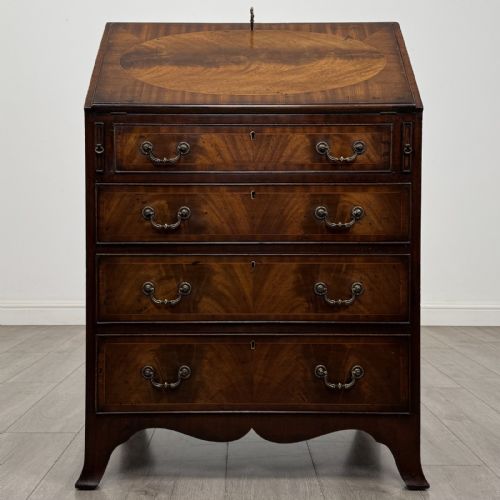
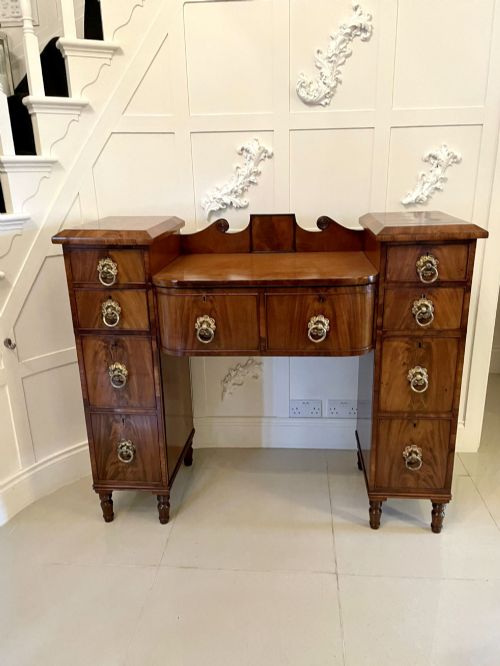
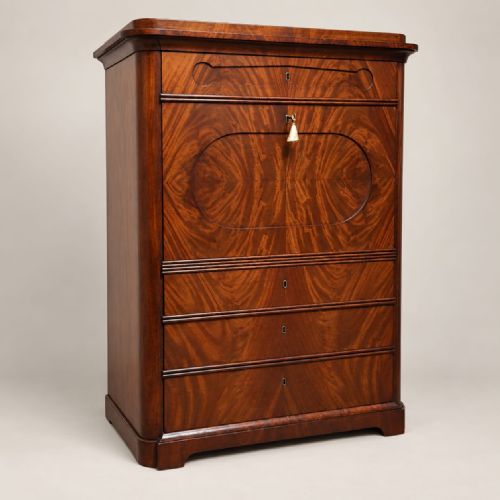
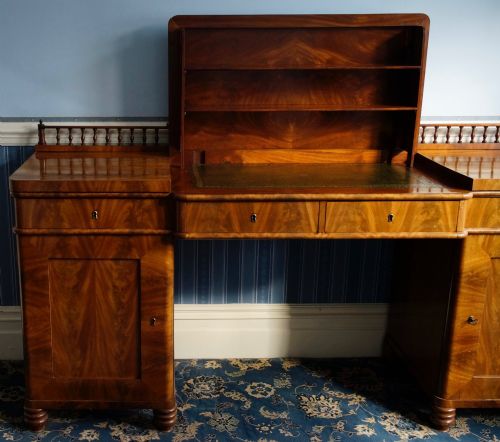
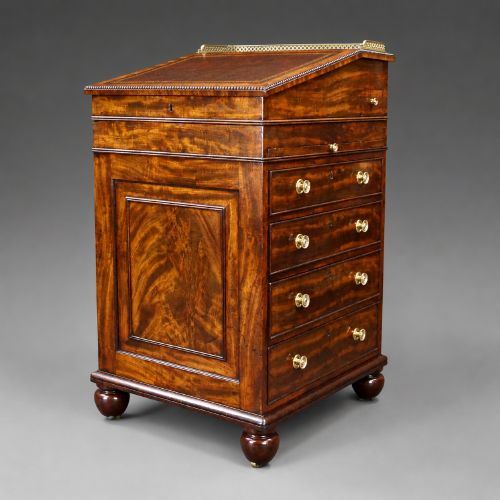
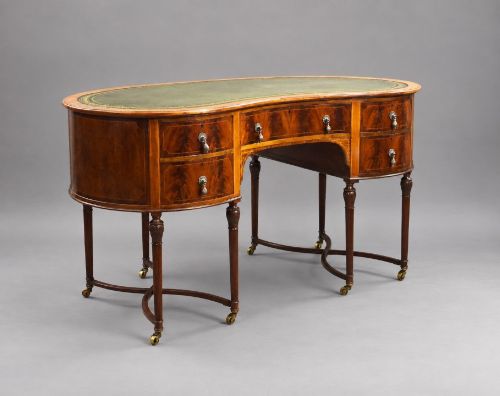
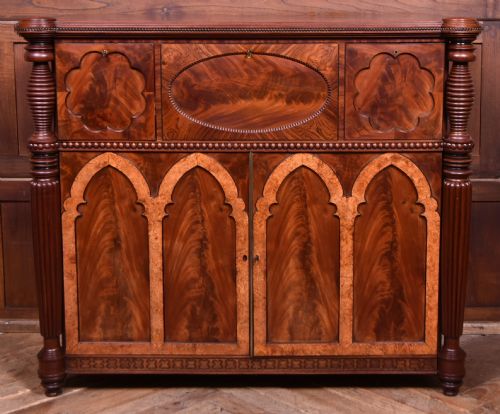
A flame mahogany writing desk is a piece of furniture designed for correspondence and paperwork, distinguished by the swirling, bonfire-like patterns of its wood grain. You will encounter these pieces across 18th century, Regency, and Victorian eras, taking forms from pedestal desks and writing tables to compact davenports and cylinder desks.
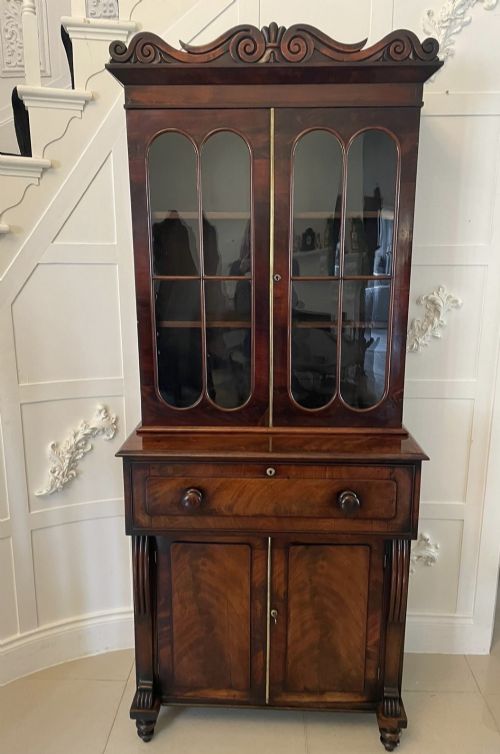
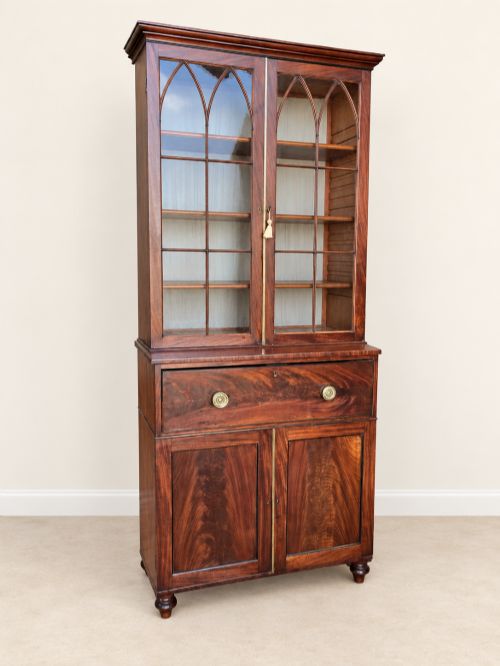
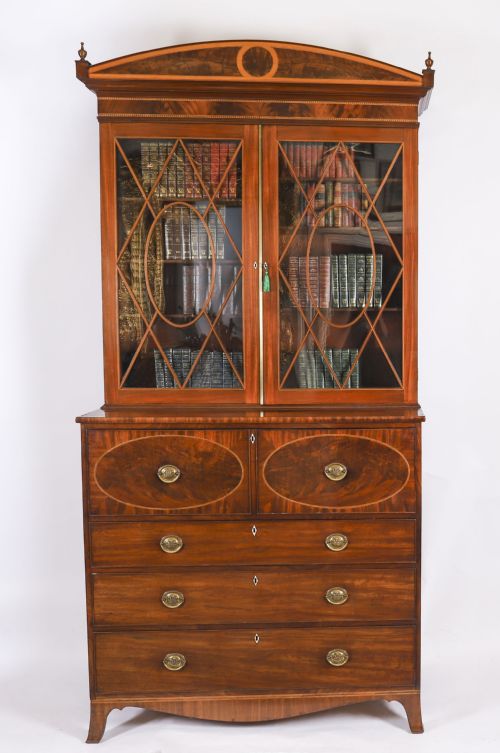
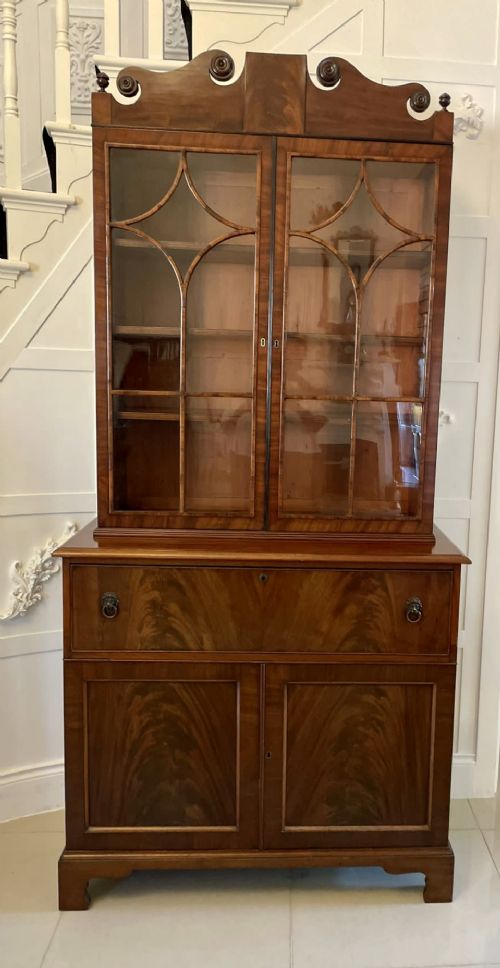
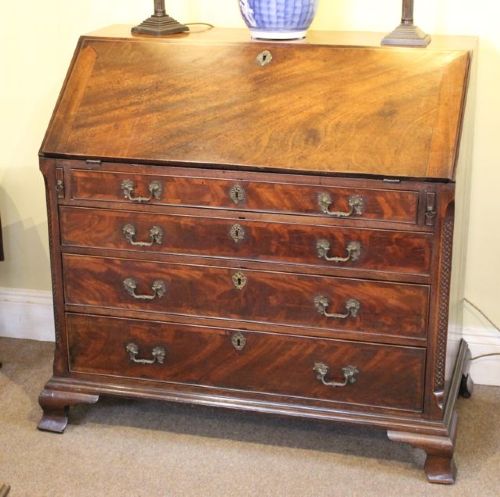
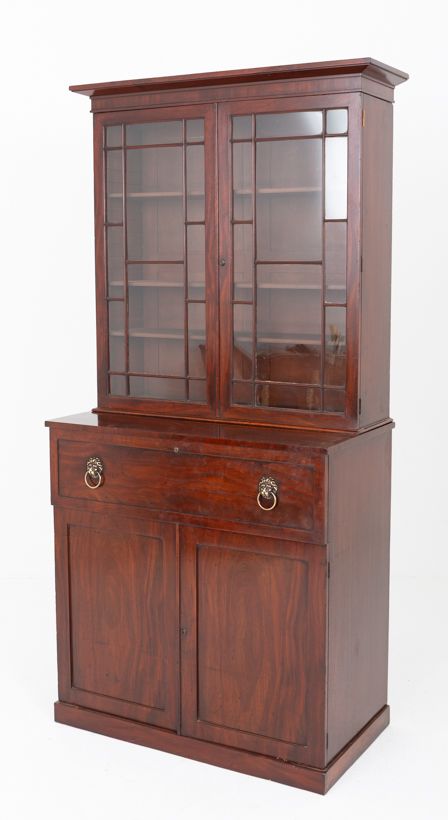
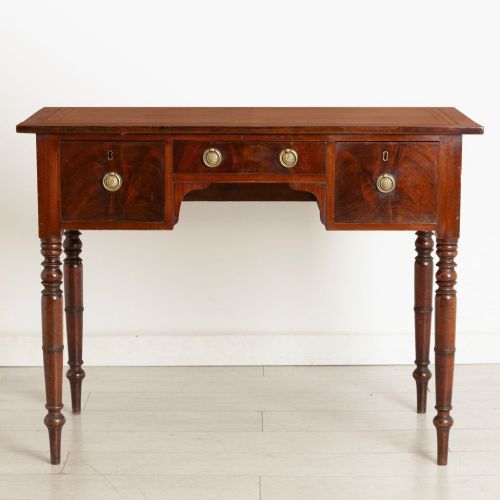
The most common versions on this page are pedestal desks and writing tables from the 19th century and Edwardian periods, often featuring fitted drawers and inset leather surfaces. Alongside these are larger secretaire bookcases and smaller bureaus which conceal writing compartments behind drop-down panels.
What varies in quality
Quality rests in the intensity and selection of the timber figure, where superior pieces display deeply rippled, highly active flame patterns across every visible drawer and panel. The precision of the veneer matching and the thickness of the timber slice dictate how well the surface ages.
Construction details also separate standard examples from finer ones, such as the presence of original brass hardware, secret drawers, and secondary woods like oak rather than pine. Gillows and other prominent workshops demonstrate finer interior joinery and more confident proportions.
Listings feature flame mahogany writing desks spanning the 18th century, Georgian, Regency, Victorian, and Edwardian periods.
Gillows
The Flame Mahogany Writing Desk Glossary
- Flame mahogany
- A veneer cut from the branch forks of the mahogany tree, creating a dramatic, flickering grain pattern resembling flames. This timber was favoured by cabinet makers for principal drawer fronts and desk surfaces.
- Secretaire
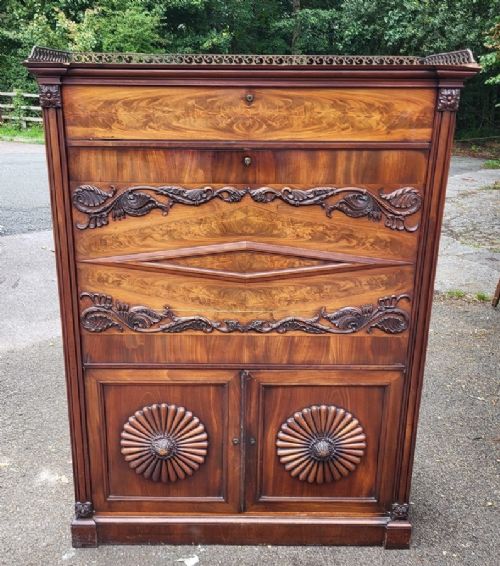
- A desk or cabinet containing a pull-out or drop-down writing drawer with small pigeonholes and compartments. It often masquerades as a standard chest of drawers or bookcase from the exterior.
- Partners desk
- A large pedestal desk designed with drawers and cupboards on both sides, allowing two people to sit opposite each other. These usually date from the Victorian period.
- Davenport
- A compact writing desk featuring a sloping lid on top of a pedestal of drawers, originating in the Regency period. The writing surface often lifts to reveal a small stationery compartment.
- Cylinder desk
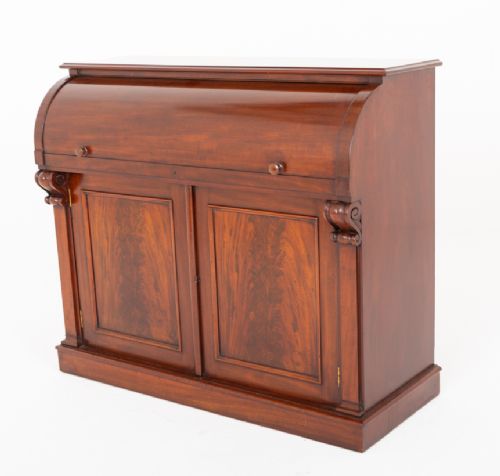
- A desk featuring a rolling curved wooden shutter that conceals the writing surface and interior pigeonholes when closed. This form requires precise joinery to operate smoothly.
- Book-matching
- A technique where adjacent leaves of veneer are opened like a page so that the grain patterns mirror each other. This creates symmetrical, decorative flame motifs across wide surfaces.
Flame Mahogany Writing Desk: Frequently Asked Questions
What is a flame mahogany writing desk?
A flame mahogany writing desk is a workspace constructed using wood veneer taken from specific cuts of mahogany that produce fiery, swirling grain patterns. These pieces span Georgian, Regency, and Victorian periods in various table and pedestal formats.
They were built to serve as functional writing furniture while showcasing the decorative qualities of exotic timber in domestic studies and libraries.
How do I care for the leather top?
The leather writing surface benefits from occasional cleaning with a damp cloth and maintenance with specialised leather balms to prevent drying and cracking. Avoid using harsh chemical cleaners that can strip the gold tooling.
Keeping the desk away from direct sunlight and excessive heat sources preserves both the leather insert and the polished timber surround.
How do I tell a Georgian desk from a Victorian one?
Georgian desks typically exhibit restrained classical proportions, finer stringing inlay, and lighter timber frames from the 18th and early 19th centuries. The brass hardware and internal drawer construction follow earlier cabinet-making traditions.
Victorian desks are generally heavier, often larger in scale like partners desks, and incorporate bolder mouldings or cylinder fronts alongside mahogany veneer over robust carcases.
Where were these desks used?
These desks were placed in the private studies, libraries, and principal dressing rooms of large townhouses and country estates. They served gentlemen and gentlewomen for managing correspondence, household accounts, and personal reading.
In modern interiors, they function effectively as standalone writing tables or home office desks positioned centrally within a room.