

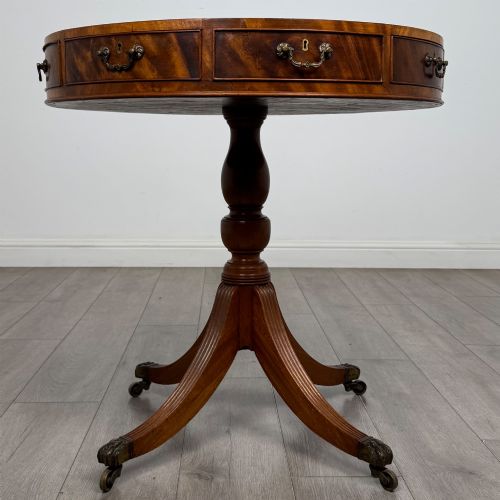
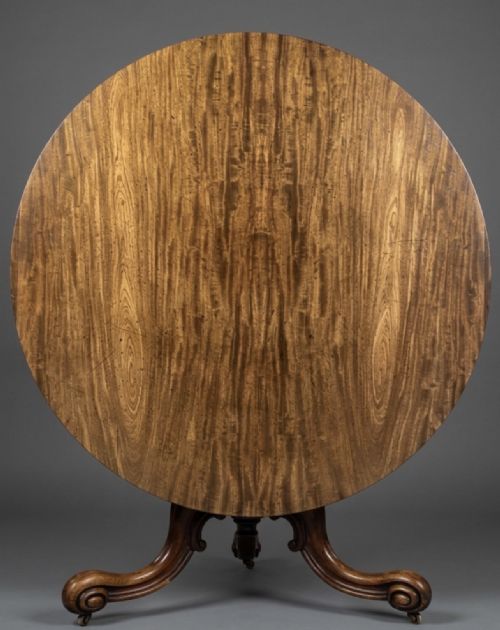


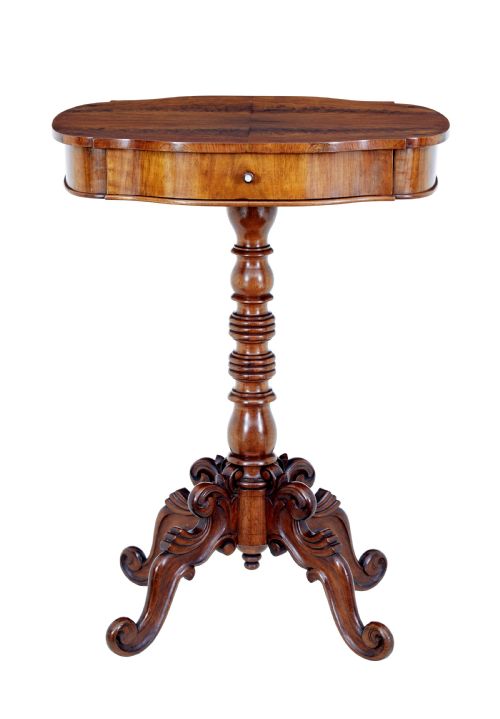


Flame Mahogany Tripod Table
A flame mahogany tripod table brings remarkable grain movement and practical support to a room, offering both beauty and versatility.
Flame Mahogany Tripod Table
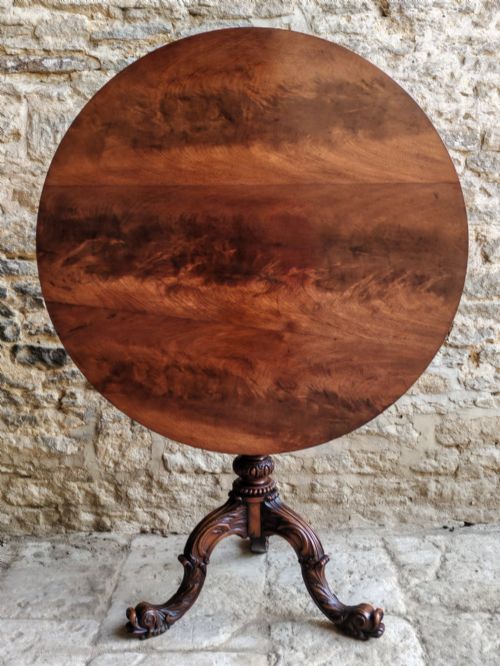
A flame mahogany tripod table combines a turned or carved central pillar supported by three feet with a distinctively figured wooden top. These pieces serve primarily as occasional, wine, lamp, or tilt-top tables across domestic interiors.
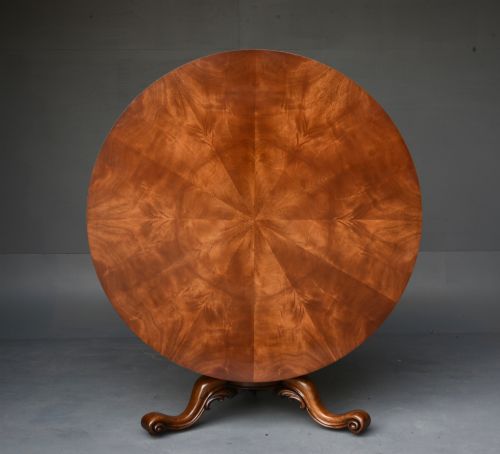
Buyers encountering this selection will find examples spanning from the Georgian and Regency periods through the Victorian era. Forms range from small wine tables and tilting lamp tables to larger centre and breakfast tables.
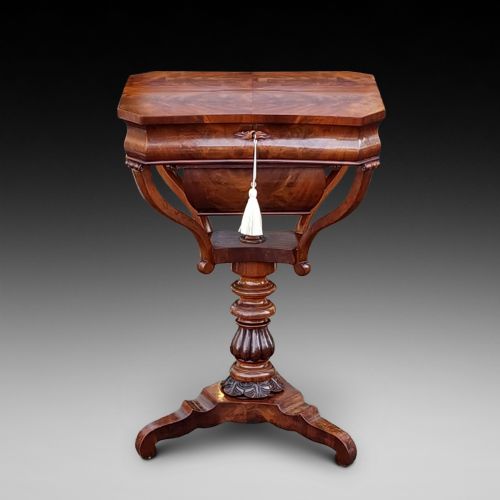
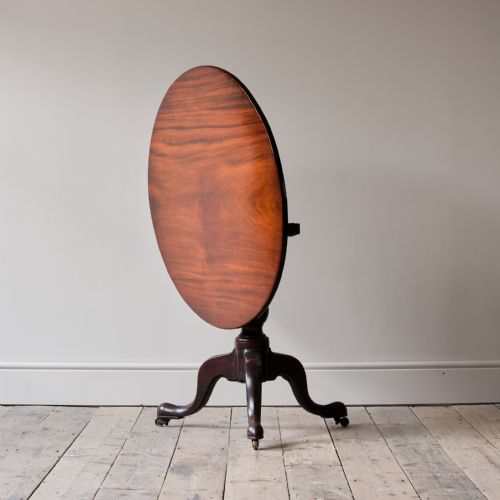
Many of these tables feature clever mechanical adaptations such as tilting tops or fitted workboxes with drawers. Their versatile sizes allow them to function easily beside seating or as central decorative accents.
Materials and construction
The defining visual element relies on flame mahogany veneer carefully applied to stable secondary timbers to create striking, rippled wood grain patterns. Solid mahogany forms the structural pillars, legs, and framing components.
Joinery techniques include sturdy tripod bases fitted securely to turned columns, often accompanied by tilting mechanisms utilising brass catches or hinges. Secondary materials like bone appear occasionally in small inlaid details or escutcheons.
Flame Mahogany Tripod Table Retail Price Guide 2026
Typical asking prices for flame mahogany tripod table among the pieces listed under this phrase on Sellingantiques today, from the lower quarter to the upper quarter. They describe what is for sale here now, not the wider market.
Listings feature periods from the 18th century through the Victorian era, utilising solid mahogany, flame mahogany veneer, brass, marble, and bone.
Assessing quality and craftsmanship
Quality in a flame mahogany tripod table rests upon the intensity and symmetry of the veneer grain selection across the top. Superior examples display vivid, highly figured flame patterns that draw the eye naturally.
Structural integrity of the tripod base and the smoothness of any tilting or pivoting mechanism distinguish finer pieces. Crisp carving on the central pillar and well-proportioned legs indicate higher workshop standards.
The Flame Mahogany Tripod Table Glossary
- Flame mahogany veneer
- A thin slice of wood cut from the fork of the mahogany tree where branches join, producing a rippled, flame-like grain pattern. This veneer is carefully laid over a stable base timber to create a decorative surface.
- Tripod base
- A support structure consisting of three legs radiating from a central pillar. This design provides steady footing on uneven historic floors.
- Tilt top
- A table top hinged to the central column so it can pivot into a vertical position. This mechanism allows the table to be stored flat against a wall when not in use.
- Wine table
- A small occasional table designed to hold glasses or bottles. These compact pieces often feature circular or octagonal tops supported by a single pillar.
- Work table
- A specialised small table fitted with drawers or fabric bags for sewing and needlework. They frequently incorporate compartments for small tools.
Flame Mahogany Tripod Table: Frequently Asked Questions
What is a flame mahogany tripod table used for?
These tables function primarily as movable stands for lamps, drinks, or decorative objects within a living space.
Their compact tripod footprint allows them to fit easily beside chairs or in corners where larger furniture cannot go.
How do you operate a tilt top table?
A release catch beneath the surface allows the top to pivot from horizontal to vertical.
This clever mechanism was originally designed to save space in smaller rooms when the table was not needed.
How can I tell the period of a table?
Stylistic details such as leg profiles, turning styles, and edge mouldings help distinguish Georgian pieces from later Victorian examples.
Construction methods and timber choices also provide strong clues regarding the decade of manufacture.
Where should I place a tripod table?
They suit quiet corners, beside reading chairs, or positioned centrally to display a lamp or small collection.
Because the three-legged base remains stable on older uneven floors, they adapt well to various rooms.