


Flame Mahogany Shelving
Flame mahogany shelving brings striking grain figures and rich warmth to a room, offering practical display space with distinct period character.
Flame Mahogany Shelving
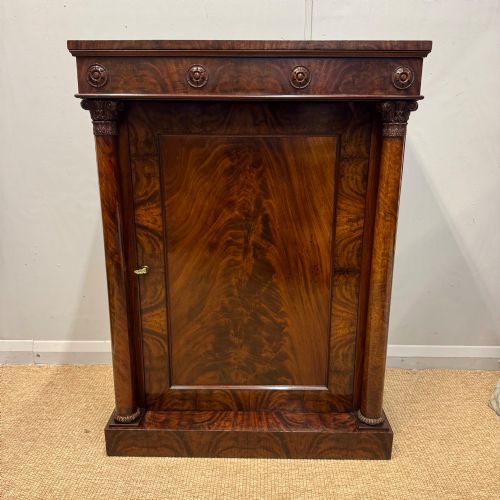
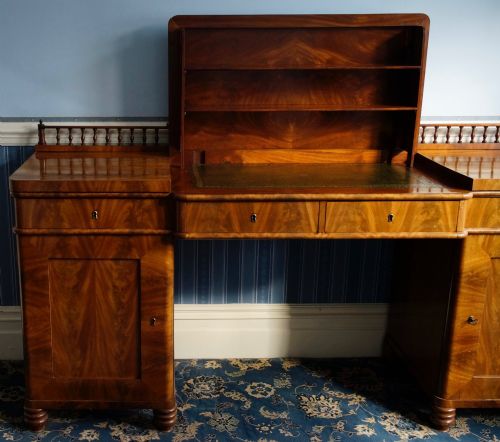
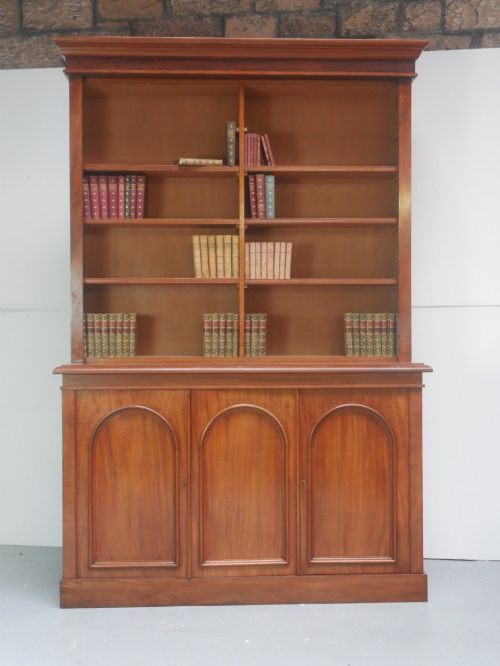
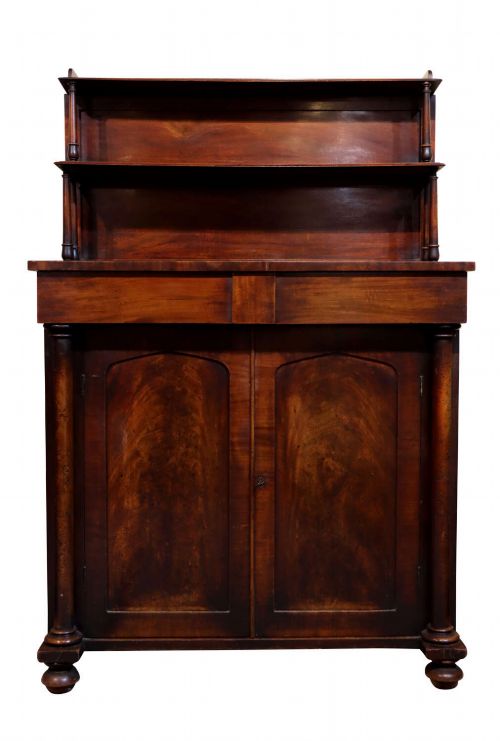
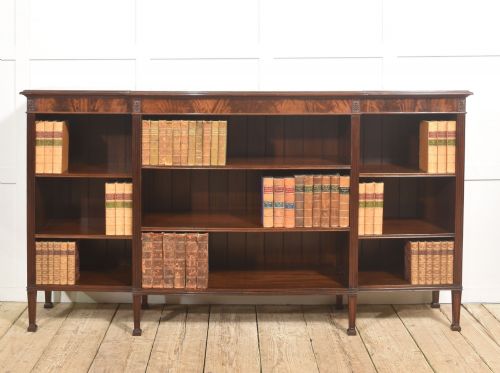
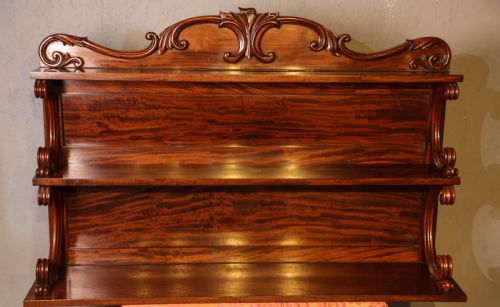
Flame mahogany shelving encompasses a variety of large breakfront floor bookcases, open bookcases, wall shelves, and chiffoniers. These pieces predominantly date from the Georgian, Regency, William IV, and Victorian eras, spanning the nineteenth century.
The form ranges from tall library bookcases designed to house extensive book collections down to smaller chiffoniers and waterfall bookcases suited for compact spaces. Buyers exploring flame mahogany shelving will encounter substantial breakfront designs alongside simpler wall-mounted or freestanding units.
Originating largely from nineteenth-century British cabinet makers, these pieces combine functional storage with decorative presence. The timber's natural figuring provides a strong visual focal point within a study, library, or drawing room.
Materials and construction
Makers constructed these pieces primarily using solid mahogany and flame mahogany veneer applied over secondary timbers such as oak. The distinctive flame effect relies on carefully sliced veneer selected from the fork of the mahogany tree, where the grain twists and creates a fiery pattern.
Cabinet makers enhanced these polished timber surfaces with secondary materials including brass hardware, glass door panels, and occasional leather inserts on desk components. Joinery techniques such as dovetailing secured the structural integrity of the shelving and drawers, ensuring durability alongside refined aesthetics.
Gillows cabinet makers once hid their signature stamps in the most unexpected drawer corners just to tease future collectors.
Quality differences
The distinction between standard and superior pieces rests heavily on the selection and matching of the timber veneer. Exceptional examples display symmetrical flame figures that flow seamlessly across large cabinet doors and breakfront surfaces.
Proportion, architectural detailing, and the crispness of carved elements separate high-grade library bookcases and chiffoniers from simpler utility pieces. Refined construction, original brass fittings, and well-executed secondary timbers indicate skilled workshop production.
Gillows
The Flame Mahogany Shelving Glossary
- Flame mahogany
- A timber veneer sliced from the junction where branches meet the main trunk, producing a rippling, flame-like pattern. This highly decorative grain is prized for its dramatic visual movement.
- Breakfront
- A cabinet design where the central section projects forward from the flanking wings. This architectural arrangement creates depth and shadow on large bookcases and sideboards.
- Chiffonier
- A low cabinet fitted with shelving or a raised back, developed during the Regency and Victorian periods. It served as a versatile piece for storing books and displaying decorative objects.
- Waterfall bookcase
- A tiered shelving unit where each successive shelf steps back from the one below, resembling the drop of a waterfall. These pieces became popular during the Georgian and nineteenth-century eras.
- Regency
- An English design style spanning the early nineteenth century, characterised by classical restraint and refined proportions. Furniture from this period often draws inspiration from ancient Greek and Roman forms.
Flame Mahogany Shelving: Frequently Asked Questions
What is flame mahogany?
Flame mahogany is a decorative wood veneer harvested from the fork of a mahogany tree where the grain twists into a distinct, fiery pattern. Cabinet makers used these figured veneers to create striking visual movement on prominent furniture surfaces.
Because the timber is sliced specifically to highlight this natural figuring, no two panels look alike. It remains a defining characteristic of fine nineteenth-century British cabinetry.
How do I date a bookcase?
Dating a bookcase involves examining its overall style, construction methods, and secondary woods. Pieces from the Georgian and Regency periods often feature hand-cut dovetails and lighter proportions, whereas Victorian examples tend to be heavier and more robust.
Hardware, moulding profiles, and glass characteristics also provide clues to the era of manufacture. Comparing these structural details against known period styles helps establish an approximate date.
Where should I place shelving?
Flame mahogany shelving suits studies, libraries, drawing rooms, and formal living spaces where its warm tones and figured grain can be appreciated. Taller breakfront bookcases require substantial wall space and high ceilings to balance their proportions.
Smaller waterfall shelves and chiffoniers fit comfortably in alcoves or against empty walls in dining rooms and bedrooms. Positioning pieces away from direct sunlight and heat sources protects the sensitive veneer from drying out.