


Flame Mahogany Secretary
A flame mahogany secretary brings dramatic grain and concealed writing surfaces together, offering a practical workspace wrapped in rich timber figure.
Flame Mahogany Secretary
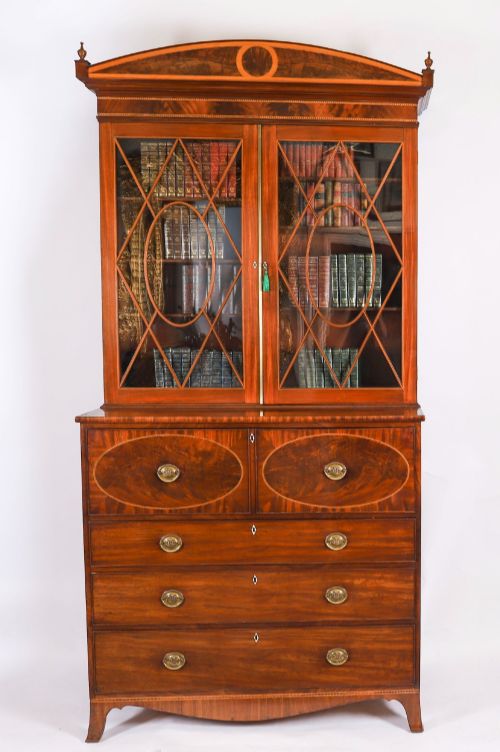
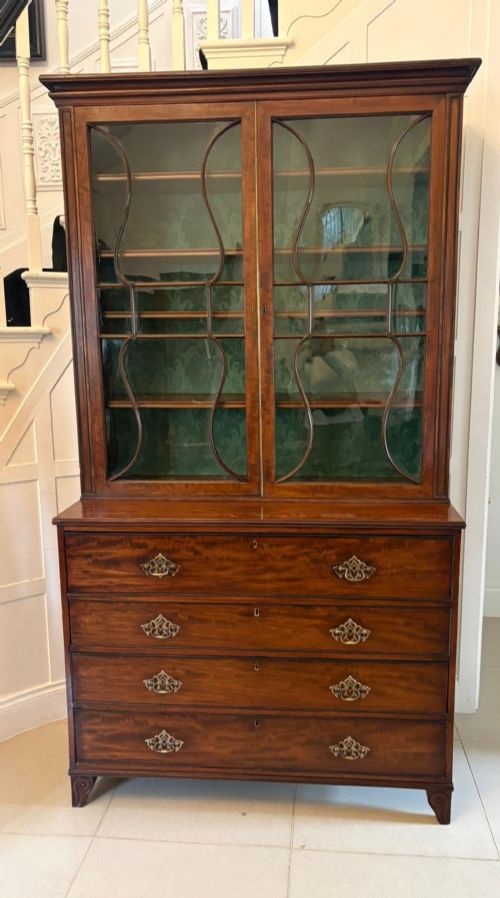
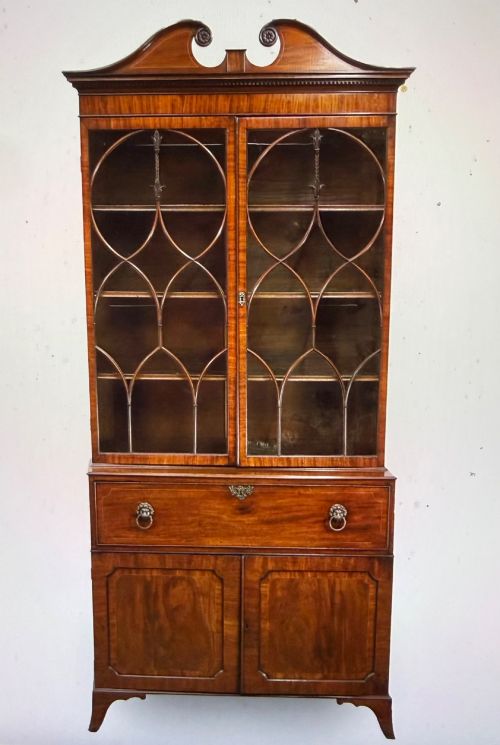
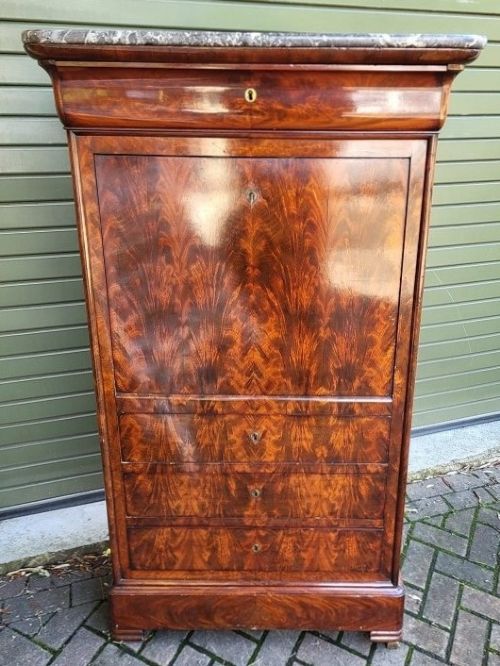
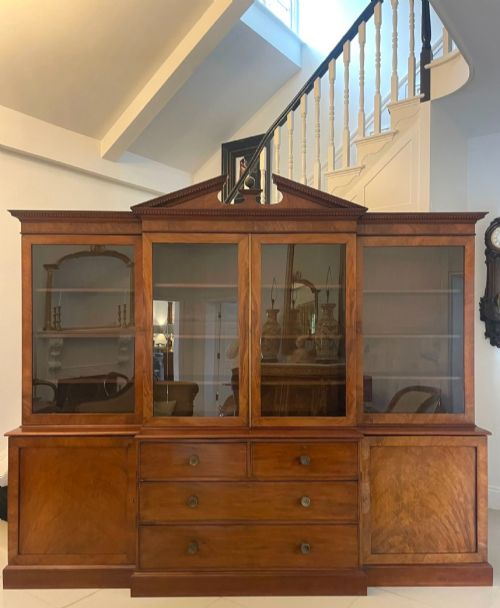
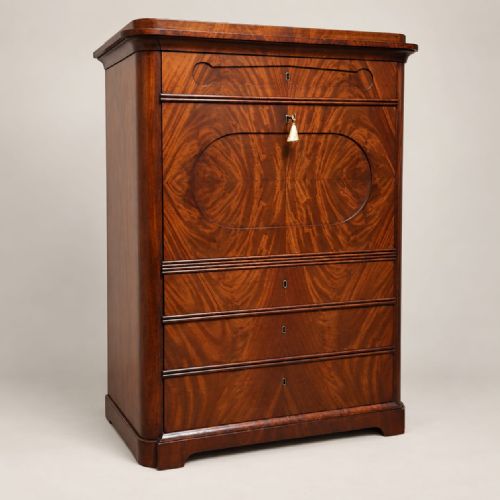
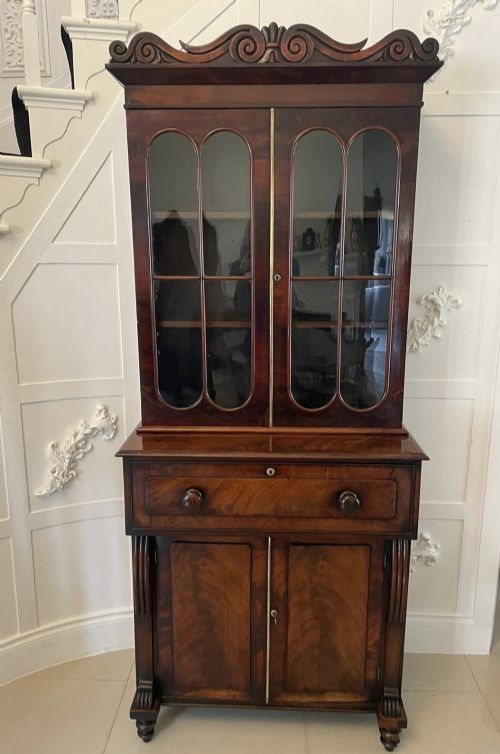
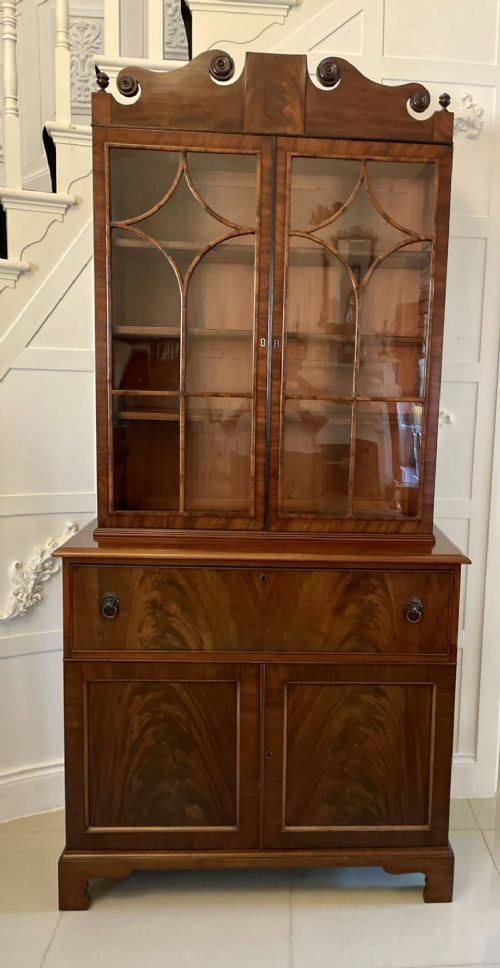
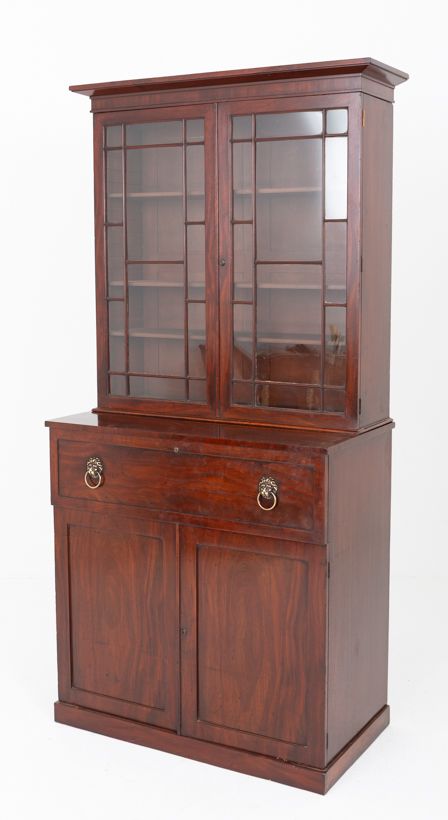
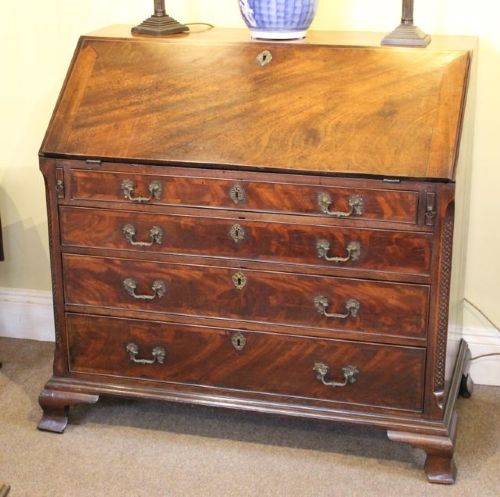
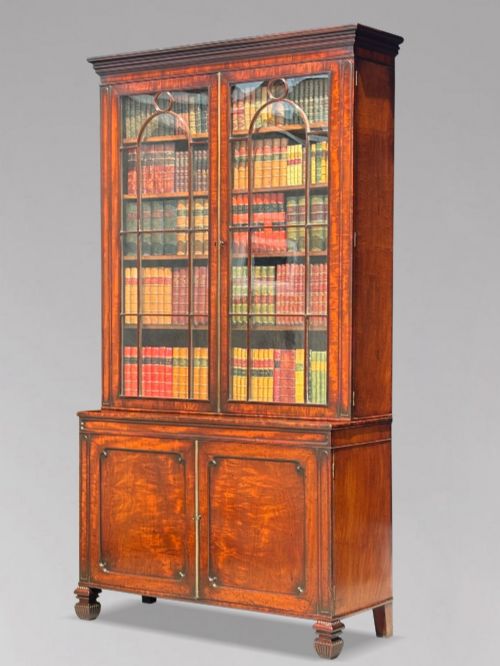
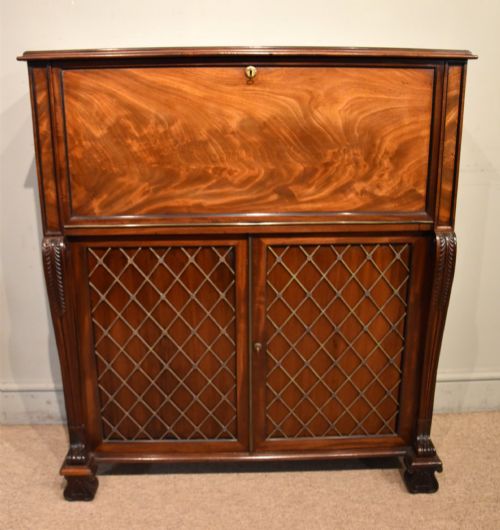
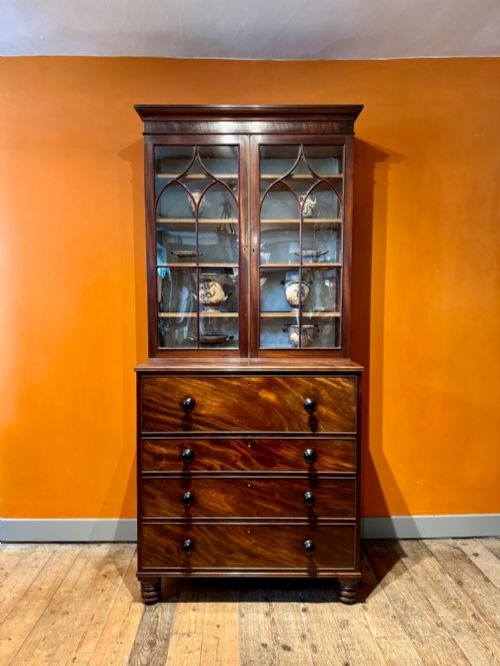
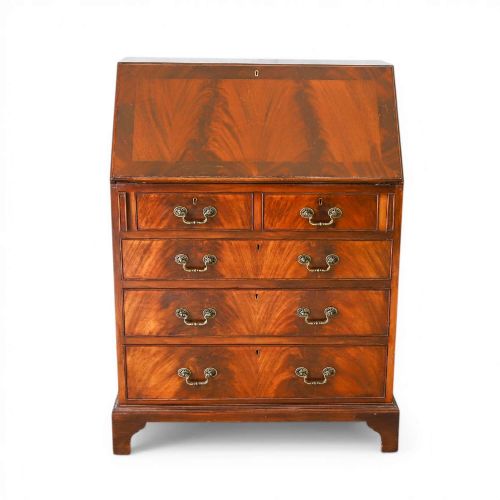
A flame mahogany secretary combines a tall bookcase, cabinet, or chest with a fitted fall-front writing drawer, providing an integrated desk and storage unit. When searching for a flame mahogany secretary, buyers encounter diverse forms ranging from large George III and Regency bookcase combinations to French empire secretaire abattants and compact writing chests.
The pieces span the eighteenth, nineteenth, and early twentieth centuries, drawing on Georgian, Regency, William IV, Victorian, and French Empire stylistic influences. Most examples on this page are tall secretaire bookcases or drop-front bureaux constructed from solid timber and rich veneers.
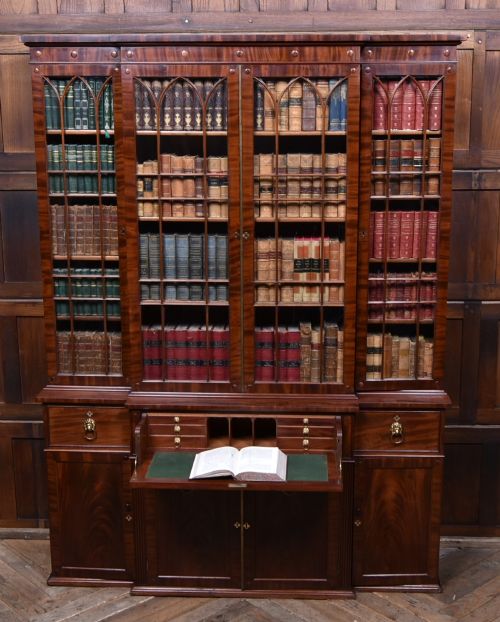
Makers and cabinetmakers built these dual-purpose items for libraries, parlours, and private chambers where writing correspondence and storing volumes required a single, handsome piece of furniture. The internal compartments typically contain small drawers, pigeonholes, and central doors designed to keep papers and writing instruments orderly.
What varies in quality
The visual impact of the grain figure sets individual pieces apart, with symmetrical flame mahogany veneers creating a striking facade on superior examples. The crispness of the inlay work, the thickness of the timber, and the balance of the proportions determine the refinement of the piece.
Interior joinery and secondary wood selection distinguish high workshop standards from standard production. The retention of original brass fittings, clear glass panes, and fitted internal stationery compartments preserves the integrity and character of the furniture.
Flame Mahogany Secretary Retail Price Guide 2026
Typical asking prices for flame mahogany secretary among the pieces listed under this phrase on Sellingantiques today, from the lower quarter to the upper quarter. They describe what is for sale here now, not the wider market.
Secretaries frequently hide tiny secret compartments behind movable pigeonholes for stashing valuables.
Gillows
The Flame Mahogany Secretary Glossary
- Flame mahogany
- A timber veneer sliced from the point where branches join the tree trunk, producing a rippling, flame-like grain pattern. This figure is prized for its decorative movement across flat cabinet doors and drawer fronts.
- Secretaire bookcase
- A tall combination piece incorporating a glazed upper bookcase section and a lower cabinet featuring a pull-out writing drawer with a drop front. The fall-front reveals a fitted interior of small drawers and pigeonholes.
- Secretaire à abattant
- A vertical cabinet with a drop-front writing flap that conceals an internal desk space, often finished with a marble top. This continental form places emphasis on clean vertical lines and prominent veneer panels.
- Fall-front
- A hinged writing surface that drops down to a horizontal position for use, then swings back to vertical to conceal the interior desk fittings. It forms the primary operational door of a bureau or secretaire drawer.
- Satinwood inlay
- Contrasting pale yellowish timber embedded into the mahogany surface in geometric or floral lines. This decorative technique highlights the borders and panels of Georgian and Regency pieces.
Flame Mahogany Secretary: Frequently Asked Questions
What is a flame mahogany secretary?
A flame mahogany secretary is a dual-purpose furniture piece featuring a drop-front writing desk combined with storage space, such as a bookcase or chest of drawers. The exterior surfaces display distinctive, rippling wood grain veneers.
These items were produced primarily during the eighteenth and nineteenth centuries in English and continental workshops, serving as both workspaces and display cabinets for books and personal papers.
How do I tell a Georgian secretary from a Victorian one?
Georgian secretaries tend to exhibit restrained classical proportions, subtle satinwood stringing, and bracket feet, often dating from the late eighteenth or early nineteenth century. Victorian examples generally display heavier proportions, darker finishes, and more robust plinth bases.
Examining the interior secondary woods and internal drawer construction also helps clarify the period of manufacture, as regional British and continental workshops evolved their joining techniques over time.
Were these desks used for writing letters?
Yes, the primary function of the fall-front section was to provide a flat writing surface with immediate access to inkwells, paper, and correspondence. The pigeonholes and small internal drawers kept stationery organised.
Owners kept private documents, ledgers, and books secured within the locking compartments of the desk, making it an essential piece of household management furniture.
How do I care for flame mahogany veneer?
Protect the veneer by keeping the furniture away from direct sunlight, extreme temperature shifts, and excessive room dryness that can cause timber to split. Apply microcrystalline wax periodically to nourish the surface.
Avoid using harsh chemical polishes or placing damp items directly onto the polished wood or marble tops to preserve the original finish and figure.