
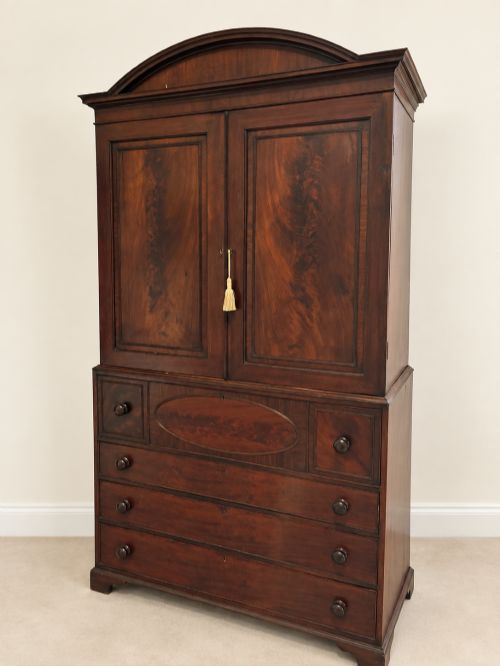
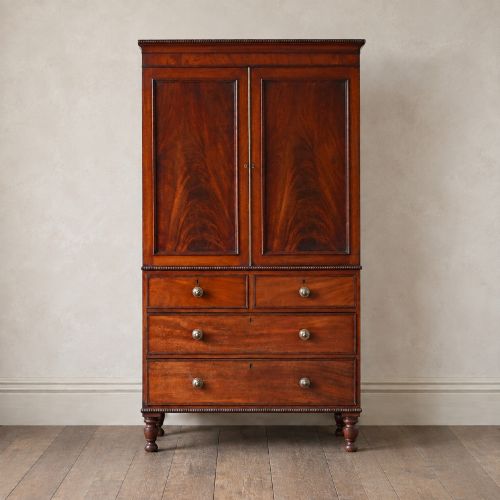
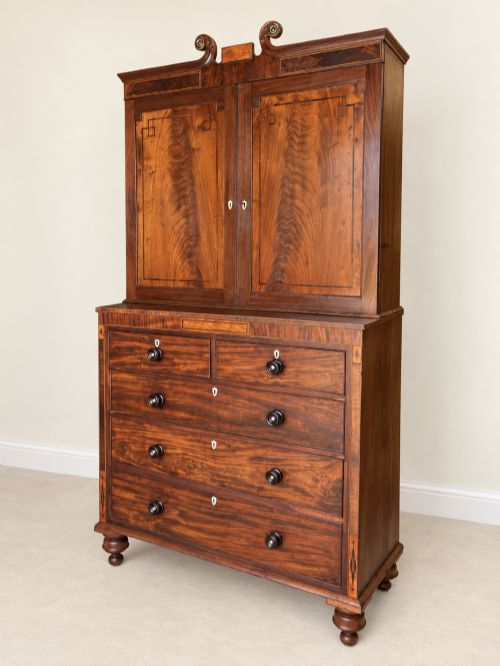
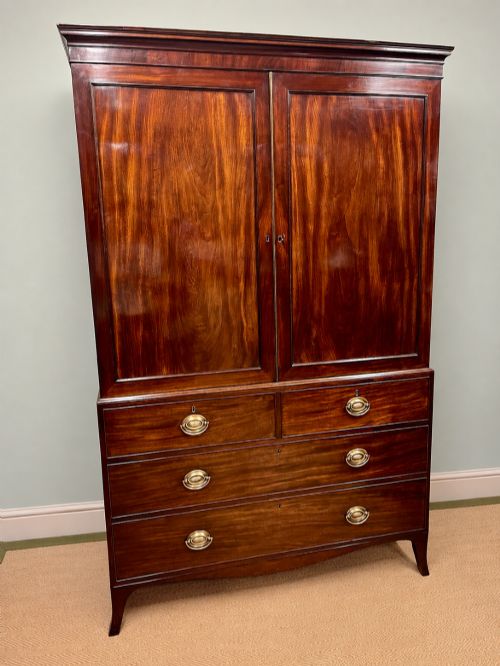
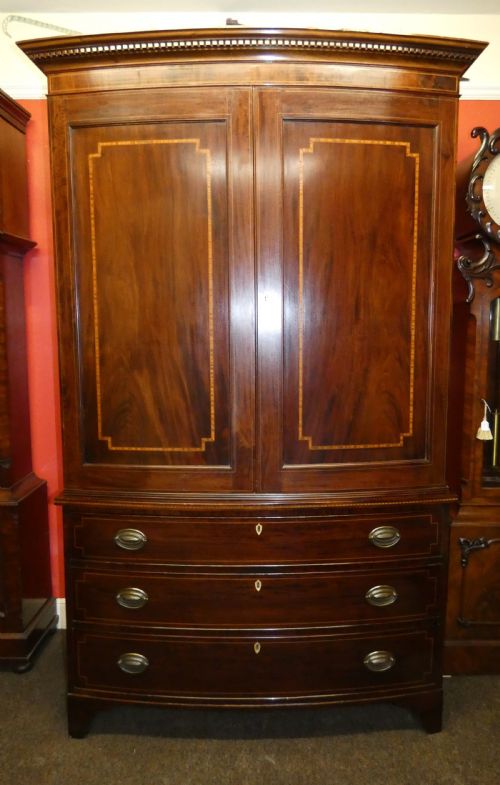
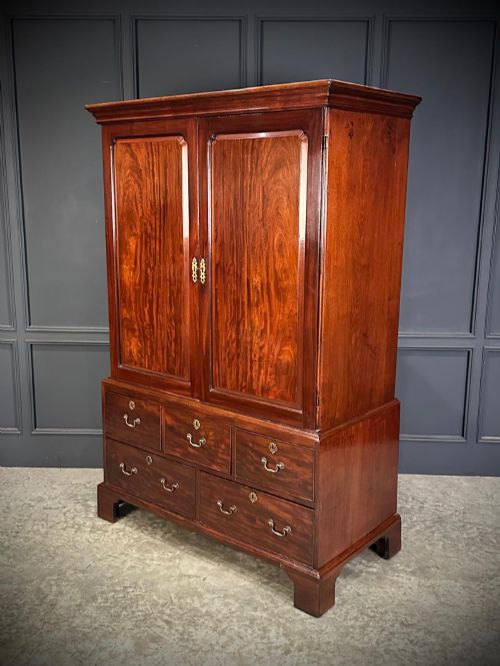
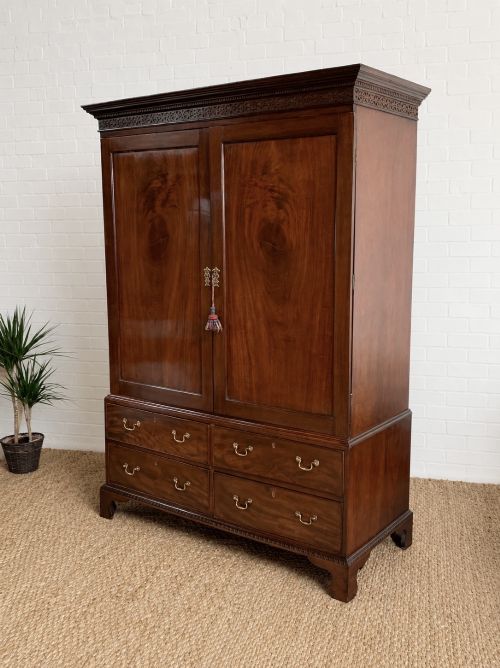
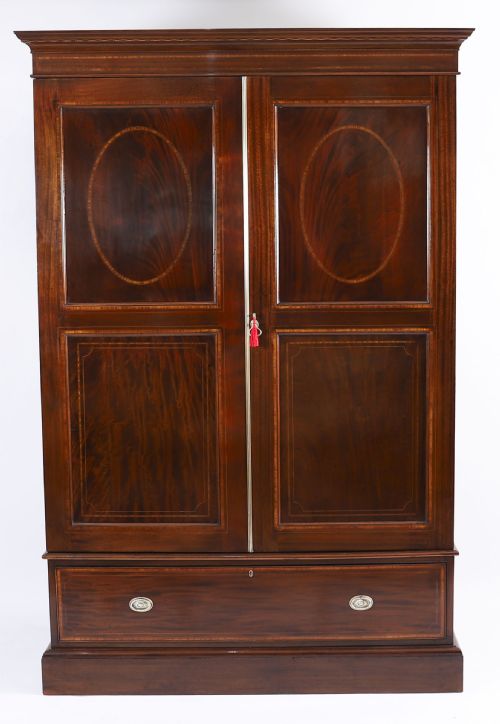
Flame Mahogany Press Cupboard
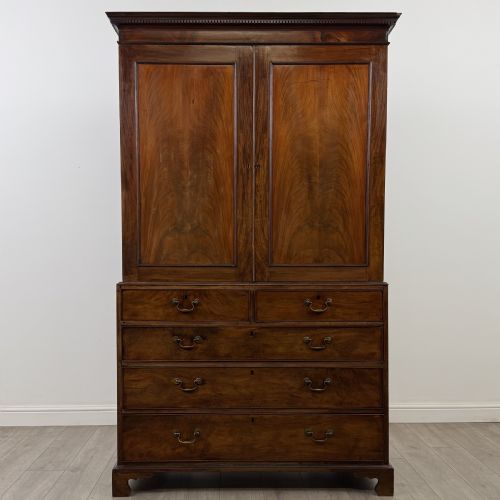
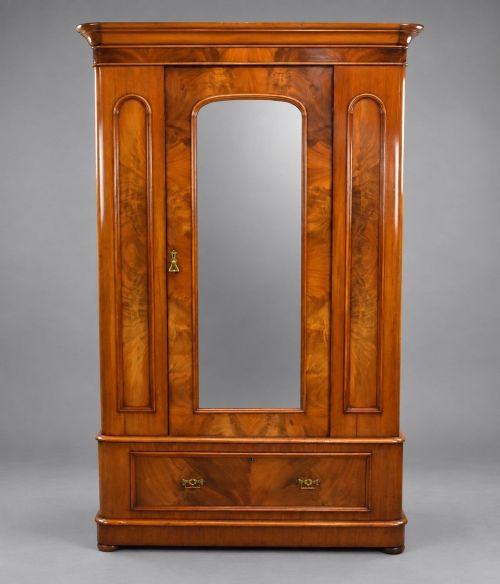
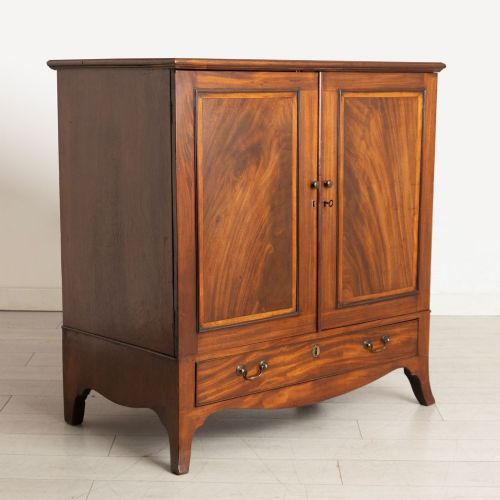
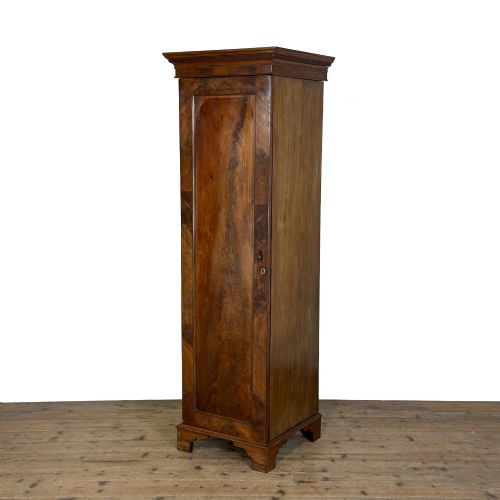
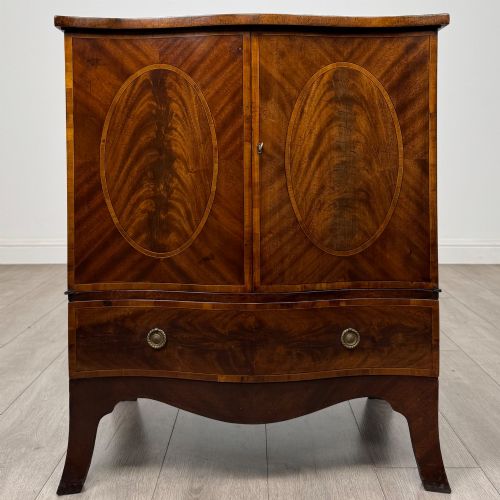
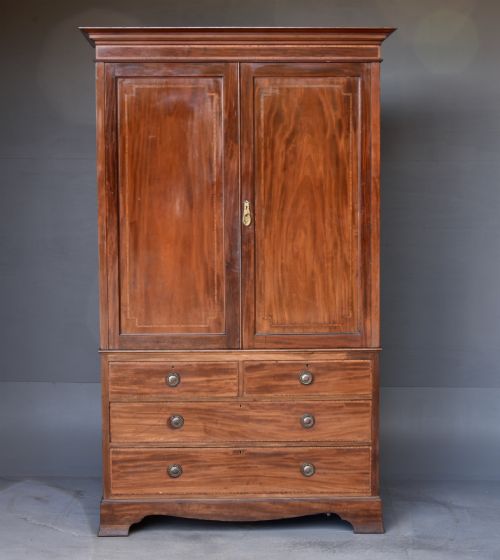
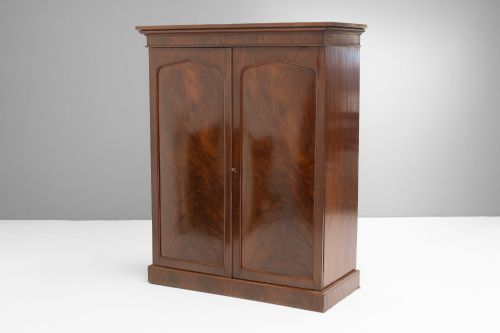
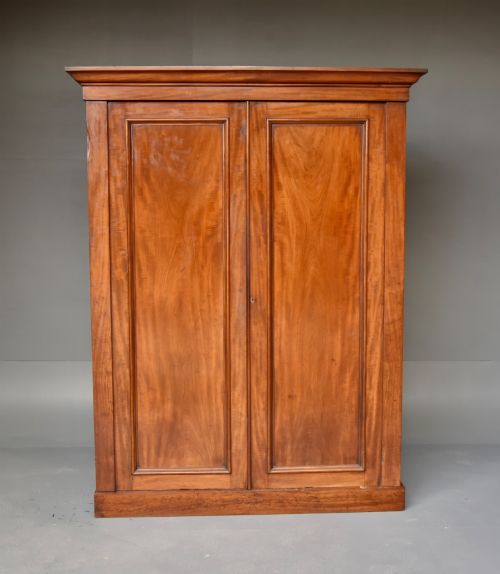
A flame mahogany press cupboard brings architectural presence and striking wood grain into a room, offering deep storage through a combination of upper cabinet doors and lower drawers.
Flame Mahogany Press Cupboard
A flame mahogany press cupboard is a substantial storage piece designed to hold folded linens, clothing, or household goods behind large doors. These pieces predominantly date from the Georgian, Regency, and Victorian periods, featuring architectural cornices and sturdy proportions.
The form typically splits into two sections, with an upper cupboard housing sliding trays or shelves sitting atop a chest of drawers. Buyers encounter variations including bowfront profiles, compactum designs, and tallboy configurations built from mahogany, oak, and satinwood.
Materials and construction
Cabinet makers utilised solid mahogany for structural frames and drawer linings, applying highly figured flame mahogany veneer to the primary exterior surfaces to create dramatic, swirling wood patterns. Workshops selected veneers from specific cuts of timber where the branch junctions met the trunk, producing distinctive rippled light-reflecting figures.
Craftsmen incorporated secondary timbers such as oak and pine for internal construction, drawer carcasses, and backboards. Details such as boxwood inlay, brass hardware, and glass elements appear across Georgian, Regency, and Victorian iterations.
Object forms recorded on this page include linen presses, compactum wardrobes, breakfront bookcases, and housekeeper's cupboards.
Judging quality in flame mahogany
Quality rests in the selection and bookmatching of the flame mahogany veneer across the doors and drawer fronts, where symmetrical grain patterns demonstrate superior craftsmanship. The depth of figure, consistency of colour, and smoothness of the timber preparation dictate the visual impact of the piece.
Structural integrity reveals itself in the dovetail joinery of the internal drawers, the weight and original state of the brass fittings, and the alignment of the heavy cupboard doors. Well-executed details like blind fretwork cornices and crisp inlay distinguish finer examples from standard production.
maples & co·Heals
The Flame Mahogany Press Cupboard Glossary
- Flame mahogany veneer
- A thin slice of mahogany timber cut from the fork of a tree where the grain twists, creating a fiery, undulating pattern. Cabinet makers laid this across prominent surfaces like door panels to catch the light.
- Press cupboard
- A large storage furniture item traditionally used for pressing and storing linen. The upper section usually encloses sliding trays while the lower portion contains a chest of drawers.
- Compactum wardrobe
- A fitted multi-compartment wardrobe designed to maximise storage efficiency. These incorporate hanging space, drawers, and shelving within a single unified cabinet.
- Blind fretwork
- Carved decorative woodwork applied to a flat surface in an intricate geometric pattern without piercing through the wood. Makers frequently placed this along the cornice of Georgian linen presses.
- Bowfront
- A convex curved furniture front that projects outward in a smooth arc. This shape appears on Georgian and Regency cabinets to soften the rectangular mass of the piece.
Flame Mahogany Press Cupboard: Frequently Asked Questions
What is a flame mahogany press cupboard?
A flame mahogany press cupboard is a large antique storage unit featuring highly figured wood veneer across the exterior doors and drawers. It combines an upper cabinet space with a chest of drawers underneath.
These items served primarily to store and flatten household linens before the widespread use of modern wardrobes and ironing equipment. The upper section traditionally housed sliding shelves known as slides.
How do I use a press cupboard today?
Modern interiors utilise flame mahogany press cupboards as statement wardrobes, living room linen stores, or media cabinets. The internal sliding trays accommodate folded garments, knitwear, and bedding with ease.
Positioning requires adequate clearance for the large upper doors to swing open fully. Placing the piece away from direct sunlight and heat sources protects the fragile mahogany veneer from drying out.
How do I date a flame mahogany press cupboard?
Dating relies on examining construction methods, timber choices, and architectural styles across the piece. Georgian and Regency examples exhibit hand-cut dovetails, secondary oak or pine framing, and classical cornices.
Victorian and Edwardian versions often display machine-sawn elements, heavier proportions, and different interior configurations. Hardware styles and inlay techniques also provide reliable chronological markers.
What is the difference between a press cupboard and a wardrobe?
A press cupboard specifically contains internal sliding trays or shelves behind its main upper doors for storing folded textiles. Traditional wardrobes focus instead on vertical hanging space with rails for garments.
Many antique examples bridge these categories by offering a hybrid of hanging sections and shelf space. The exterior appearance remains similar, but the interior layout defines the historic function.