
Fitted Wooden Wardrobe
A fitted wooden wardrobe delivers substantial room for hanging garments and linen while anchoring a bedroom with deep timber grain and period presence.
Fitted Wooden Wardrobe
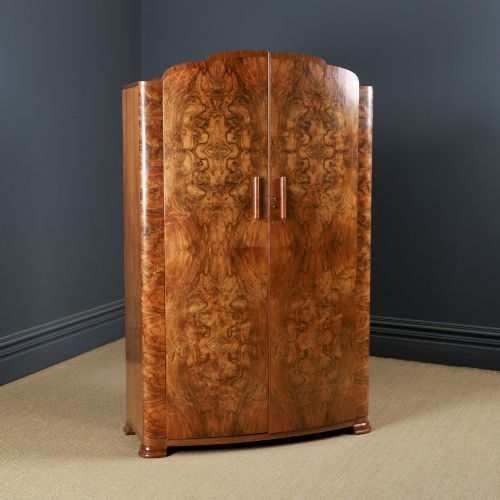
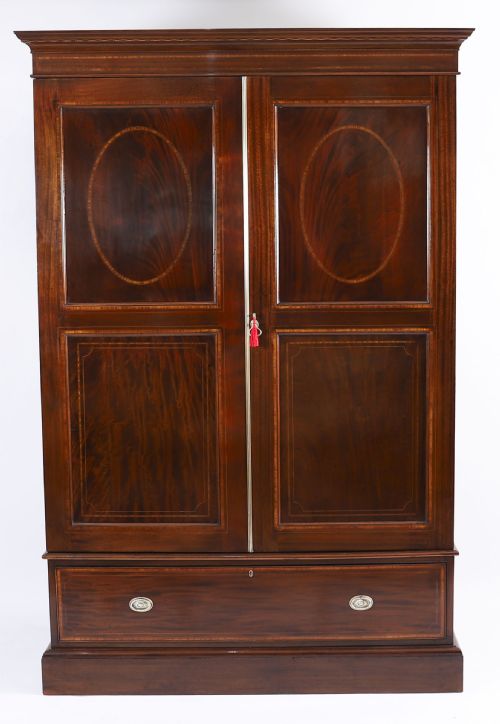
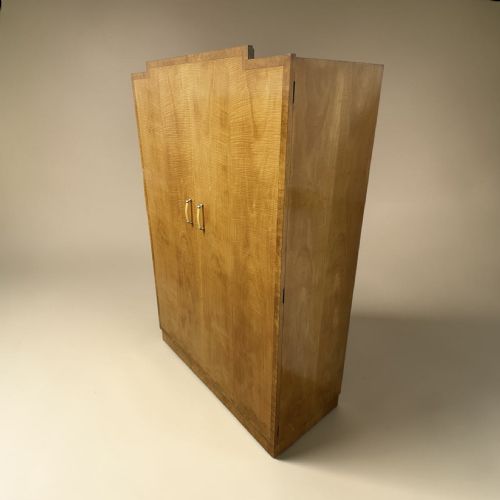
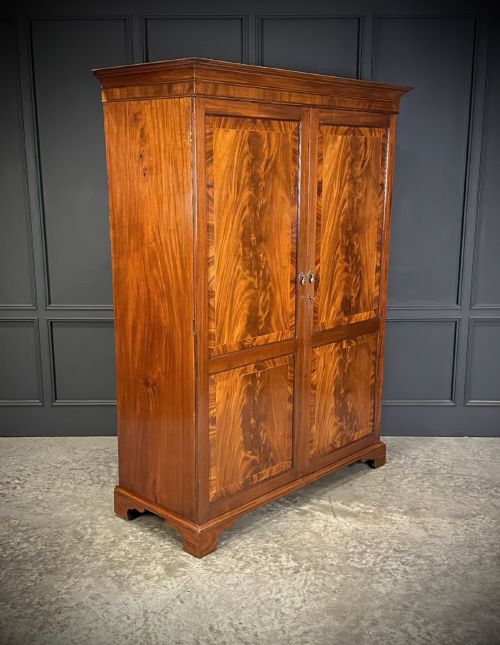
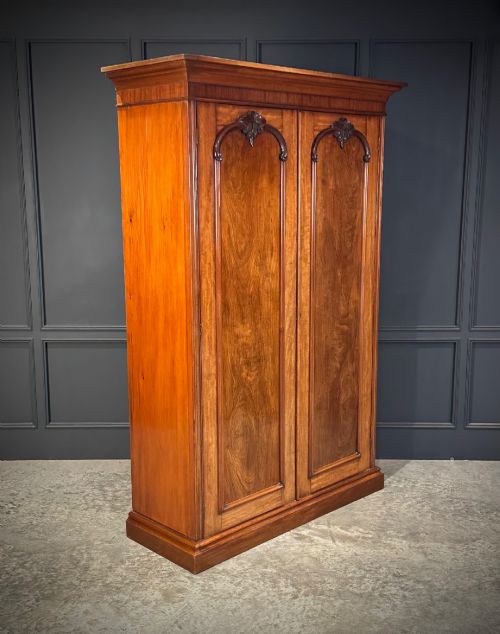
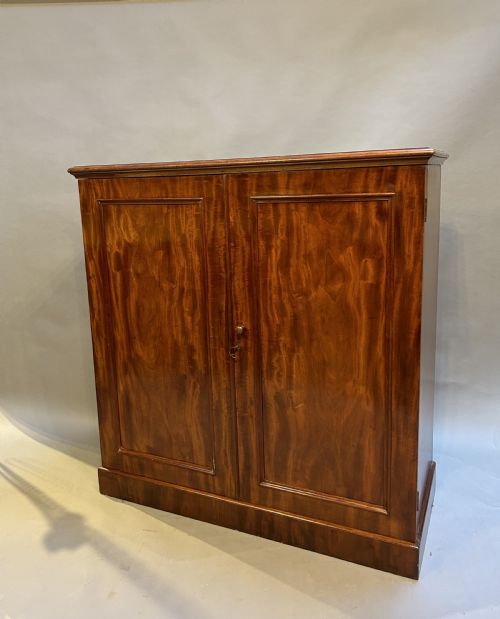
A fitted wooden wardrobe answers the eternal demand for organised storage through substantial timber cabinetry designed to hold coats, suits, and folded garments. When you search for a fitted wooden wardrobe, you encounter robust examples spanning the Victorian and Edwardian eras, alongside later Art Deco interpretations.
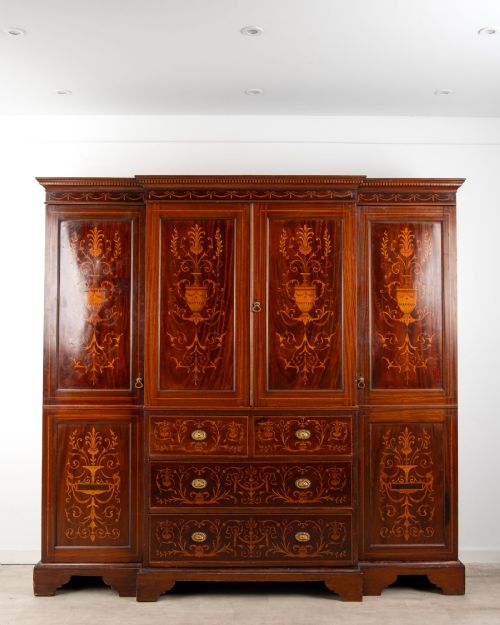
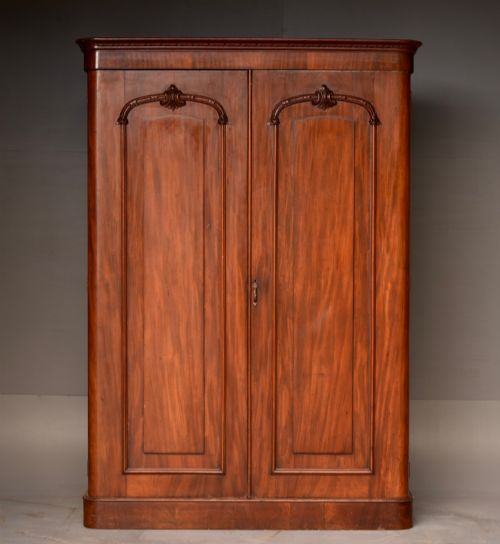
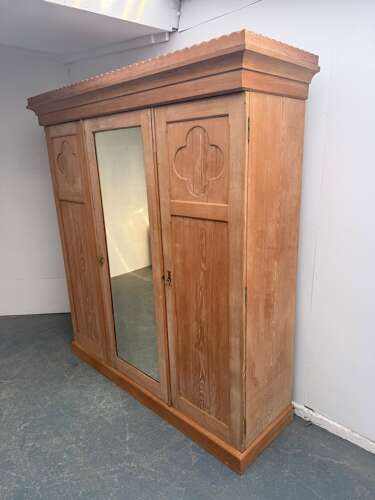
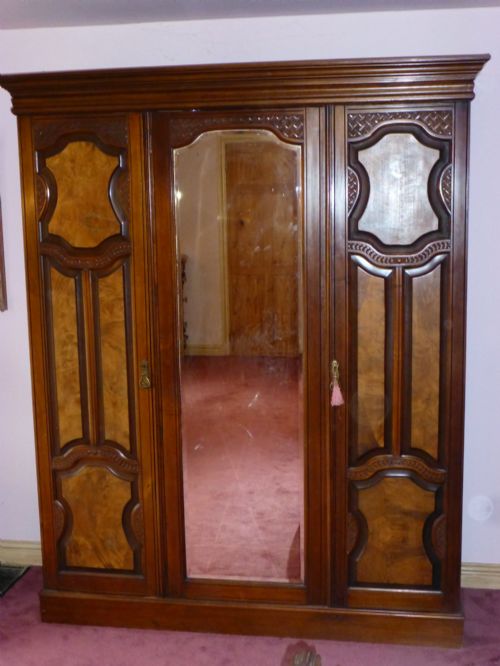
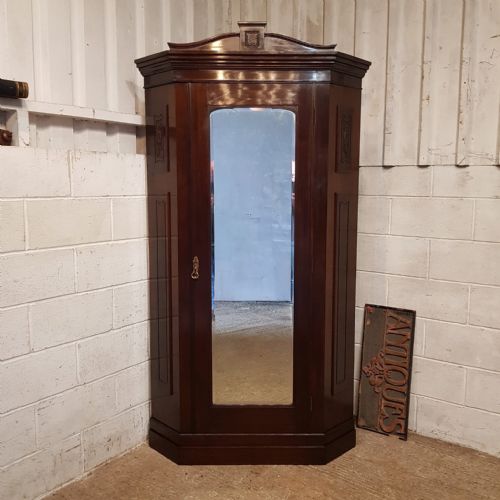
The variations range from compact single door pieces and corner designs to expansive breakfront triple wardrobes and combination compactums. Mahogany and walnut dominate these offerings, frequently selected by makers to showcase rich figure and warm tone across large panelled doors.
Materials and Construction
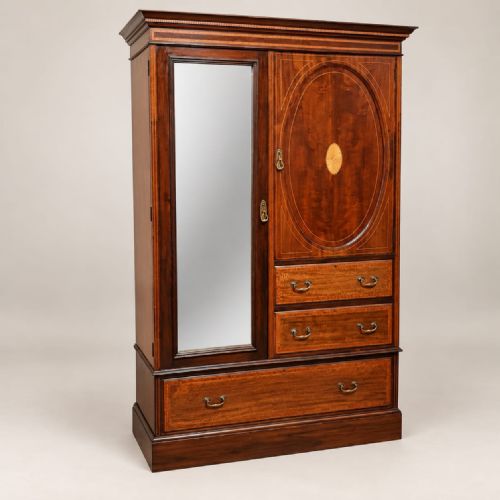
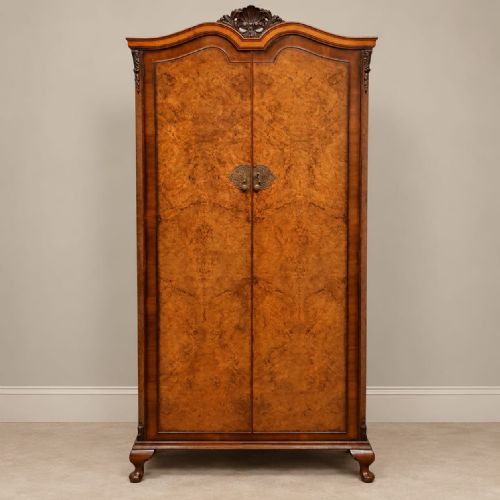
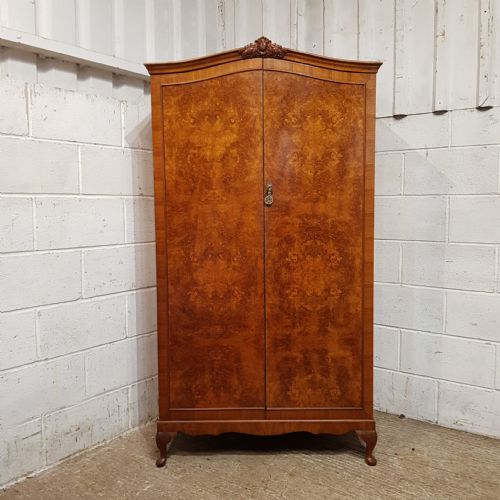
Cabinet makers built these pieces using solid foundations of mahogany, oak, or pine, then applied decorative surfaces of flame mahogany veneer, burr walnut, or satinwood. Brass fittings secure the doors and internal hooks, whilst glass panels sometimes integrate into full length mirror doors.
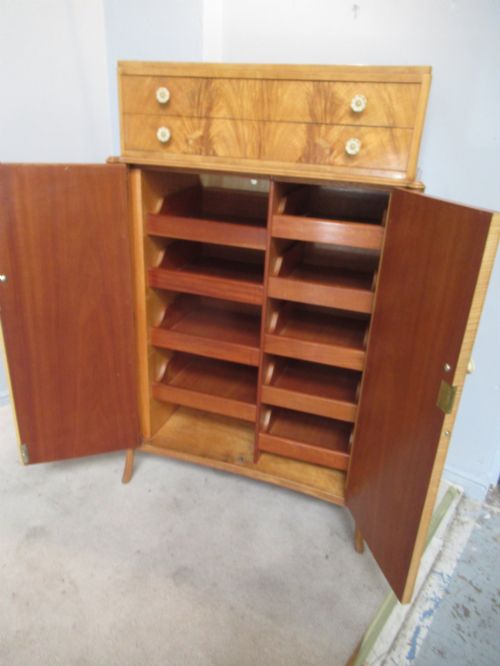
Internal configuration often includes sliding linen trays, drawers, and hanging spaces designed to maximise utility. Joinery relies on traditional dovetail techniques for drawers and robust frame and panel construction for the main bodies.
Listings feature mahogany, walnut, and pine across Victorian, Edwardian, and Art Deco periods, showcasing both simple country forms and complex breakfront designs.
Judging Quality
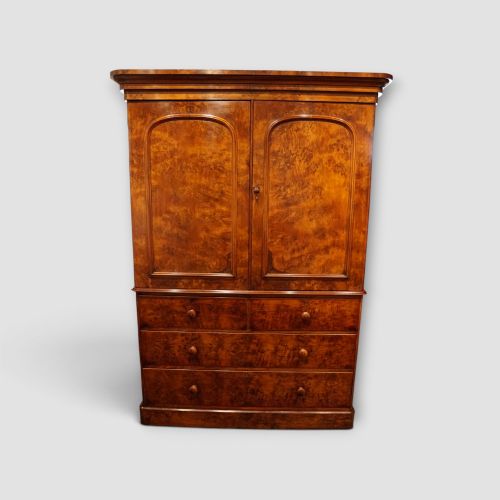
The distinction between standard utility pieces and exceptional examples rests upon timber selection and decorative restraint. Master cabinet makers chose burr walnut and curl mahogany for their striking natural patterns, laying veneers with precision across broad surfaces.
Proportion and architectural detail also elevate a piece. Superior wardrobes balance scale with refined cornices, fine stringing inlay, and substantial brass hardware that operates smoothly within the frame.
Heals·Maple and Co·Holland and Sons·Robert Strahan of Dublin
The Fitted Wooden Wardrobe Glossary
- Compactum
- A multi-section wardrobe combining hanging space, drawers, and linen shelves within a single integrated piece of furniture.
- Breakfront
- A cabinet design where the central section projects forward from the flanking wings, adding architectural depth to the facade.
- Burr walnut
- A prized timber harvested from walnut tree growths, producing swirling, intricate grain patterns highly valued for decorative veneer.
- Linen press
- A traditional storage cabinet featuring upper sliding trays for folded textiles above a chest of drawers in the base.
- Flame mahogany
- A veneer cut from the fork of a mahogany tree that creates a distinctive flickering pattern resembling flames.
Fitted Wooden Wardrobe: Frequently Asked Questions
How do I dismantle a fitted wooden wardrobe for transport?
Most large period wardrobes separate into modular components consisting of a cornice, base, plinth, and distinct side or central carcase sections. Screws and concealed bolts typically hold the frame together rather than permanent glue.
Mark each panel clearly during disassembly to ensure the doors hang true and square when reassembled in a new room.
What is the difference between an armoire and a wardrobe?
An armoire traditionally describes a tall cupboard with doors enclosing shelves or hanging space, originating as a movable closet for arms or garments in continental Europe. A wardrobe specifically denotes a tall piece of furniture dedicated primarily to hanging clothes.
In British antique listings, the terms frequently overlap, though fitted wooden wardrobes often incorporate internal drawers and specialist compartments alongside hanging rails.
How do I care for antique walnut and mahogany surfaces?
Maintain timber finishes by applying a quality beeswax sparingly and buffing gently with a soft cloth to preserve the natural lustre. Avoid placing antique furniture near direct heat sources or strong sunlight, which can dry out veneers and fade rich polishes.
Regular dusting with a dry lint-free cloth prevents grit from accumulating in carved details and fine inlay work.
Can I adjust the internal layout of a vintage wardrobe?
Period wardrobes generally feature fixed partitions, sliding trays, or hanging hooks installed by the original cabinet maker. Altering these internal fittings requires careful joinery work to avoid compromising the structural integrity of the carcase.
Many buyers choose to utilise freestanding boxes or hanging solutions that respect the original wooden interior without permanent modification.