



Fitted Walnut Cupboard
A fitted walnut cupboard brings warmth and concealed storage to a room, ranging from grand Victorian linen presses to streamlined Art Deco compactums.
Fitted Walnut Cupboard
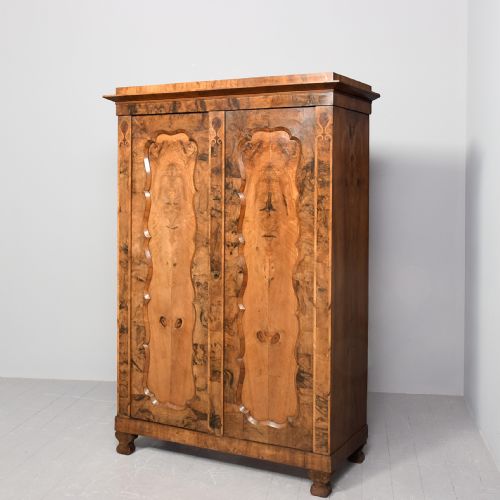
A fitted walnut cupboard serves as a practical storage piece, often equipped with internal drawers, shelves, or hanging space. When searching for a fitted walnut cupboard, buyers encounter forms spanning several centuries, from 18th-century North European armoires to Edwardian combination wardrobes and 1930s compactums.
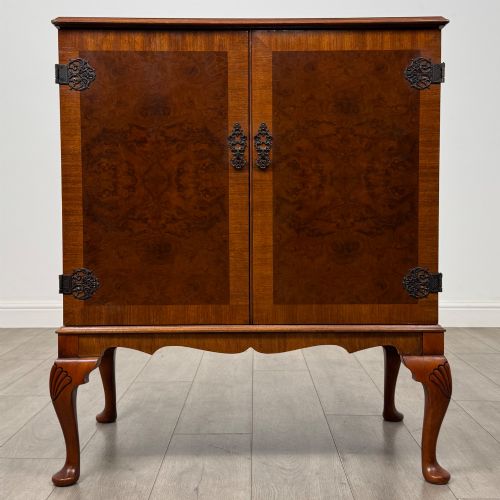
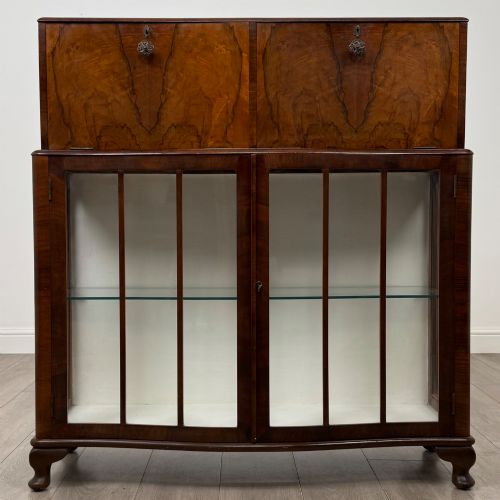
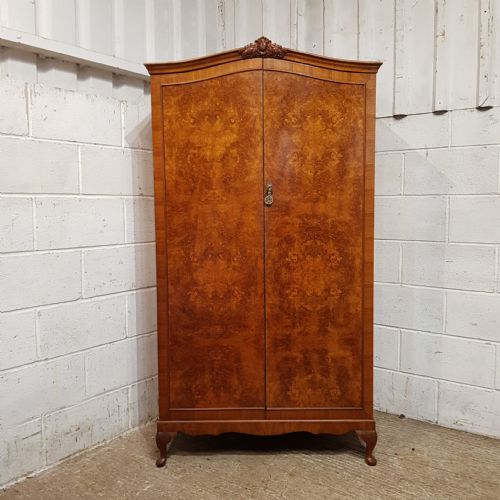
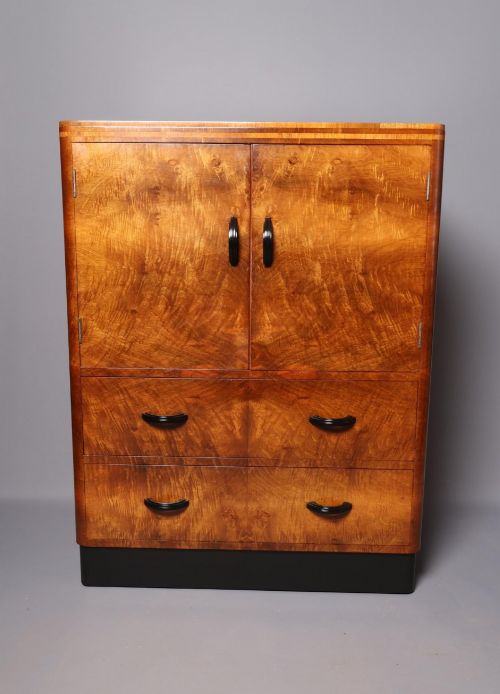
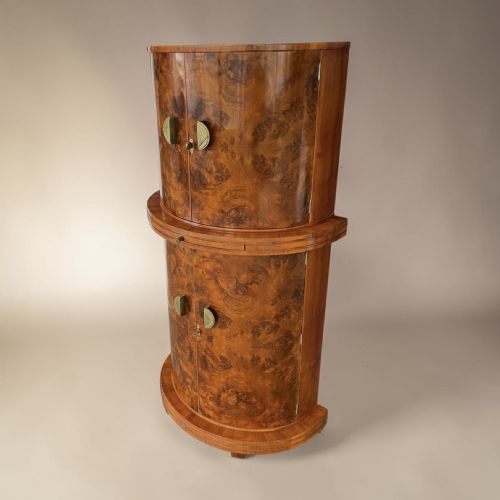
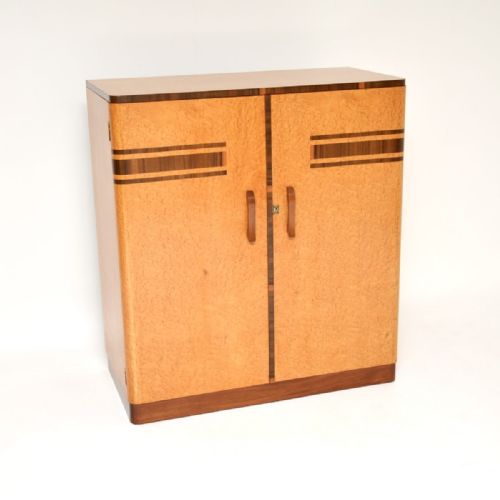
The selection on this page leans heavily toward 20th-century examples, particularly Art Deco cocktail cabinets and wardrobes from the 1920s and 1930s, alongside robust Victorian and Edwardian pieces. These items appear in various styles including Queen Anne Revival, Regency Revival, Art Nouveau, and Continental designs.
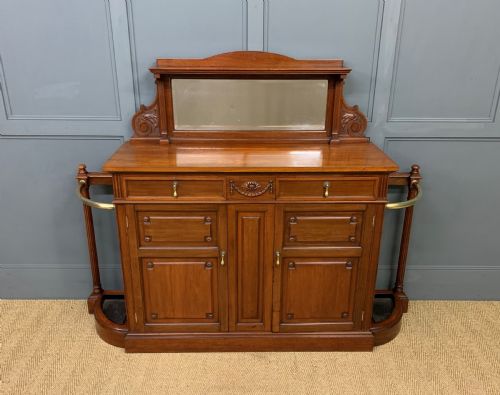
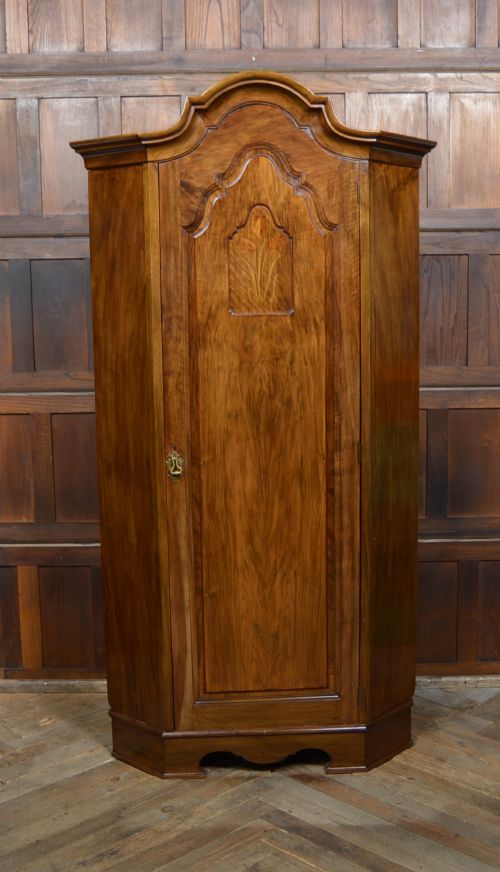
Smaller variants such as table cabinets, corner robes, and hall stands also emerge among the larger wardrobes and cocktail cabinets. Each piece reflects the storage demands of its era, adapted for modern domestic organisation.
Materials and construction methods
Hardware played a functional and decorative role, with makers incorporating brass handles and hinges alongside early plastics like bakelite on mid-century pieces. Glass panels frequently appear on display cabinets and cocktail units to showcase interior contents.
The listings here span from the 17th century through to the 1940s, uniting walnut, burr walnut, ash, brass, and glass across diverse forms.
What separates the finest examples
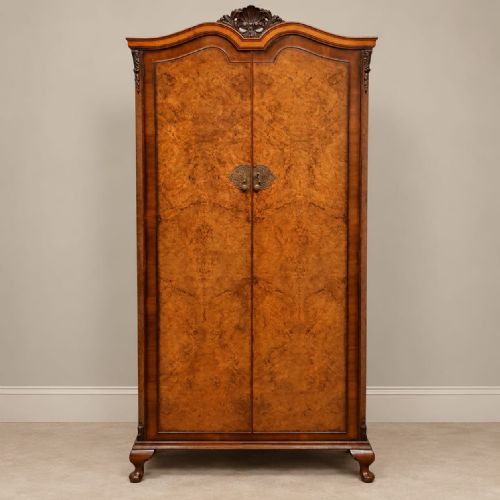
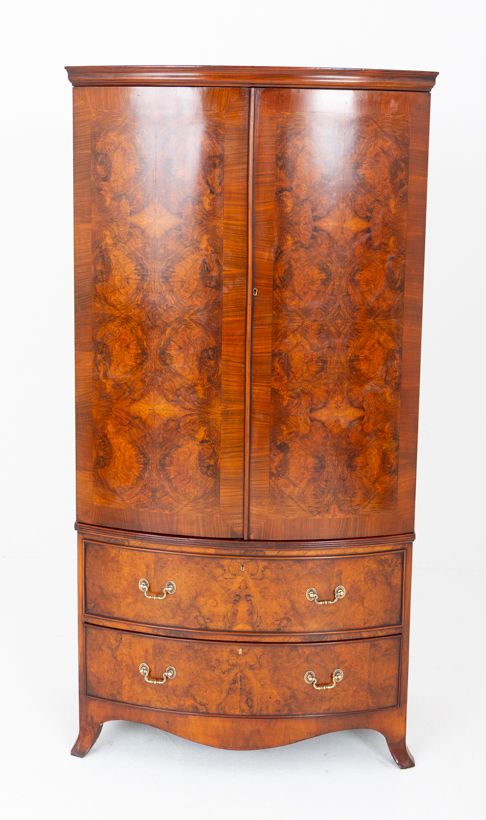
Quality in these cabinets rests upon the selection and matching of the walnut veneer across the doors and drawers, where symmetrical grain patterns demonstrate superior joinery. The crispness of carved details in Victorian pieces or the geometric precision in Art Deco examples indicates the maker's skill.
Internal fitting sophistication also marks out the superior piece, seen in specialised compartments for drinks, sliding linen trays, or integrated drawers within compactums. Original brass fittings and intact glass further elevate the standing of a cabinet.
Shoolbred & Co.·Maple & Co.·Harry and Lou Epstein·Waring and Gillow
The Fitted Walnut Cupboard Glossary
- Compactum
- A multi-functional wardrobe featuring a combination of hanging space, drawers, and linen shelves within a single footprint. This form became particularly popular during the Victorian and Art Deco periods.
- Burr walnut
- Timber taken from a tree growth or burl, yielding complex, swirling grain patterns. Cabinet makers prized this wood for decorative veneering on prominent exterior surfaces.
- Linen press
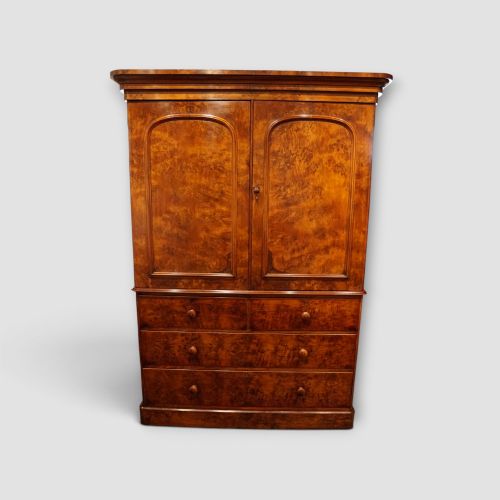
- A tall storage piece comprising upper shelving enclosed by doors, positioned above a base of horizontal drawers. They were traditionally used for storing folded household linens.
Fitted Walnut Cupboard: Frequently Asked Questions
How do I identify an Art Deco cabinet?
Art Deco cabinets, dating largely from the 1930s, typically display clean geometric lines, streamlined silhouettes, and dramatic burr walnut veneers without heavy carving.
They often incorporate specialised internal fittings such as mirrored cocktail compartments, pull-out trays, and original bakelite or brass handles.
What is the difference between a wardrobe and a compactum?
A standard wardrobe focuses primarily on vertical hanging space for garments behind full-length doors. A compactum integrates hanging areas alongside banks of internal drawers and linen shelves within the same frame.
This makes the compactum a more versatile piece of bedroom furniture for folded storage.
Where were cocktail cabinets used?
Cocktail cabinets were designed for entertaining, becoming especially popular in homes during the 1920s and 1930s. They were typically placed in reception rooms or drawing rooms to house glassware, bottles, and mixing equipment.
Many feature drop-down serving flaps and mirrored interiors to display drinks.
How can I tell a Victorian piece from an Edwardian one?
Victorian cupboards, dating from the 19th century, generally feature darker finishes, heavier proportions, and more elaborate carved architectural details or paneling. Edwardian examples from around 1900 to 1910 often exhibit lighter ash combinations, refined inlay work, and slightly more restrained Revival styles.