
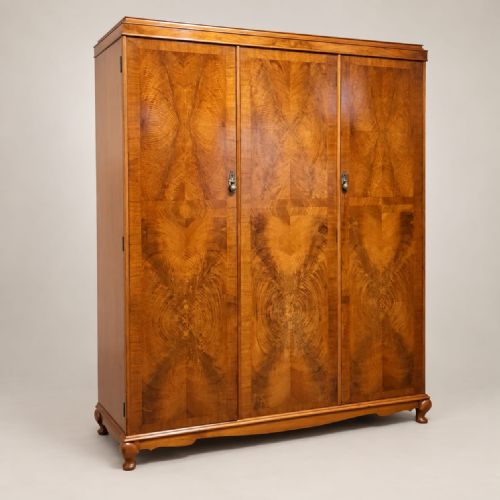
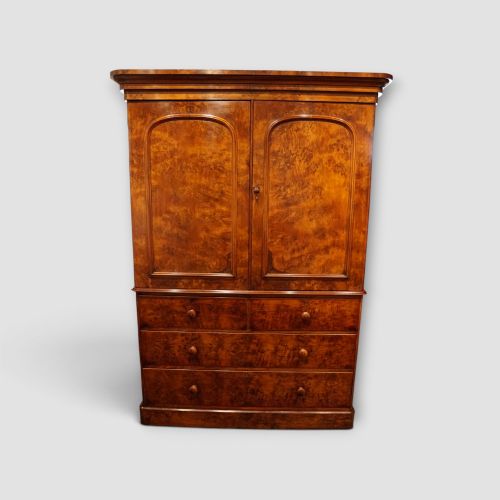
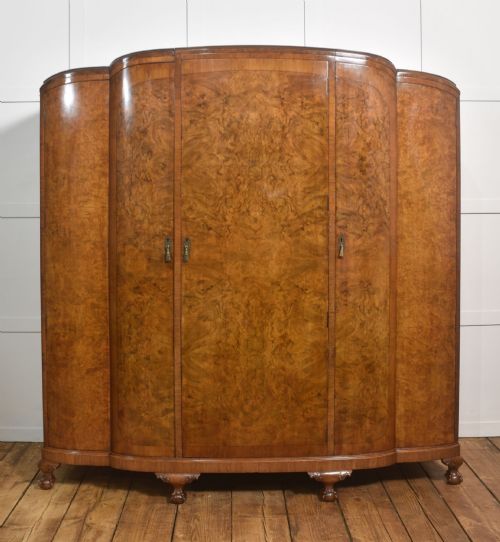
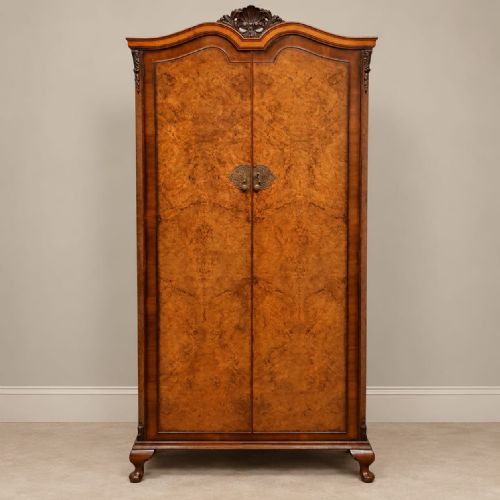


Fitted Walnut Armoire
A fitted walnut armoire brings monumental presence and tailored internal storage to a bedroom.
Fitted Walnut Armoire
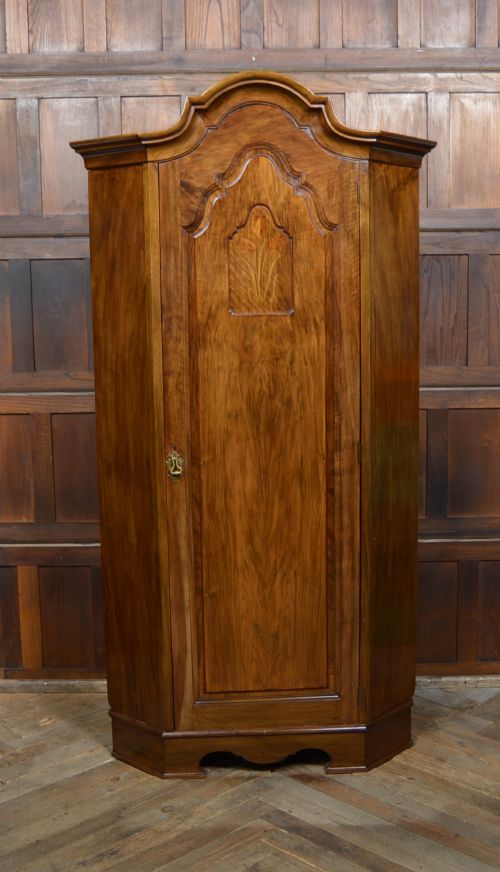
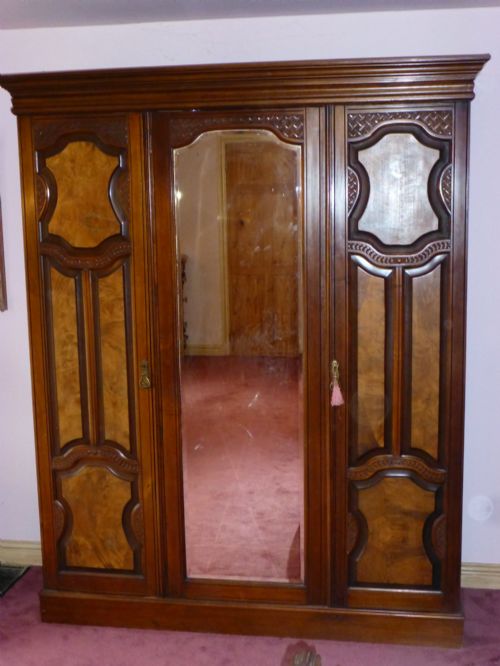
When you search for a fitted walnut armoire, you are looking at substantial storage furniture built to house clothes, linen and personal items with internal hanging space and drawers. These pieces range from Victorian and Edwardian examples to streamlined Art Deco designs and earlier 18th Century continental forms.
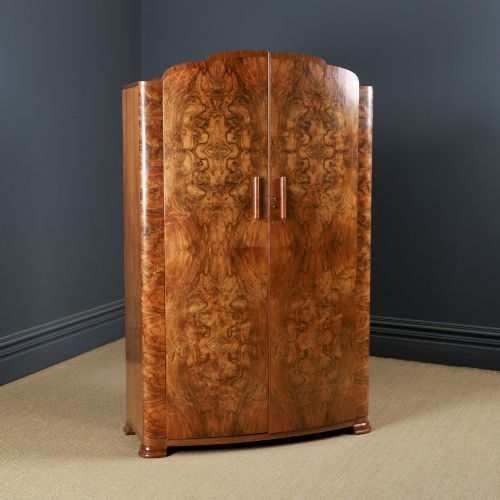
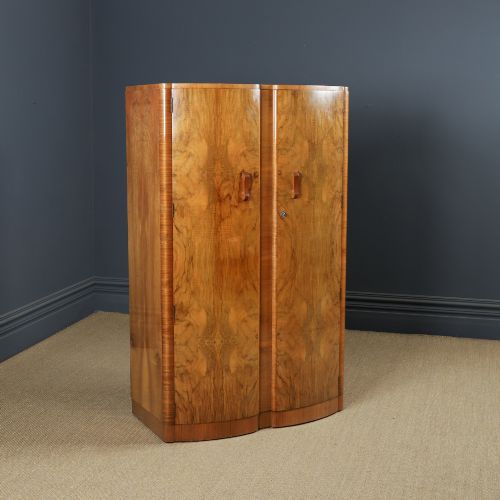
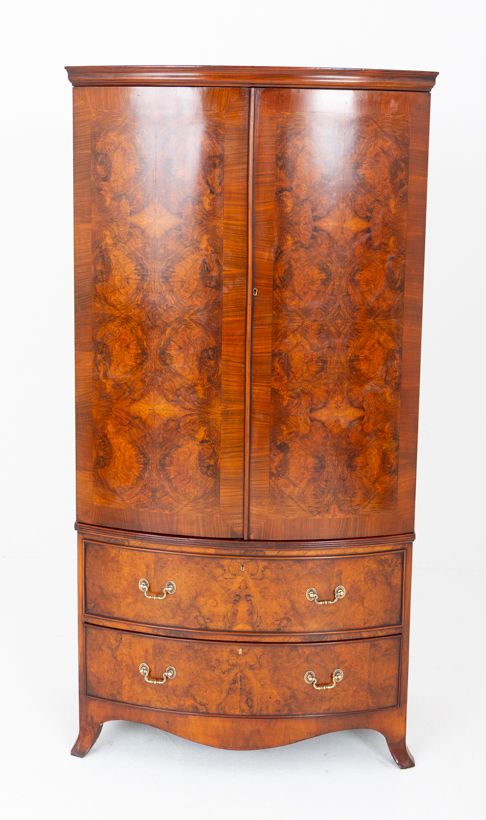
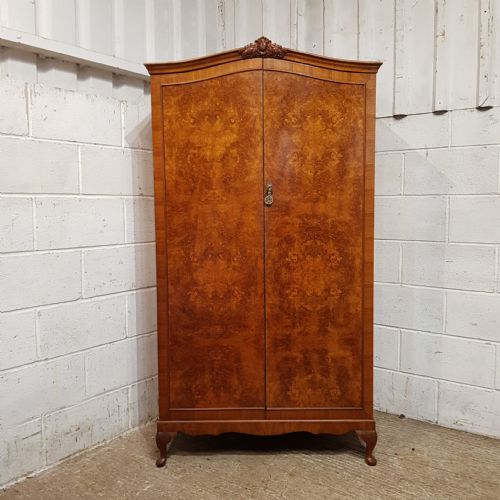
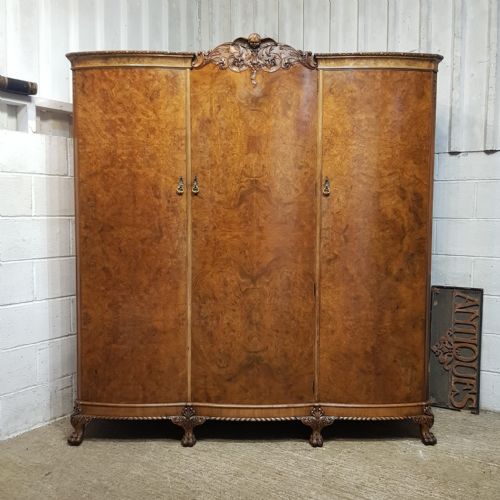
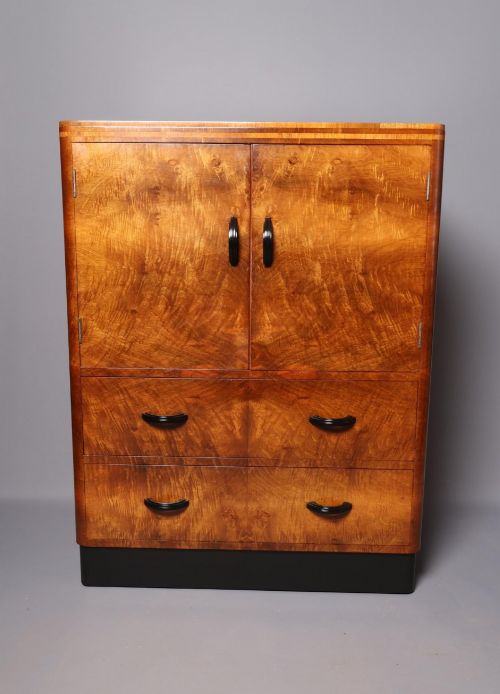
You are most likely to meet burr walnut and plain walnut wardrobes from the 1920s and 1930s on this page, often featuring fitted interiors with compartment shelves and compactum configurations. The selection also includes 19th Century linen presses and triple wardrobes with bow fronts and serpentine lines.
Originating as large clothes presses and grand chamber cupboards, these fitted pieces combine architectural timber facades with specialised internal compartments. They serve as primary bedroom furniture designed to organise a wardrobe while displaying rich timber grain across large panel doors.
How they were made
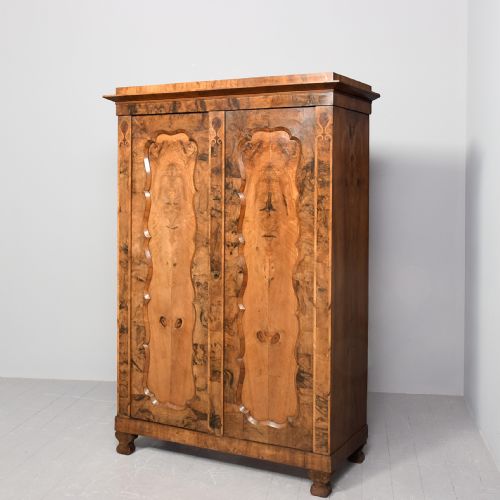
Cabinet makers constructed these large wardrobes using solid walnut and structural timbers, applying figured walnut and burr walnut veneers to the visible exterior surfaces to create dramatic grain patterns. Secondary woods such as ash appear in internal linings and drawer construction, paired with cast brass hardware and glass mirrors.
The technique relies on precise timber selection and book-matching veneers across large doors, complemented by curved bow-front and serpentine framing. Interiors feature fitted shelving, hanging rails, and internal drawers built into compactum layouts that require exact joinery to support heavy timber doors.
Burr walnut burls form as tree excrescences, creating wild, swirling natural patterns that turn wardrobe doors into abstract art.
What varies in quality
The standard of a fitted walnut armoire rests on the choice of timber veneer and the complexity of its external form. Pieces featuring highly figured burr walnut, mirrored grain matching, and serpentine or bow-front construction sit at the higher end of the scale compared to plain flat-fronted examples.
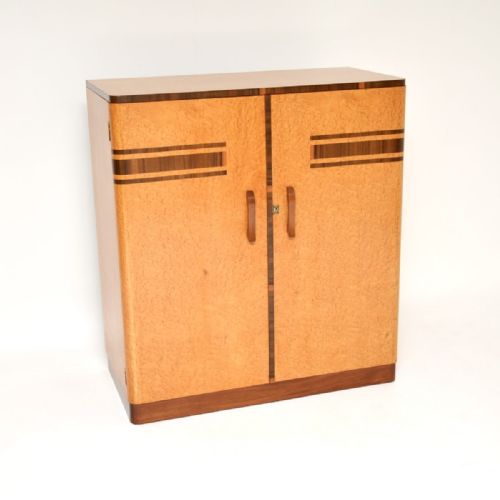
Internal organisation also separates ordinary production from superior workshop output, particularly in fitted compactums with specialised trays and neatly divided compartments. The refinement of the brass fittings, the integrity of the structural joinery, and the execution of carved or stepped Art Deco geometric details define the overall calibre.
Holland and Sons·Harry and Lou Epstein
The Fitted Walnut Armoire Glossary
- Armoire
- A tall wardrobe or cupboard, traditionally used for storing clothes and originating in continental Europe. These pieces often feature large double doors enclosing hanging space or sliding shelves.
- Compactum
- A fitted wardrobe that combines hanging space, sliding trays, and multiple internal drawers within a single unified cabinet. This design maximises storage efficiency for diverse garments.
- Burr Walnut
- A specialised timber cut from the growth warts or burls of walnut trees, yielding highly decorative, swirling grain patterns. It was frequently sliced into veneer for grand cabinet doors.
- Linen Press
- A traditional storage cabinet comprising upper shelving for folded textiles and lower pull-out drawers for smaller items. They frequently appear in Victorian walnut configurations.
- Serpentine Front
- A cabinet facade characterised by a wavy outline featuring a convex centre flanked by concave curves, or vice versa. This sophisticated shape demands advanced woodworking skill.
Fitted Walnut Armoire: Frequently Asked Questions
What is a fitted walnut armoire used for?
These large cabinets provide comprehensive bedroom storage through a combination of hanging rails, internal shelves, and fitted drawers.
They house garments, linens, and accessories while acting as a commanding architectural focal point in a master bedroom.
How do I date a walnut wardrobe?
Dating relies on stylistic markers such as Victorian proportions, Edwardian detailing, or 1930s Art Deco geometric lines and waterfall cornices.
Construction methods, secondary timbers like ash, and the type of veneer figure also offer clear clues to the decade of manufacture.
Are these wardrobes easy to dismantle?
Many large period wardrobes and compactums were constructed to be taken apart into sections for transport and installation in upper rooms.
It is advisable to check the construction of individual pieces, as some larger triple wardrobes are built as solid, non-demountable units.
What is the difference between an armoire and a compactum?
An armoire typically focuses on tall vertical hanging space enclosed by two or three main doors.
A compactum integrates multiple internal storage variations including dedicated drawer stacks, sliding trays, and compartments alongside the hanging sections.