



Fitted Vanity Box Bottles
These fitted vanity box bottles are portable containers of glass and silver designed for dressing tables and travel, holding perfumes and cosmetics.
Fitted Vanity Box Bottles
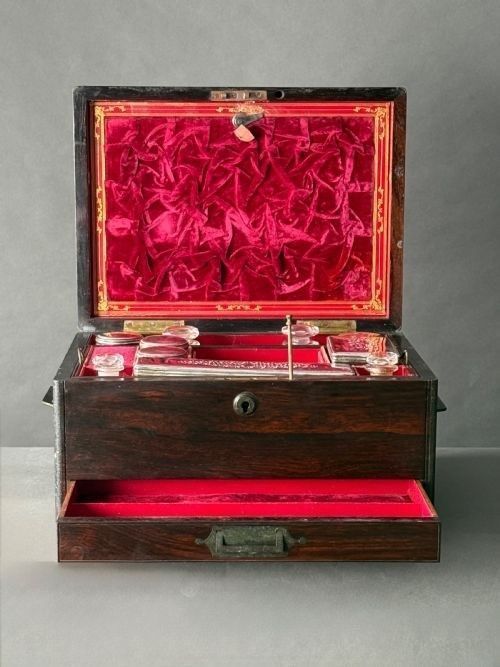
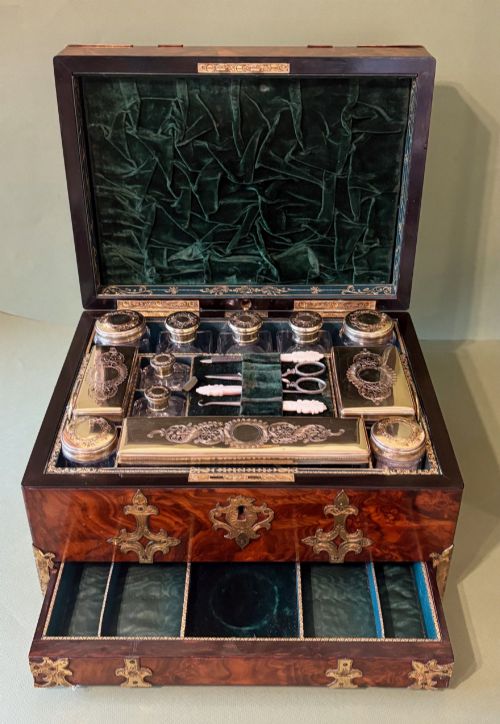
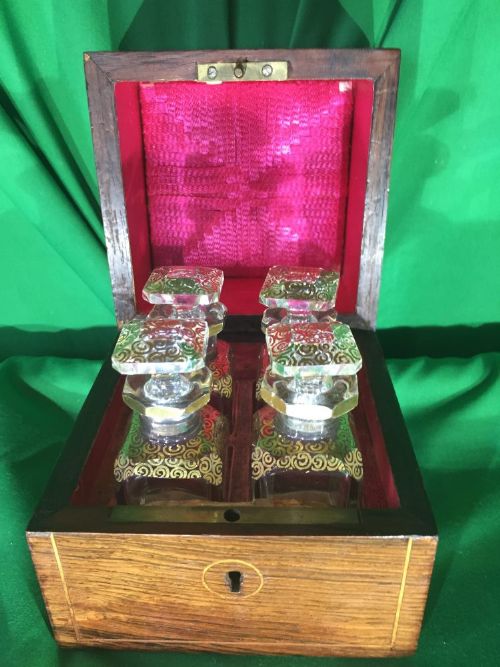
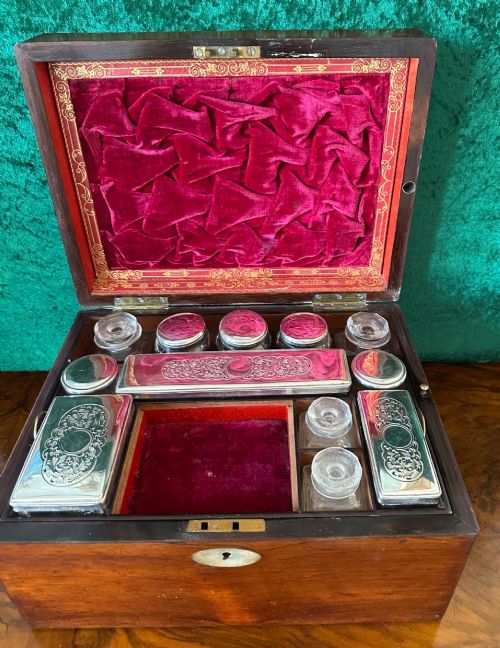
When you search for fitted vanity box bottles, you encounter portable containers designed to house glass scent bottles and cosmetic jars securely inside a larger travelling case or dressing box. These fitted vanity box bottles appear in various forms across the Georgian, Regency, and Victorian periods, often accompanying ladies' dressing cases and jewellery boxes.
The pieces listed on this page span several decades of the nineteenth century, including specific dates such as eighteen hundred and twenty, eighteen hundred and twenty-three, eighteen hundred and sixty-two, and circa eighteen hundred and ninety. You will find them housed in rosewood, walnut, coromandel, and kingwood boxes, sometimes bound in brass or mounted with ormolu.
Many of these items integrate perfume bottles, cologne bottles, and crystal cut trays into velvet or silk-lined interiors. The assortment includes scent caskets, travelling sets, and vanity cases originating from English and French workshops.
Materials and construction
The exterior cases utilise hardwoods like rosewood, walnut, coromandel, and kingwood, frequently enhanced with brass binding, mother-of-pearl inlay, or ormolu mounts. These robust timber structures protect the fragile glass components housed within during travel.
Internal compartments are meticulously lined with materials such as velvet and silk to cradle the individual bottles. The bottles themselves are formed from cut glass or crystal, occasionally fitted with silver or silver-gilt collars and tops.
Fitted Vanity Box Bottles Retail Price Guide 2026
Typical asking prices for fitted vanity box bottles among the pieces listed under this phrase on Sellingantiques today, from the lower quarter to the upper quarter. They describe what is for sale here now, not the wider market.
Several sets retain their original bottles, ensuring every stopper still rests quietly in its velvet-lined berth.
Evaluating quality and execution
The standard of a piece depends heavily on the integration between the exterior box and its internal fittings. Superior examples maintain complete sets of matching cut glass or crystal bottles that sit snugly within their original velvet or silk compartments.
Material selection and decorative detailing also determine the grade of the object. High-quality pieces feature dense exotic timbers like coromandel or kingwood, complemented by precision metalwork such as brass bound edges, silver hallmarked components, or finely chased ormolu mounts.
Asprey
The Fitted Vanity Box Bottles Glossary
- Coromandel
- A dense and heavily figured exotic timber from Asia, frequently utilised for luxury nineteenth-century dressing cases and vanity boxes.
- Ormolu
- Gilded bronze mounts applied to the exterior of wooden caskets and boxes for decorative effect.
- Silver-gilt
- Silver that has been coated with a thin layer of gold, often found on the caps and collars of better scent bottles.
- Cut glass
- Glass decorated by being ground and polished with wheels, creating facets that catch the light on vanity bottles and crystal trays.
- Dressing case
- A fitted box containing compartments for cosmetics, brushes, and perfume bottles, designed for travelling or domestic use.
Fitted Vanity Box Bottles: Frequently Asked Questions
What periods do these vanity boxes come from?
The pieces span the Georgian, Regency, and Victorian eras, with several examples originating from the nineteenth century.
Specific dates recorded among the items range from eighteen hundred and twenty through to the eighteen nineties.
What materials were used for the bottles?
The bottles are primarily made from cut glass and crystal, often featuring glass stoppers and decorative shaping.
Many examples include additions of silver, silver-gilt, or Baccarat glass elements on the perfume and scent bottles.
How were these fitted boxes originally used?
They served as portable dressing stations for travellers and ladies, keeping personal grooming items organised.
Inside the rosewood or walnut cases, compartments held perfumes, colognes, jewellery, and writing or cosmetic implements.
What woods appear on the exterior cases?
Common cabinet timbers include rosewood, walnut, coromandel, and kingwood, selected for their rich grain.
Cabinetmakers frequently added brass binding, mother-of-pearl inlay, or ormolu mounts to decorate the exterior surfaces.