




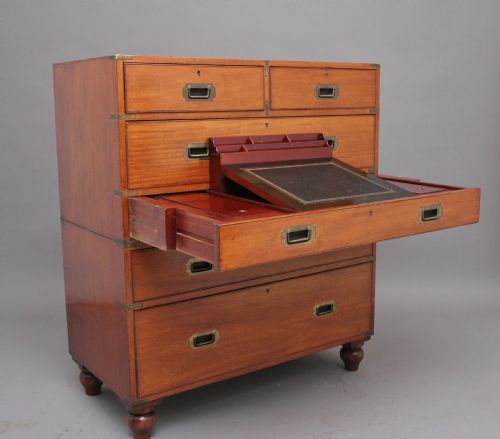
Fitted Secretaire Chest
A fitted secretaire chest combines the everyday storage of a traditional drawer unit with a pull-out writing drawer, offering a practical workspace that hides away when not in use.
Fitted Secretaire Chest
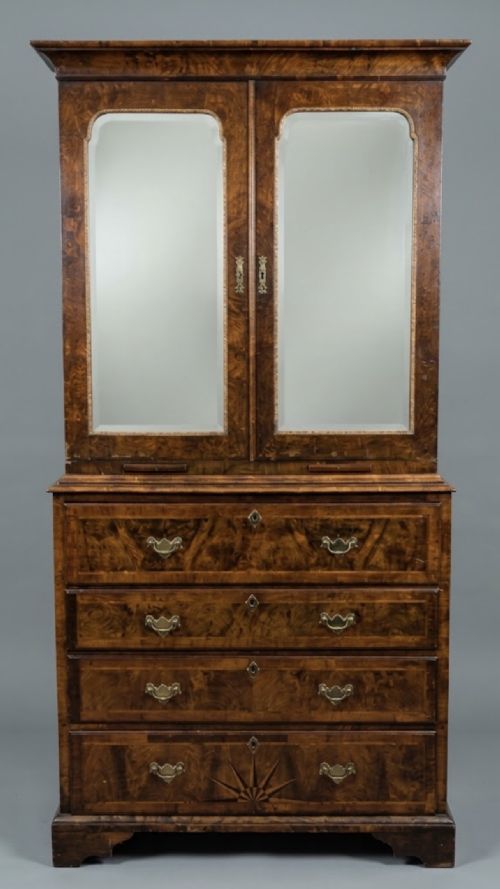
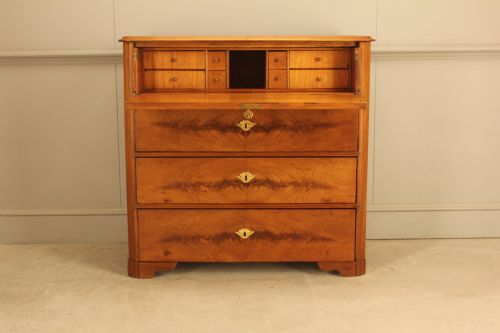
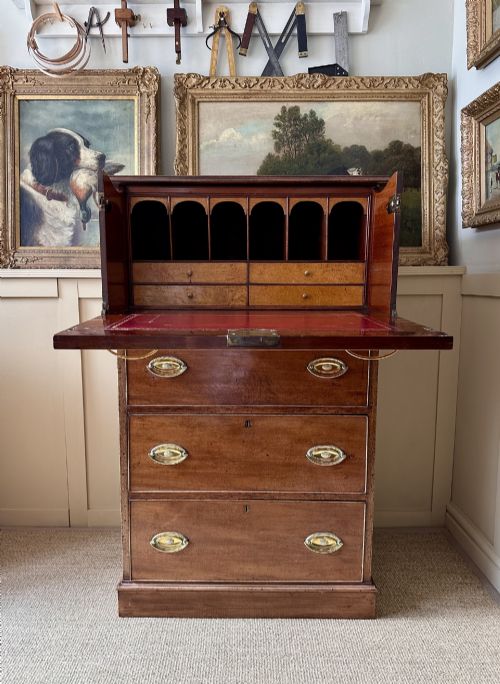
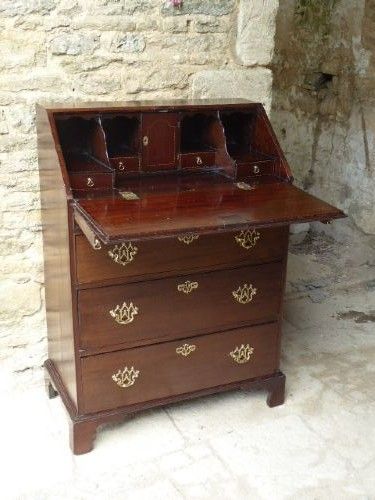
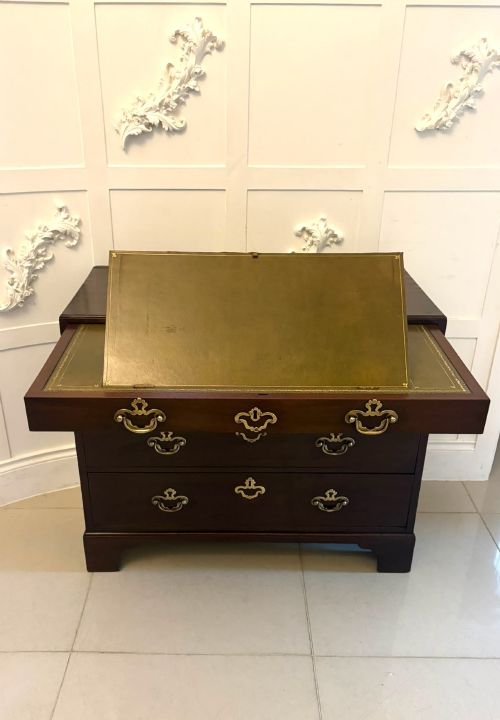
A fitted secretaire chest bridges the gap between a standard chest of drawers and a writing desk, providing domestic storage alongside a dedicated workspace. The form emerges frequently in Georgian, Regency and Victorian pieces, constructed across the eighteenth and nineteenth centuries.
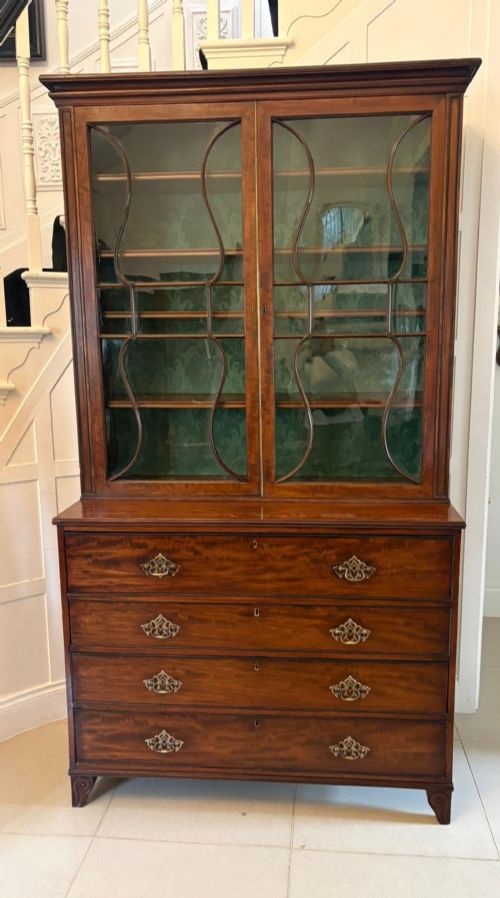
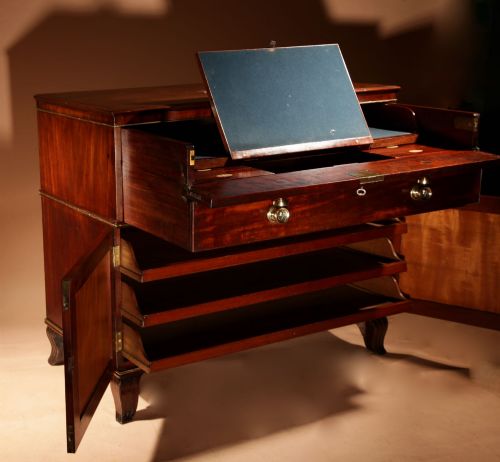
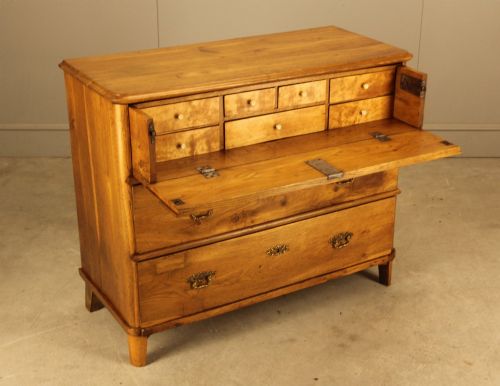
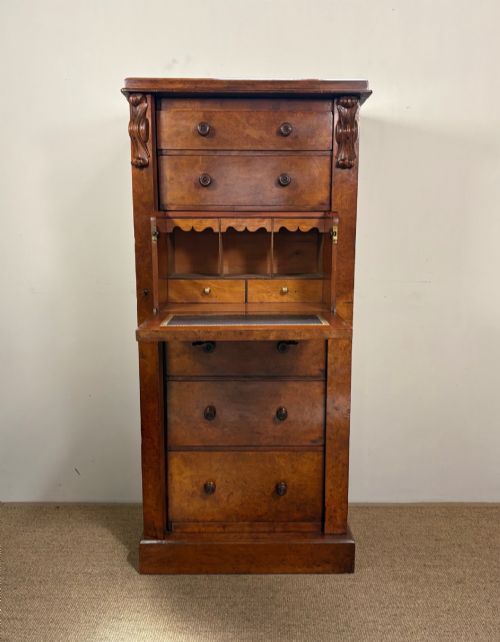
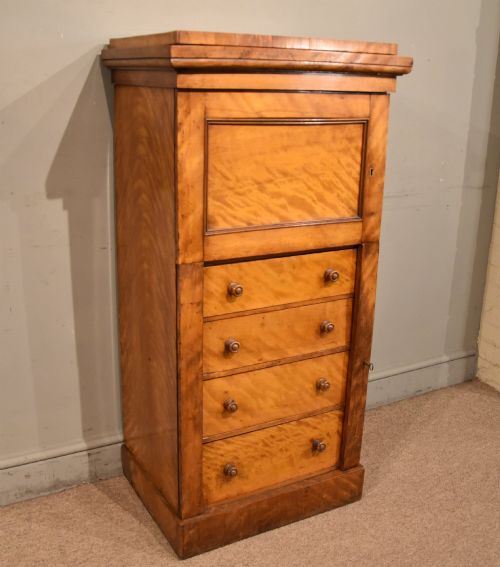
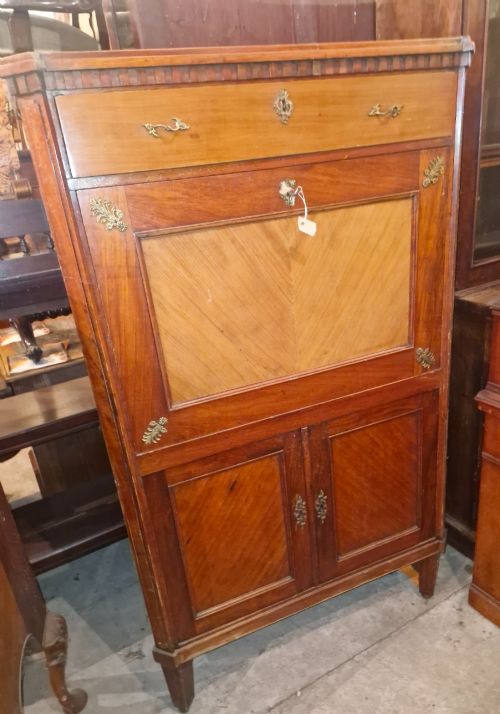
Examples on this page span several distinct formats, including standard chests of drawers with drop-front writing compartments, tallboys, campaign furniture built in sections, and taller library bookcases. Woods such as mahogany, walnut and oak predominate, often enhanced by flame veneers or satinwood details.
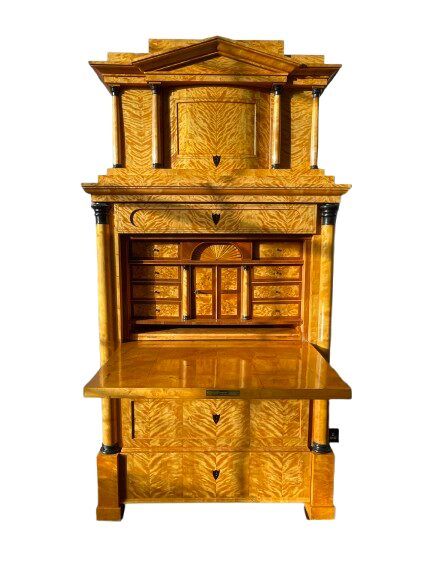
Regional variations appear across the selection, ranging from English workshops to Scottish makers and Swedish Biedermeier or country pieces. The interior fittings typically include small drawers, pigeonholes and sometimes leather or baize writing surfaces.
Materials and Construction
Cabinetmakers utilised solid native and imported timbers, applying figured mahogany, walnut, or curl mahogany veneers to primary surfaces while using secondary woods like oak for drawer linings. Brass hardware, including drop handles, escutcheons and campaign-style corner brackets, provides structural reinforcement and visual contrast.
The secretaire drawer itself relies on clever internal mechanisms, often using support slides, hinges or quadrant arms to hold the drop-front flap level when open. Interior compartments are constructed with dovetailed joints and miniature drawers, demonstrating fine joinery on a domestic scale.
Fitted Secretaire Chest Retail Price Guide 2026
Typical asking prices for fitted secretaire chest among the pieces listed under this phrase on Sellingantiques today, from the lower quarter to the upper quarter. They describe what is for sale here now, not the wider market.
Listings feature mahogany, walnut and oak timbers alongside specialist campaign brasswork across eighteenth and nineteenth-century periods.
Evaluating Craftsmanship
Quality rests in the selection of timber and the precision of the cabinetwork, particularly in how seamlessly the secretaire drawer integrates into the wider chest facade. Superior pieces display carefully matched veneer grains across the drawer fronts and clean, hand-cut dovetails on every internal component.
The sophistication of the internal fittings defines the upper tier of these pieces, distinguishing simple pigeonholes from complex arrangements of small drawers, secret compartments and inset leather writing surfaces. Well-executed hardware, original brasses and stable hinge mechanisms further separate standard utility items from master workshops.
Gillows of Lancaster·Captain Fairbrother
The Fitted Secretaire Chest Glossary
- Secretaire
- A writing drawer or compartment featuring a drop-front flap that conceals small drawers and pigeonholes inside.
- Wellington chest
- A tall, narrow chest of drawers secured by a hinged locking stile on one side that fastens over the drawer edges.
- Tallboy
- A tall chest of drawers made in two sections, often taking the form of a chest on chest or a chest mounted on a stand.
- Campaign chest
- Portable furniture built in two or more separable sections with recessed brass handles, designed for military transport.
- Biedermeier
- A Central European style dating from the nineteenth century characterised by clean lines, restrained ornamentation and flat expanses of figured wood.
Fitted Secretaire Chest: Frequently Asked Questions
What is a fitted secretaire chest?
A fitted secretaire chest is a case piece that looks like a standard chest of drawers from the outside but conceals a drop-front writing drawer with internal compartments.
It provides both domestic storage and a compact desk space within a single item of furniture.
How were these pieces used historically?
These items served as dual-purpose furniture for correspondence and household administration in domestic settings, bedchambers and studies.
In campaign configurations, they travelled with military officers to provide a portable desk and wardrobe in the field.
How do I distinguish Georgian from Victorian examples?
Georgian pieces generally favour classical proportions, bracket feet and rich mahogany or walnut timbers with subtle stringing or crossbanding.
Victorian items often introduce heavier timbers, bolder veneers like burr walnut or satin birch, and specialised locking mechanisms such as the side-stile found on Wellington chests.
How do I care for the leather writing surface?
The leather or baize lining inside the drop-front drawer benefits from gentle dusting and protection from direct sunlight to prevent drying and fading.
Avoid using modern chemical cleaners or excessive moisture on the aged leather surface.