
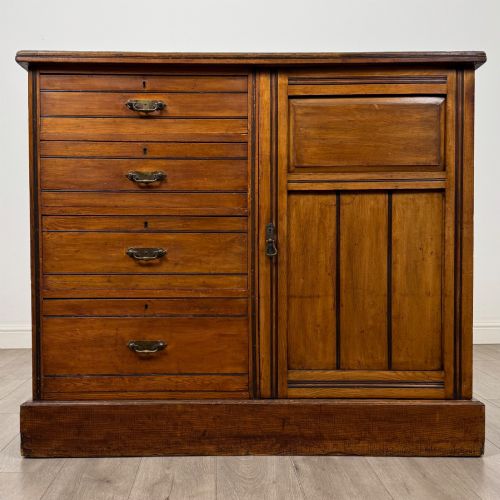
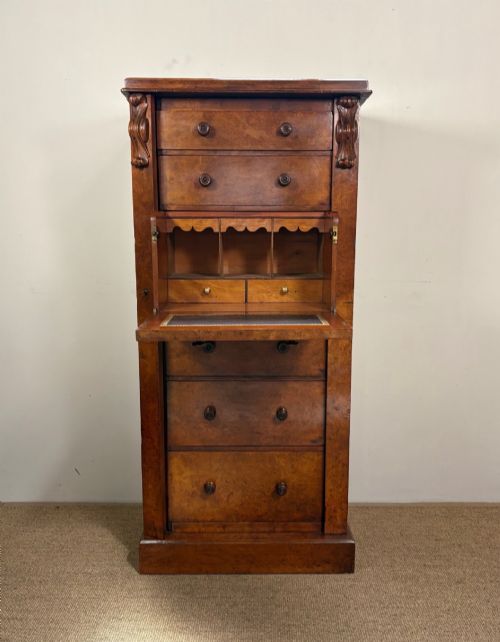
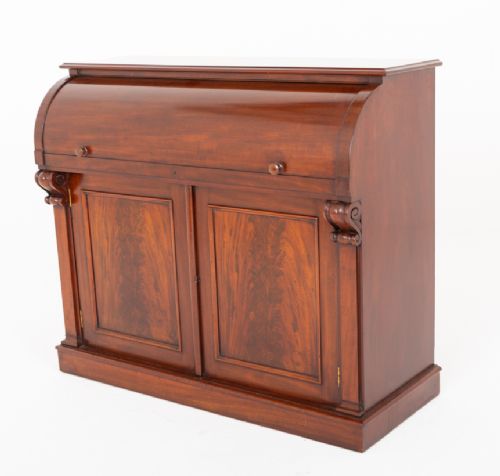
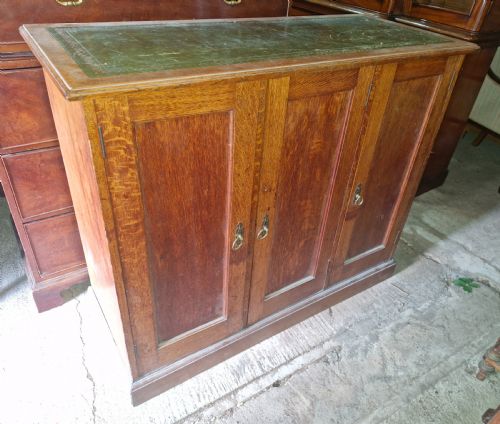
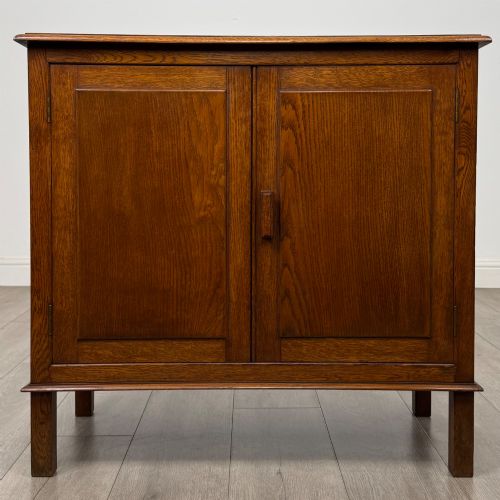
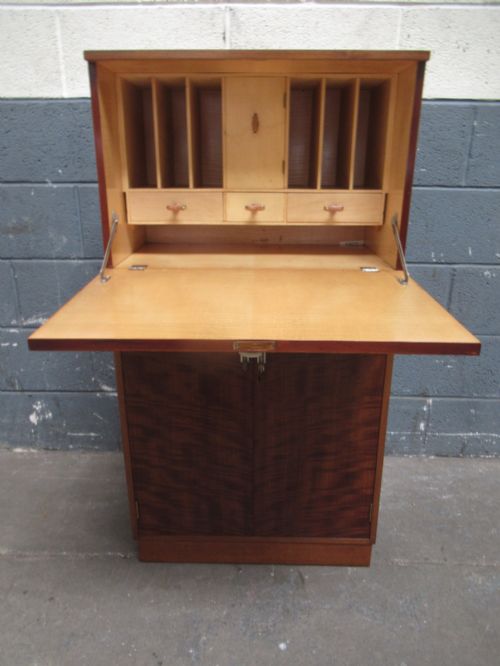
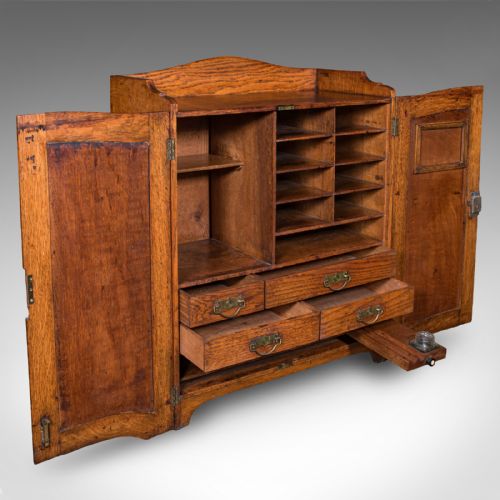


Fitted Office Cabinet
A fitted office cabinet offers organised storage for correspondence and documents, combining practical internal compartments with period character.

Fitted Office Cabinet
A fitted office cabinet provides specialised storage for paperwork through internal pigeon holes, drawers, and compartments concealed behind panelled doors or drop-front writing surfaces. When you search for a fitted office cabinet, you encounter pieces designed to manage documents and correspondence efficiently in professional or domestic settings.
The examples recorded here span the Victorian, Edwardian, and early twentieth-century periods, alongside nineteenth-century pieces. These cabinets range from compact mahogany storage units and pedestal formats to larger bureau bookcases and cylinder desks.
You are most likely to meet oak and mahogany constructions featuring internal fittings such as letter files, pigeon holes, and small drawers. These variations reflect the changing administrative needs of businesses and private estates across the nineteenth and early twentieth centuries.
Materials and construction methods
Cabinet makers built these pieces primarily using solid hardwoods such as mahogany, oak, and walnut, frequently enhancing surfaces with flame mahogany veneer or brass hardware. Structural framing relied on traditional joinery to support heavy internal pigeon holes and sliding mechanisms.
Specialised fittings, including patented letter filing systems and drop-front writing mechanisms, required precise carpentry to ensure smooth operation. Brass handles, hinges, and locks provided both functional security and decorative contrast against the dark timbers.
One listed estate cabinet previously belonged to a gamekeeper, proving that even paperwork storage needed a rugged country iteration.
Assessing quality and craftsmanship
Quality in these cabinets rests upon the complexity and intactness of the internal fittings, such as pigeon holes, secret compartments, and patent filing mechanisms. Pieces retaining their original brass hardware, fitted drawers, and working locks demonstrate superior original manufacture.
The choice of timber and veneer work distinguishes finer examples, particularly where figured mahogany or quarter-sawn oak is selected for prominent surfaces. Robust secondary timbers used in internal drawer construction indicate high standards of workshop production.
Maple & Co.·Wooton Desk Company·Amberg
The Fitted Office Cabinet Glossary
- Secretaire
- A desk or cabinet featuring a pull-down writing flap that conceals a nest of small drawers and pigeon holes. This form allows a piece of furniture to serve double duty as a storage cabinet and a writing surface.
- Pigeon hole
- A small, open compartment within a desk or cabinet used for sorting letters and documents. These compartments form the core of the fitted interior in office furniture.
- Pedestal cabinet
- A freestanding storage unit supported by one or more column-like bases containing drawers or cupboards. They offer compact vertical storage for office environments.
- Rolltop
- A flexible slatted tambour shutter that slides along a track to cover the working surface and pigeon holes of a desk. This mechanism secures the contents without requiring a hinged fall-front.
Fitted Office Cabinet: Frequently Asked Questions
What is a fitted office cabinet?
A fitted office cabinet is a piece of antique furniture designed with internal compartments, pigeon holes, and drawers for sorting and storing documents. These units range from compact tabletop storage to large bureau bookcases.
They served administrative functions in nineteenth and early twentieth-century offices, libraries, and estate houses, keeping correspondence ordered and secure.
How do I date a fitted office cabinet?
Dating relies on identifying timber choices, construction techniques, and stylistic markers associated with specific periods like the Victorian era or the Edwardian period. Examining secondary woods and hardware also helps establish age.
Patent marks and maker labels, when present, provide precise manufacture dates for pieces produced around the turn of the twentieth century.
How were these cabinets used?
These cabinets were used to organise letters, ledgers, and office supplies in domestic studies and commercial workplaces. Drop-front sections provided a writing surface that folded away when not in use.
Internal pigeon holes and specialised filing systems allowed clerks and estate managers to retrieve documents quickly.
How do I care for antique office furniture?
Maintain antique timber cabinets by keeping them away from direct heat sources and fluctuating humidity levels to prevent wood splitting. Regular dusting with a soft, dry cloth preserves the polish and finish.
Feed dry wood surfaces periodically with appropriate wax to maintain the moisture and lustre of the mahogany or oak.