
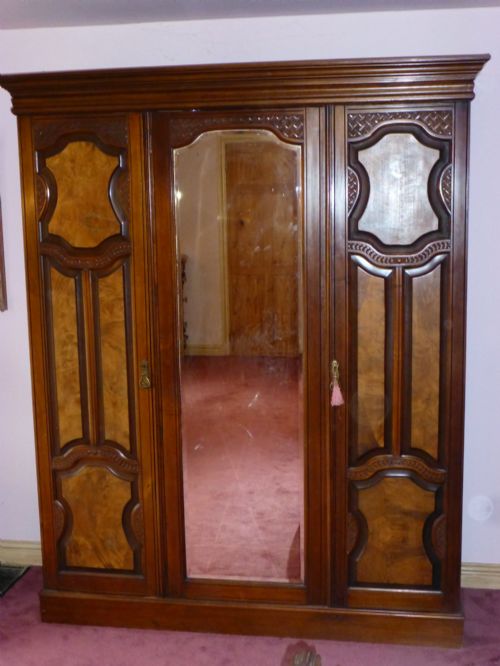
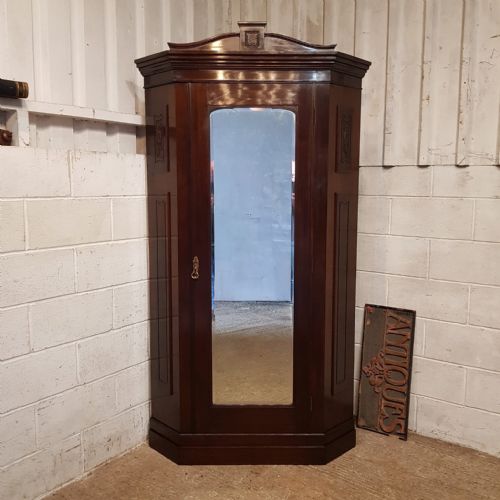
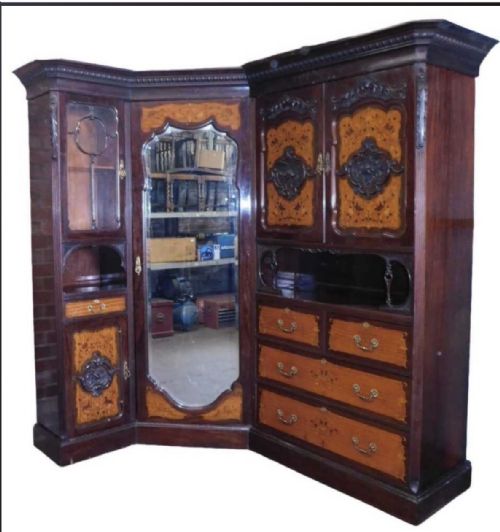


Fitted Mirrored Wardrobe
A fitted mirrored wardrobe brings useful storage and a full length glass panel to the bedroom, grounding the room in period timber.
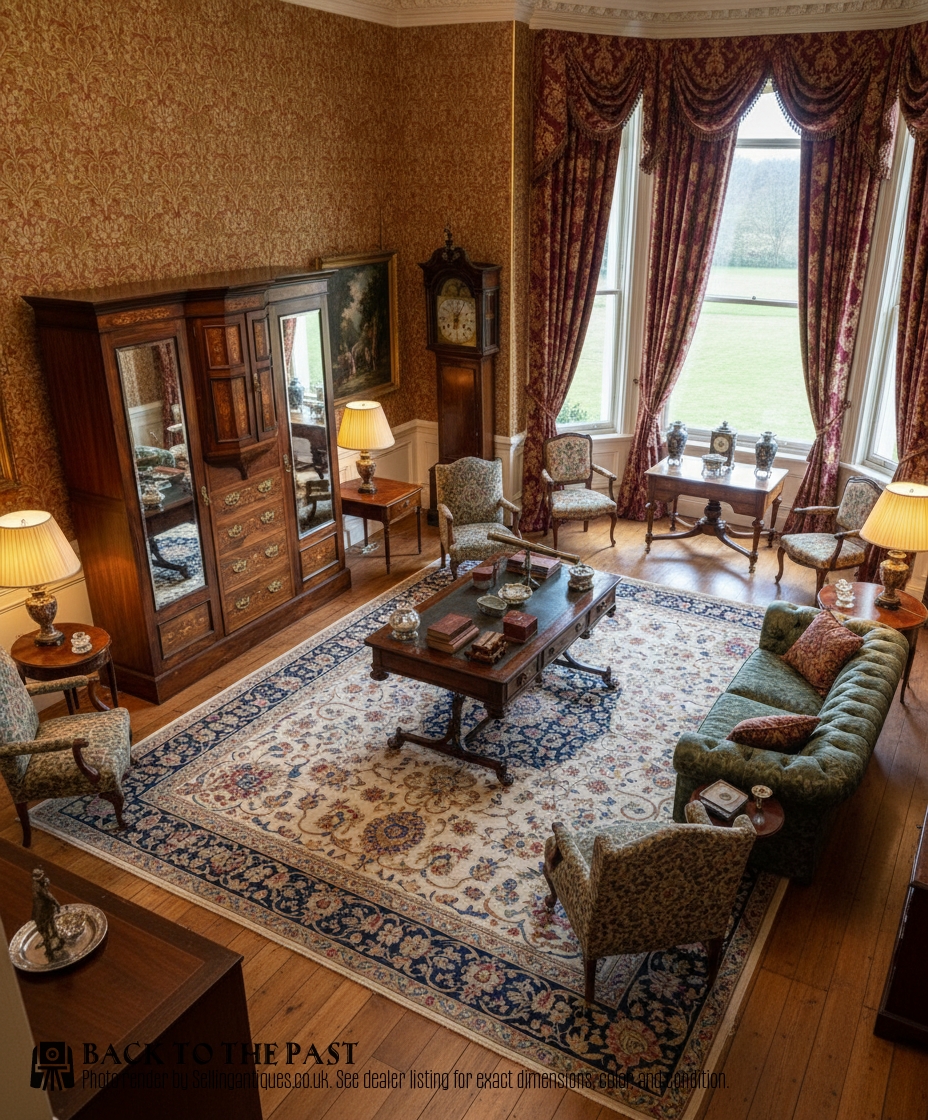
Fitted Mirrored Wardrobe
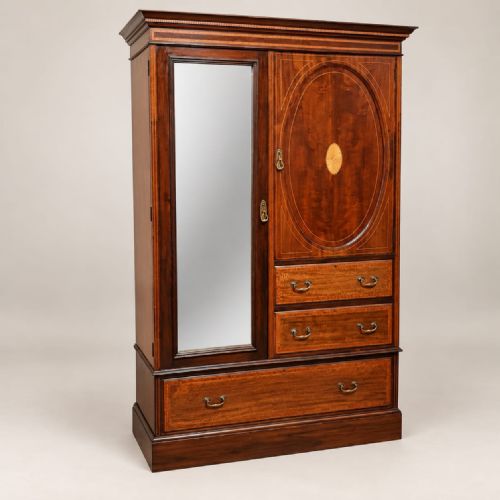
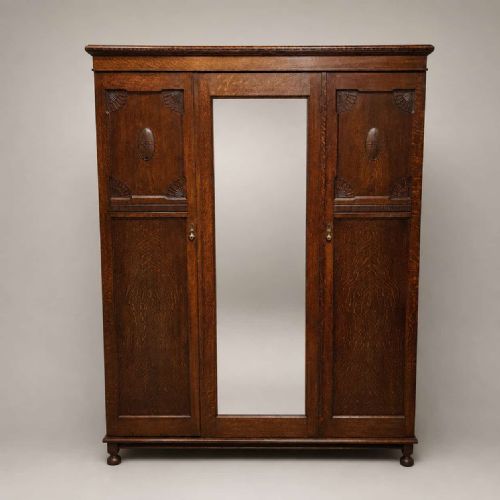
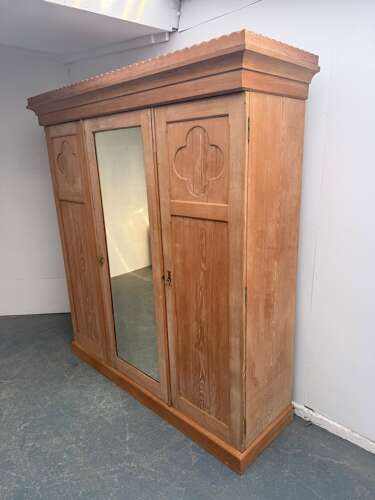
A fitted mirrored wardrobe provides substantial bedroom storage through large doors, often incorporating central glass plates designed to reflect light and show reflections. When you search for a fitted mirrored wardrobe, you encounter pieces originating primarily from the Victorian and Edwardian eras, alongside examples from around nineteen hundred and nineteen twenty.
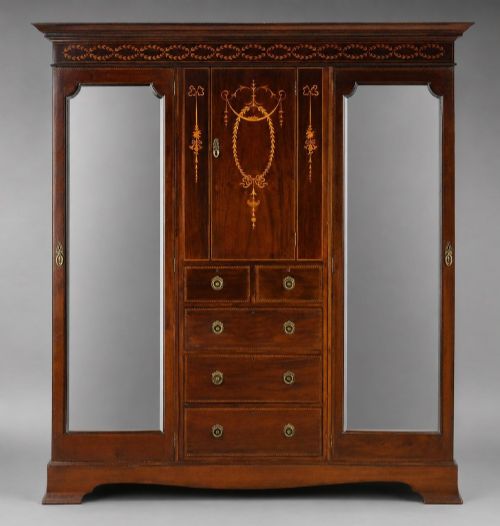
The format spans single doors, triple configurations, and compactum designs that combine hanging space with drawers and linen compartments. Mahogany, walnut, and oak form the structural backbone of these pieces, frequently enriched with satinwood, burr walnut, or ash highlights and brass hardware.
Edwardian and Victorian workshops produced many of these large items to serve as the centrepiece of a bedroom suite. The inclusion of mirror glass serves both a practical dressing purpose and light distribution across the floor space.
Distinctions in construction and design
The standard of a wardrobe rests on the selection of timber veneers, such as burr walnut or figured birch, and the crispness of marquetry inlay work. Finer examples display thoughtful proportion across triple sections or compactum layouts, integrating internal linen drawers seamlessly.
Hardware quality and the condition of the bevelled mirror glass indicate the original tier of production. Maker attribution to established firms like Maple and Co or Gillows often aligns with superior internal fittings and heavier timber scantlings.
Design influences across the listings include Arts and Crafts, Aesthetic Movement, and Jacobean Revival styles.
Holland and Sons·Maple and Co·Gillows of Lancaster
The Fitted Mirrored Wardrobe Glossary
- Compactum wardrobe
- A fitted wardrobe that includes internal drawers, shelves, and hanging space within a multi-section carcass.
- Mirror glass
- A reflective glass plate set into the door panels to provide a full length dressing mirror.
- Marquetry
- Decorative woodwork where different coloured veneers form pictorial or geometric patterns on the surface.
- Satinwood
- A pale, lustrous timber utilised for stringing, banding, and general cabinet construction during the Victorian and Edwardian periods.
- Cornice
- The moulded architectural projection running along the top of the wardrobe carcass.
Fitted Mirrored Wardrobe: Frequently Asked Questions
How do I assemble a large triple wardrobe?
Most period wardrobes of this scale dismantle into a cornice, a base, and separate side and central carcass sections for transport.
Reassembly requires a spirit level to ensure the frame sits square so that the heavy mirrored doors hang properly on their hinges.
What is the difference between an armoire and a wardrobe?
An armoire is a traditional tall cupboard with roots in continental European furniture making, often featuring adjustable shelving behind doors.
A wardrobe specifically prioritises horizontal hanging space for garments on rails, though compactum versions blend both formats.
How do I care for the mirror glass?
Clean the glass with a soft cloth and a neutral cleaning solution, avoiding abrasive pads that might scratch the surface or damage the surrounding wooden frame.
Check the mirror backing periodically to ensure moisture does not cause silvering degradation behind the plate.
How do I distinguish Edwardian pieces from Victorian ones?
Victorian wardrobes often exhibit heavier proportions, darker mahogany or walnut tones, and rich carved or figured surfaces.
Edwardian examples tend to display lighter satinwood inlays, ash or pollard oak accents, and a brighter overall aesthetic.