





Fitted Case Cutlery Set
A fitted case cutlery set brings order to dining, housing matched utensils within tailored wooden boxes lined in velvet or silk.
Fitted Case Cutlery Set
A fitted case cutlery set comprises matched dining implements arranged securely inside a dedicated box, spanning periods from the nineteenth century into the nineteen-forties. These gatherings range from compact teaspoon groupings and Christening sets to thirty-six piece fish services and substantial oak cased canteens.
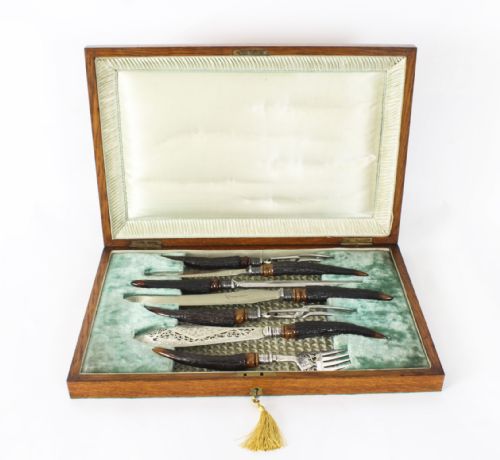
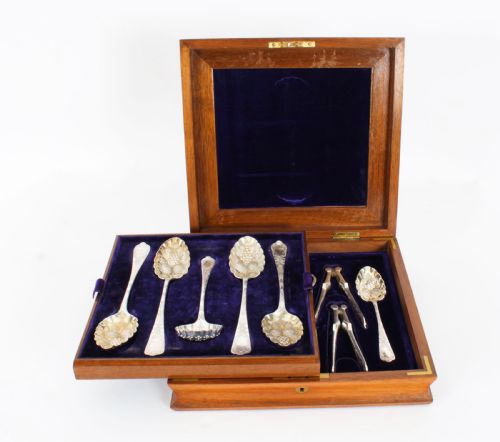
Victorian and Edwardian examples dominate the selection, often incorporating specialist serving tools like carving knives, nutcrackers, or grape scissors alongside standard flatware. The containers themselves utilise woods like oak, frequently paired with fitted velvet or silk interiors designed to hold each specific piece in place.
Materials and construction
Makers combine sterling silver or silver plate with organic elements such as mother of pearl and antler horn for utensil handles. These components rest within protective wooden housings covered in leatherette or lined with tactile velvet and silk fabrics.
Metal elements display traditional British hallmarks or electroplated finishes originating from silversmithing hubs like Sheffield and Chester. Individual compartments inside each box are custom-shaped to snugly receive the specific contours of spoons, forks, or carving knives.
Fitted Case Cutlery Set Retail Price Guide 2026
Typical asking prices for fitted case cutlery set among the pieces listed under this phrase on Sellingantiques today, from the lower quarter to the upper quarter. They describe what is for sale here now, not the wider market.
Listings feature items utilising silver plate, sterling silver, wood, velvet, silk, leatherette, mother of pearl, and antler horn across Victorian and Edwardian periods.
Distinctions in craftsmanship
Superior sets separate themselves through the integrity of the fitted interior and the precision of the box's joinery, ensuring every utensil sits flush within its designated recess. The choice of handle material, from genuine mother of pearl to carved antler horn, alongside robust sterling silver construction rather than plating, elevates the standing of a service.
The reputation of the original maker, such as established silversmiths or cabinet firms, influences the desirability of a piece. Preservation of the original box lining and the completeness of the service further define the grade of surviving sets.
Waring & Gillows·Hukin & Heath·Cooper Brothers and Sons·Thomas Harwood and Co
The Fitted Case Cutlery Set Glossary
- Canteen
- A fitted wooden box or chest specifically designed to store a comprehensive set of cutlery. These containers often feature multiple tiers or slotted trays.
- Sterling silver
- A silver alloy containing 92.5 percent pure silver by mass, frequently hallmarked on British cutlery to denote official standard purity.
- Silver plate
- A layer of silver applied to a base metal core, commonly utilised across nineteenth-century and twentieth-century dining services.
- Mother of pearl
- The iridescent internal layer of pearl oyster shells, shaped and polished to form decorative handles for knives and fruit sets.
- Antler horn
- Natural deer antler utilised for tactile, textured cutlery handles particularly suited to carving and serving sets.
Fitted Case Cutlery Set: Frequently Asked Questions
What periods do these sets come from?
The available sets span the Victorian, Edwardian, and mid-twentieth-century periods, specifically dating from the 1870s through to the 1940s.
Most examples reflect late nineteenth-century and early twentieth-century British manufacturing traditions, particularly from silversmithing centres like Sheffield.
What materials are used for the handles?
Handles incorporate sterling silver, silver plate, mother of pearl, and antler horn depending on the specific service type and period.
Fruit sets and dessert services frequently feature mother of pearl, whilst carving tools often utilise textured antler horn.
How were these sets originally used?
These services served specialised dining functions, ranging from daily tea sets with sugar tongs to large fish services and multi-piece fruit gatherings.
The fitted cases protected delicate items like mother of pearl handled dessert knives and christening gifts during storage.
How do I identify the maker?
Makers are typically identified through hallmarks stamped onto the metal components or through manufacturer marks located inside the fitted case lining.
Prominent firms such as Cooper Brothers and Sons or Hukin & Heath stamped their specific trade signatures directly onto the silver.