



Cased Christening Set
A cased christening set marks a lifelong milestone, pairing fitted presentation boxes with precious silver spoons, forks and cups designed for a child's early years.
Cased Christening Set
A cased christening set comprises matching silver cutlery, egg cups, napkin rings or pushers presented inside a dedicated fitted box for safekeeping. These objects span the Victorian, Edwardian and Art Deco eras, reflecting the changing tastes of gift-giving across generations.
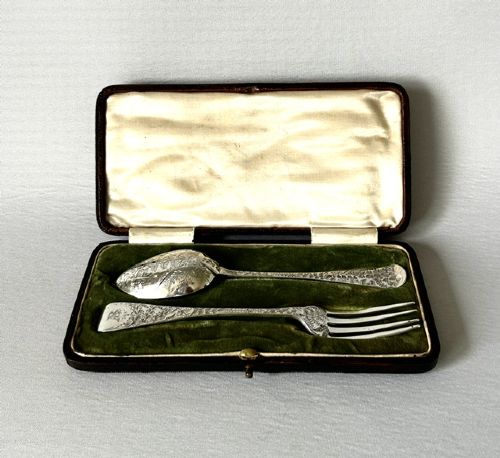
The version most commonly encountered on this page is the Victorian or early twentieth-century three-piece set, often containing a spoon, fork and knife or pusher in sterling silver. Makers designed these packages specifically to commemorate birth and baptism, ensuring they survived decades as treasured family heirlooms.
Materials and Construction
Silversmiths shaped the utensils from sterling silver or solid silver, occasionally employing silver plate for larger service combinations. Handles sometimes incorporate decorative elements like teddy bears or distinct motifs formed through stamping and casting.
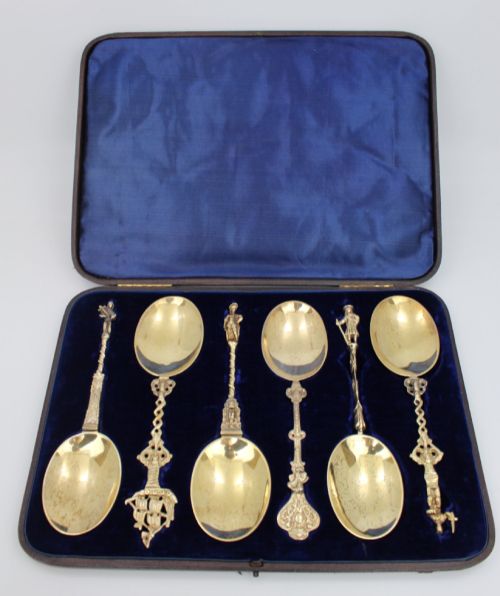
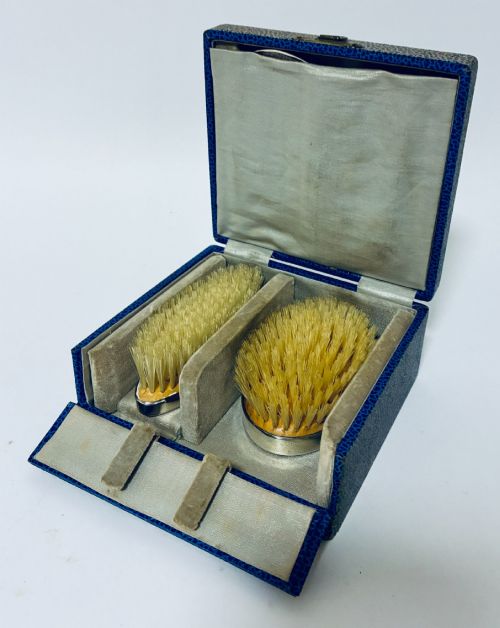
The protective outer cases rely on wood or heavy card foundations covered in leather, faux leather or textured leatherette. Interiors feature linings of silk or plush velvet, shaped precisely to hold each individual piece of cutlery securely in place.
Cased Christening Set Retail Price Guide 2026
Typical asking prices for cased christening set among the pieces listed under this phrase on Sellingantiques today, from the lower quarter to the upper quarter. They describe what is for sale here now, not the wider market.
Certain nursery sets feature endearing teddy bear handles designed to delight an infant receiving their very first piece of silver.
Distinctions in Quality
Quality rests primarily on the substantial weight of the silver components and the crispness of the chased or engraved ornamentation on the handles. Thicker gauge silver resists bending during use, whereas lighter pieces feel delicate and prone to distortion.
The integrity of the presentation case also dictates overall standing, with well-preserved leather exteriors and intact silk or velvet linings holding significantly more appeal than degraded or replaced boxes.
John Round·Thomas Harwood and Co·Sanders and Mackenzie·Lanson Ltd·Wm Adams Ltd·Broadway and Co·Docker and Burn Ltd·Henry Williamson Ltd
The Cased Christening Set Glossary
- Pusher
- A flat-ended silver utensil designed to help a small child push food onto a spoon without sharp tines. It remains one of the most frequent items found in twentieth-century sets.
- Hallmark
- An official stamp applied by an assay office indicating the purity of the metal, the year of manufacture and the maker's mark. These marks provide the key to dating each box's contents.
- Apostle spoon
- A spoon featuring the figure of an apostle cast or chased onto the terminal of the handle. Victorian silversmiths occasionally included these in elaborate presentation boxes.
- Leatherette
- A synthetic material mimicking leather, utilised to cover many presentation boxes from the Edwardian period onward. It offers durability while maintaining a smart exterior finish.
Cased Christening Set: Frequently Asked Questions
What items typically come inside a set?
Sets generally include a spoon and a food pusher, though larger configurations add forks, knives, napkin rings or egg cups.
Everything fits snugly into a dedicated slot within the velvet or silk-lined interior of the fitted box.
How do I know the date of the silver?
British silver bears a series of hallmarks stamped directly onto the metal, including a date letter corresponding to the assay office records.
Matching these letters against reference tables reveals the exact year the pieces passed inspection.
Were these sets meant for daily use?
Most sets served as ceremonial gifts intended for display and careful preservation rather than rugged everyday dining.
The protective leather and velvet cases kept the silver bright and free from tarnish between family milestones.
Why do some cases use faux leather?
As manufacturing methods evolved into the twentieth century, makers adopted durable alternative materials to cover presentation boxes.
These textured coverings provided a smart exterior while keeping production costs accessible for gift buyers.