
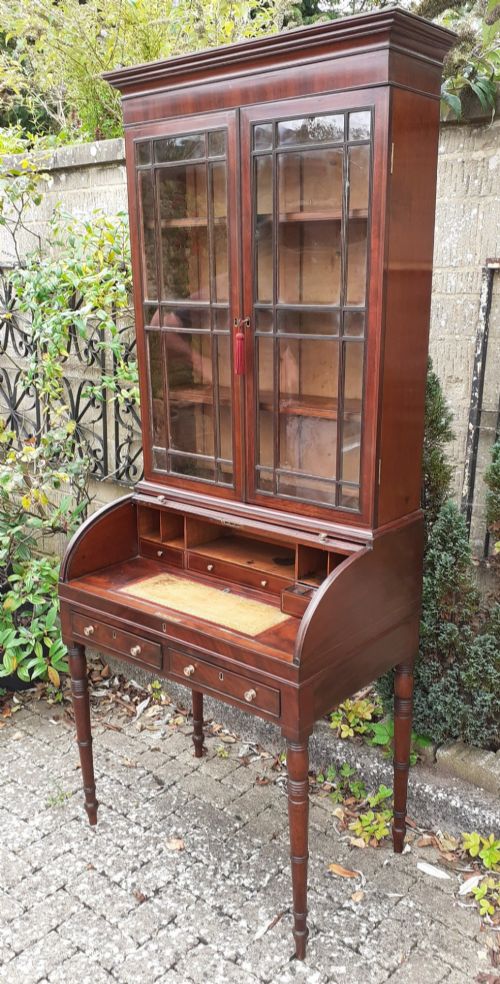


Fitted Bureau Bookcase
A fitted bureau bookcase combines a writing desk and a glazed shelving unit, offering practical workspace and storage in one substantial piece of furniture.
Fitted Bureau Bookcase
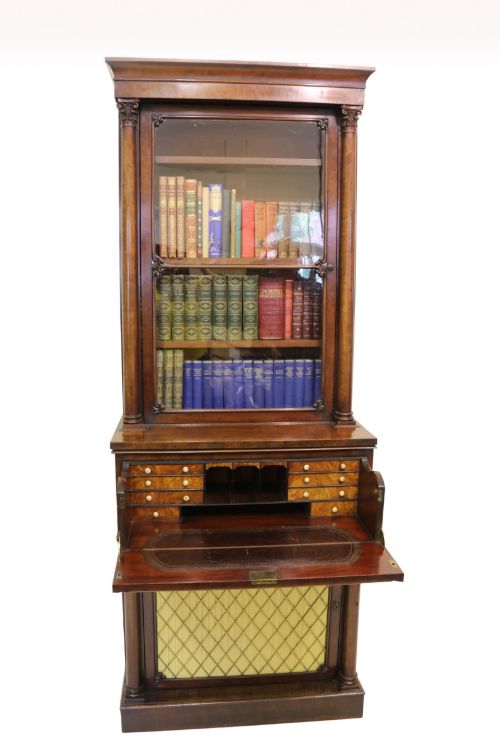
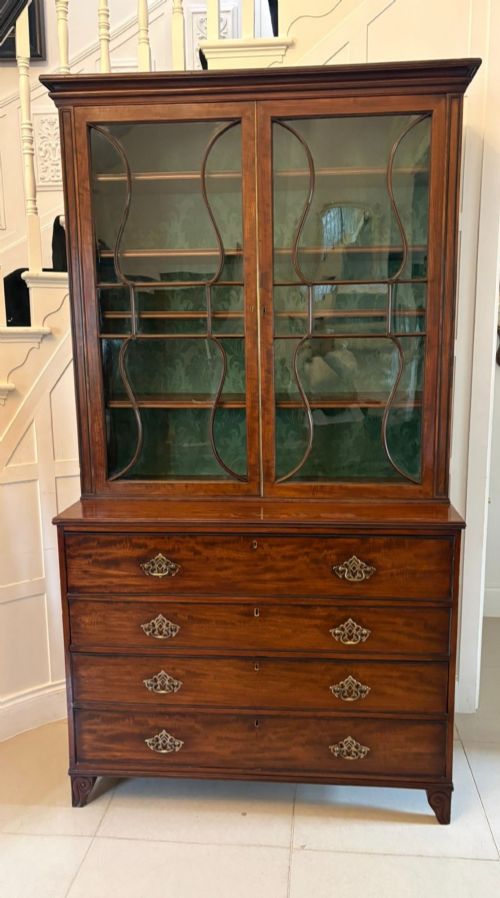
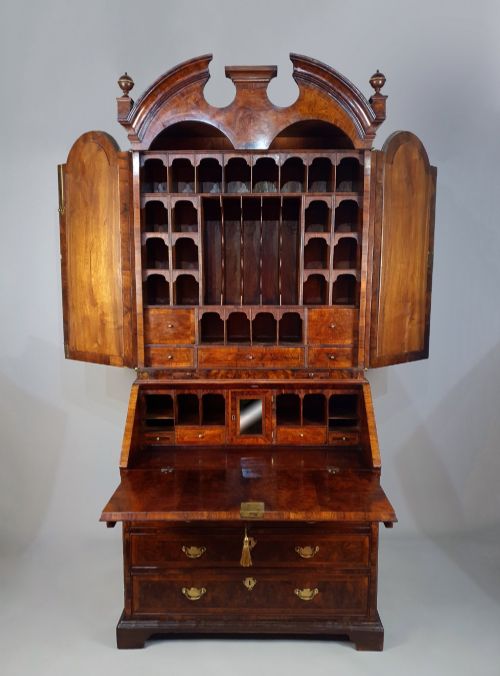
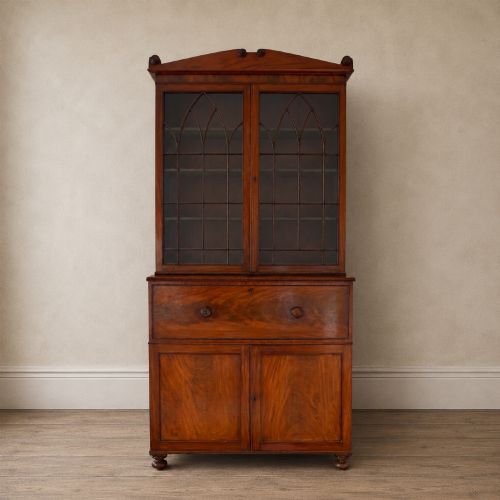
A fitted bureau bookcase is a dual-purpose item consisting of a lower writing cabinet with a fall front or pull-out drawer, paired with an upper section enclosed by glass doors for books and display. When you search for a fitted bureau bookcase, you encounter forms ranging from early eighteenth-century walnut examples to later Victorian and Edwardian iterations in mahogany and oak.
The lower section typically opens to reveal a fitted interior containing small drawers, pigeonholes, and sometimes a secret compartment or central cupboard door. The upper bookcase portion houses adjustable shelving behind glazed panes, which can feature simple timber frames or decorative astragal bars.
Pieces span various periods including George I, George III, Regency, and Victorian eras, demonstrating how cabinetmakers adapted the form across centuries. Many examples divide into two or three modular sections to facilitate transport and placement within a room.
Materials and construction methods
Makers constructed the carcase and framing from durable hardwoods such as mahogany, oak, and walnut, often applying decorative veneers like burr walnut or mulberry to exterior surfaces. Brass hardware, including drop handles, escutcheons, and hinges, secures and ornaments the doors and drawers.
Glazing relies on thin wooden glazing bars dividing hand-finished glass panes into geometric patterns. Writing surfaces frequently integrate leather inserts or polished timber writing flaps supported by internal lopers that slide out automatically as the fall front lowers.
Several examples include hidden compartments designed for private letters, accessed only by sliding out secret panels within the inner stationery drawers.
Evaluating craftsmanship and proportion
Quality rests in the selection of timber figures, such as highly figured mahogany or matching burr walnut veneers applied symmetrically across the front panels. The refinement of the interior pigeonholes and small drawers within the bureau section also distinguishes superior workshop production.
Construction details such as dovetailed drawer boxes, original brass fitments, and well-proportioned cornices indicate higher manufacturing standards. The integration of functional elements like candle slides, internal secret compartments, and functioning locks with original keys elevates a piece's standing.
Gillows of Lancaster·Tudor and Burrey
The Fitted Bureau Bookcase Glossary
- Secretaire drawer
- A top drawer fitted with a drop-front mechanism that conceals a writing surface and internal stationery compartments.
- Astragal bar
- A narrow wooden moulding that divides glass panes within a bookcase door.
- Fall front
- A hinged writing flap that pulls down into a horizontal position for writing.
- Lopers
- Wooden support arms that pull out from the bureau frame to hold the open writing flap.
- Cornice
- The ornamental moulded projection crowning the top of the bookcase.
Fitted Bureau Bookcase: Frequently Asked Questions
How do I date a bureau bookcase?
Dating relies on observing timber choices, construction techniques, and stylistic markers specific to periods like Queen Anne or the Georgian era. Earlier pieces often feature walnut or oak with candle slides, while later Victorian examples display heavier proportions and figured mahogany veneers.
Hardware styles, foot designs such as bracket feet or bun feet, and the configuration of internal drawers also help narrow down the decade of manufacture.
Will a bureau bookcase fit in a modern room?
Most fitted bureau bookcases are tall and deep, requiring adequate wall space and ceiling clearance. Because many traditional examples separate into upper and lower sections, moving them through standard doorways is generally straightforward.
Measuring the total height and ensuring the room can accommodate the open fall front or pull-out secretaire drawer is essential before placement.
How should I care for the leather writing surface?
Leather inserts benefit from occasional dusting with a dry cloth and minimal exposure to direct sunlight. Avoiding liquid cleaners prevents staining and preserves the supple texture of the hide.
Conditioning balms specifically formulated for antique leather can be applied sparingly to maintain the material and prevent cracking over time.