



Fitted Box Silverware
Fitted box silverware brings together practical flatware and custom-built storage, offering complete dining sets nestled in tailored wooden chests.
Fitted Box Silverware
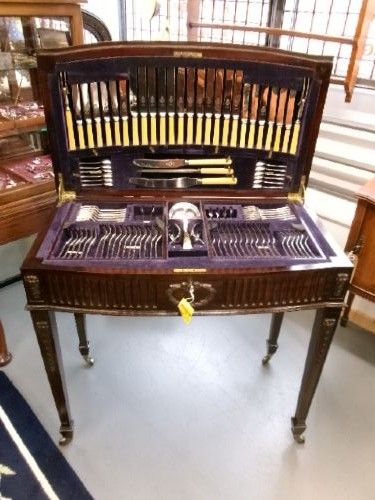
When you search for fitted box silverware, you are looking at comprehensive dining sets and serving pieces housed within dedicated wooden enclosures. These items combine silver plate or sterling silver flatware with secure, partitioned containers designed for proper organisation and preservation.
The versions you are most likely to meet on this page take the form of substantial oak or mahogany cutlery canteens, alongside smaller specialised chests and cased sets. Originating across Georgian, Victorian, Edwardian, and later twentieth-century periods, these pieces range from compact grape scissor cases to grand canteens on stands.
Makers such as Walker & Hall, Mappin & Webb, and Waring & Gillows appear within these listings, alongside period pieces from the Georgian, Victorian, and Edwardian eras. Interior linings typically utilise velvet, silk, or felt to cradle individual pieces of cutlery, serving spoons, and specialised utensils securely.
Materials and construction
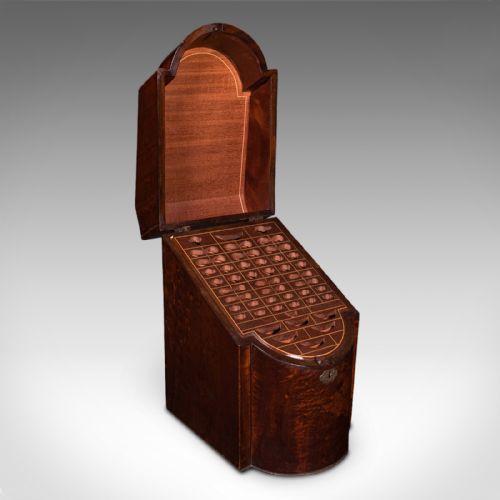
The enclosures are constructed from sturdy timbers including oak, mahogany, and walnut, built as cabinets, chests, or knife boxes to withstand regular domestic use. Exterior fittings often incorporate brass hardware and secure locking mechanisms.
Interiors are carefully partitioned and lined with textiles such as velvet, silk, or felt to hold each utensil firmly in place. Flatware items themselves are fashioned from sterling silver or silver plate, paired with steel components where necessary for durability.
Fitted Box Silverware Retail Price Guide 2026
Typical asking prices for fitted box silverware among the pieces listed under this phrase on Sellingantiques today, from the lower quarter to the upper quarter. They describe what is for sale here now, not the wider market.
Some Edwardian oak canteens contain over one hundred and fifty individual pieces, requiring a minor logistical operation just to set the dining table.
Factors of quality
The distinction between standard items and superior examples lies in the integrity of the housing and the completeness of the contained service. Fine cabinets feature robust timber construction, uncompromised interior linings, and fully intact fitted compartments that match the original service.
Quality also manifests in the execution of the metalwork, whether solid sterling silver or durable silver plate, coupled with reputable workshop provenance. A coherent set with minimal replacement pieces commands greater appreciation than a mismatched assortment gathered later.
Walker & Hall·Mappin & Webb·Waring & Gillows
The Fitted Box Silverware Glossary
- Canteen
- A fitted box or cabinet designed specifically to hold a complete set of cutlery and flatware. These chests feature custom internal slots and trays to protect each individual piece.
- Flatware
- Table utensils such as spoons and forks used for serving and eating food. In fitted boxes, these are arranged systematically in designated tiers or layers.
- Silver plate
- A base metal coated with a thin layer of pure silver. This technique provided an accessible alternative to solid sterling silver while maintaining the same bright appearance.
- Sterling silver
- An alloy consisting of silver and other metals, primarily copper, standardising at a high purity level. Items made from this material frequently bear official hallmarking.
- Campaign chest
- A portable trunk or box constructed for travel, featuring recessed handles and robust framing. These pieces were built to endure movement while keeping contents secure.
Fitted Box Silverware: Frequently Asked Questions
What is fitted box silverware?
Fitted box silverware refers to dining implements and serving sets housed inside custom-built wooden chests, cabinets, or cases. These enclosures feature tailored interior layouts designed to keep every spoon, fork, or knife secure and organised.
The containers range from compact presentation cases for specific items like grape scissors to large floor-standing canteens holding over a hundred pieces of flatware.
How were these canteens used?
These canteens served as the primary storage solution for household dining utensils in affluent homes, keeping large services clean and complete between meals. They allowed servants or hosts to transport and present entire sets of cutlery efficiently.
Many designs were intended to remain permanently in a dining room sideboard, while campaign-style trunks were built for travel and relocation.
How do I live with fitted box silverware?
Living with these pieces involves using the flatware for dining while keeping the wooden cabinet in a stable environment away from extreme humidity and direct sunlight. Regular use helps prevent tarnish accumulation on silver surfaces while maintaining the functional purpose of the set.
The exterior wood benefits from occasional gentle polishing, and the interior fabric linings should be kept dry and free from dust.
How do I tell periods apart?
Distinguishing between periods relies on observing the cabinet timber, hardware style, and interior textile choices alongside any visible maker marks. Georgian pieces often display simpler, functional lines in mahogany or oak, while Victorian and Edwardian examples frequently feature more elaborate fitted tiers and plush velvet or silk linings.
Later twentieth-century items, such as those from the 1910s and 1920s, reflect shifting domestic dining habits through more streamlined canteen designs.