


First World War Art
First world war art captures the conflict through contemporary paintings, drawings, trench pieces and metalwork made by participants and observers alike.
First World War Art
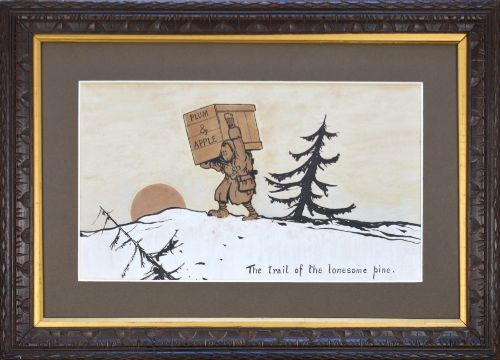
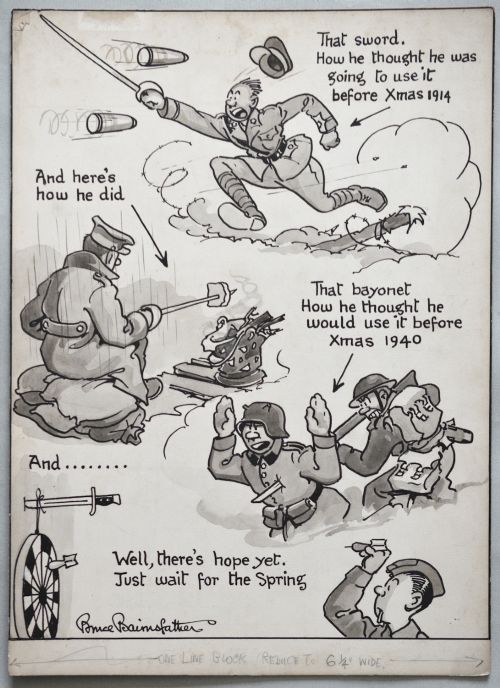
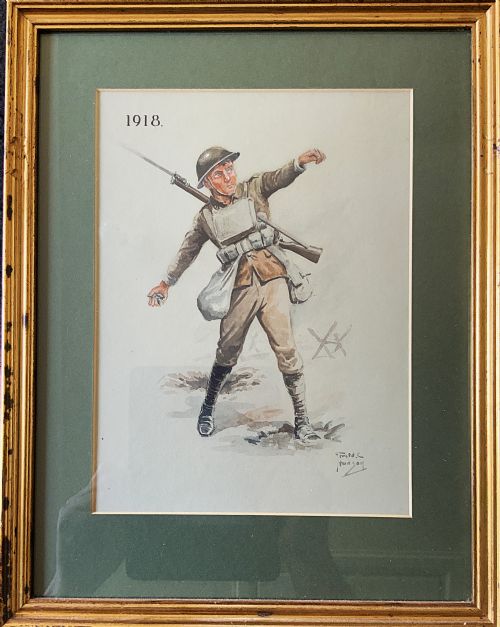
First world war art includes original watercolours, ink drawings, oil portraits, and satirical illustrations produced during the conflict and in subsequent decades. You encounter framed battlefield drawings, military portraits, and caricatures alongside period items like manuscript illustrations.
The selection ranges from professional fine art lithographs and landscape watercolours painted in nineteen sixteen to commemorative items fashioned from discarded ordnance. Surviving examples demonstrate both official record-keeping and personal expression.
Materials and construction
Makers utilised paper, card, and canvas combined with watercolour, ink, oil paint, and charcoal to create the two-dimensional artworks. Framed pieces frequently pair these drawing materials with glass and wood surrounds.
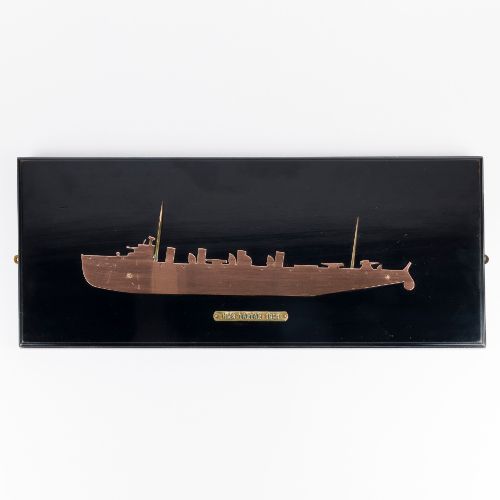
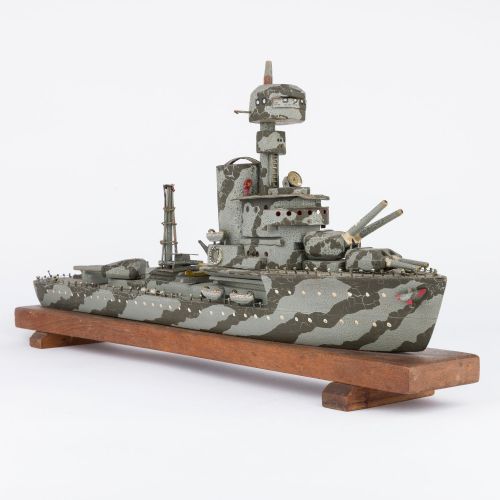
Three-dimensional trench pieces and models rely on brass, copper, and other metals salvaged from shell cases, alongside carved wood and horn components. Artisans shaped, hammered, and engraved these durable materials to produce decorative plaques, vases, and novelty clocks.
A scarce carved wood and horn propaganda pipe offers a wonderfully amusing glimpse into frontline humour.
Judging quality and execution
Quality rests upon the skill of the draughtsman or artisan, distinguishing competent military portraiture and precise scale models from basic commemorative novelties. Signed works by documented artists carry stronger compositional execution.
Condition governs the desirability of paper works and metal artefacts alike, where foxing, tears, or heavy corrosion detract from the historical integrity of the piece. Clean patination on brass shell cases and well-preserved framing retain the original character.
Bruce Bairnsfather·Leopold Halvoet·G Hindle·Sir Muirhead Bone·Sidney Riesenberg·JE Hood
The First World War Art Glossary
- Trench art
- Decorative items fashioned by soldiers, prisoners of war, or civilians from war debris and military surplus materials. These objects include engraved shell cases, carved pipes, and metal plaques.
- Lithograph
- A printmaking process where an image is drawn onto stone or metal and transferred to paper using ink. Authentic examples show fine dot patterns under magnification rather than modern pixel grids.
- Watercolour painting
- A medium utilising water-soluble pigments applied to paper surfaces to create transparent washes of colour. Period works often exhibit delicate tonal gradations characteristic of early twentieth-century practice.
- Shell case
- A brass or copper casing left over from artillery ammunition, commonly repurposed into vases, ash trays, or decorative vessels by soldiers. These metal items show characteristic hammer marks and engraved details.
First World War Art: Frequently Asked Questions
What is first world war art?
First world war art comprises paintings, drawings, trench artefacts, and metalwork created during the conflict or in the decades immediately following. The category includes frontline sketches, portraits of soldiers, and objects fashioned from military ordnance.
Items range from professional fine art prints to handmade wooden pipes and brass shell cases. Together they record the visual culture and personal experiences of the nineteen-teens and twenties.
How was trench art made?
Trench art was produced by soldiers, prisoners, and local artisans using available materials found in and around the battlefields. Discarded brass and copper shell cases served as the primary medium for engraved vases and plaques.
Craftsmen also carved discarded wood and animal horn into functional items like smoking pipes. Simple hand tools transformed combat waste into decorative keepsakes.
How do I display drawings safely?
Original watercolours, ink drawings, and lithographs require protection from direct sunlight to prevent fading of the pigments and yellowing of the paper. Acid-free mounting and UV-filtering glass help preserve works on paper over time.
Keep framed art away from damp walls and excessive temperature fluctuations. Proper hanging maintains the stability of Edwardian wooden frames and backing boards.
How do I identify period materials?
Period metalwork typically displays natural oxidation, patination, and tool marks consistent with early twentieth-century manufacturing techniques. Brass shell cases often feature stamped military markings, dates, and maker stamps near the base. nPaper artefacts show period-appropriate ageing, watermarks, and printing methods distinct from modern reproductions. Examining the construction of frames and backing materials confirms Edwardian or later era origins.