


Fireside Wing Arm Chair
A fireside wing arm chair provides deep comfort around the hearth while blocking draughts with its high sides.
Fireside Wing Arm Chair
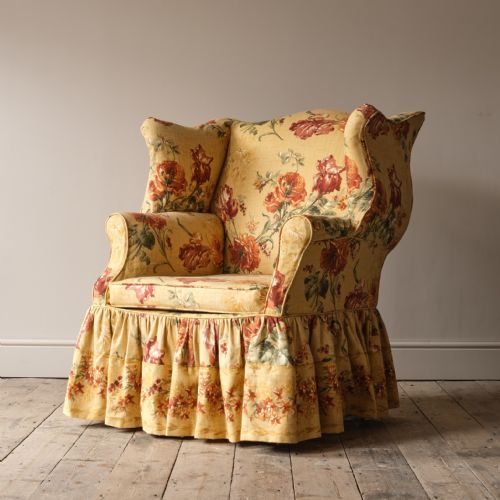
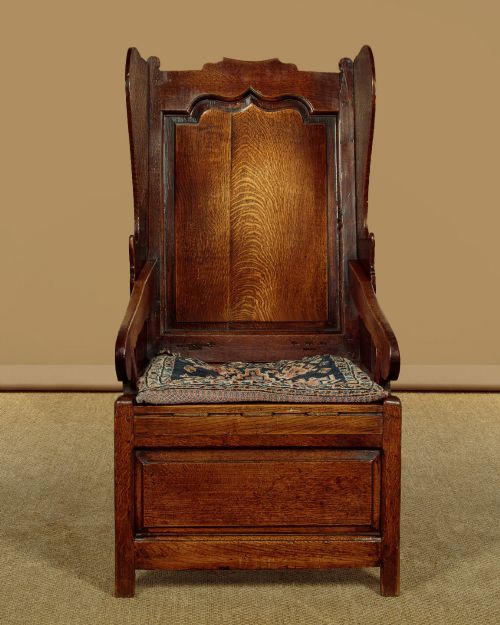
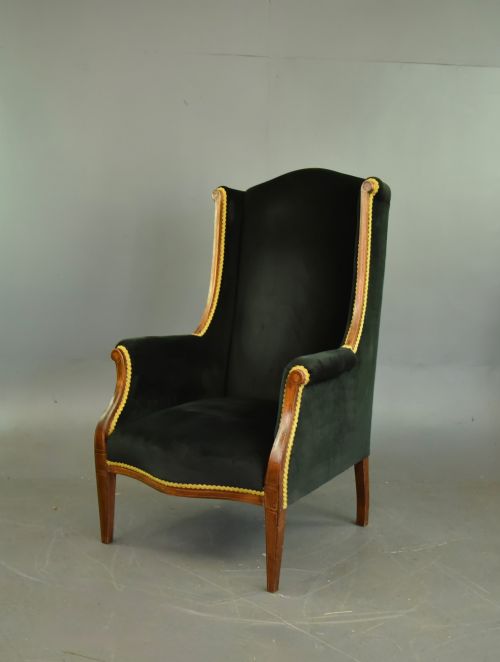
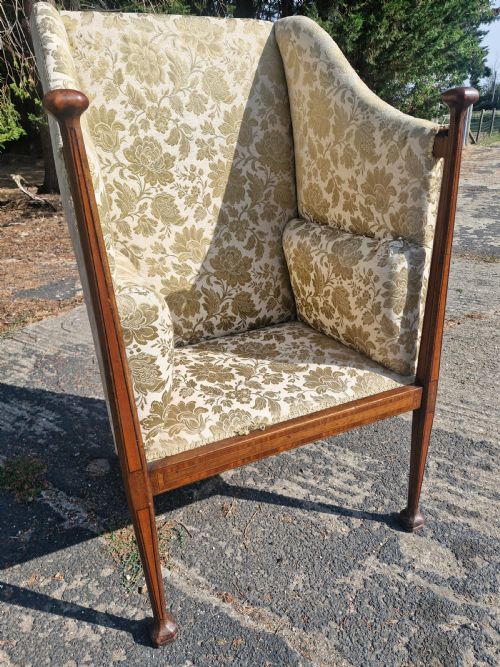
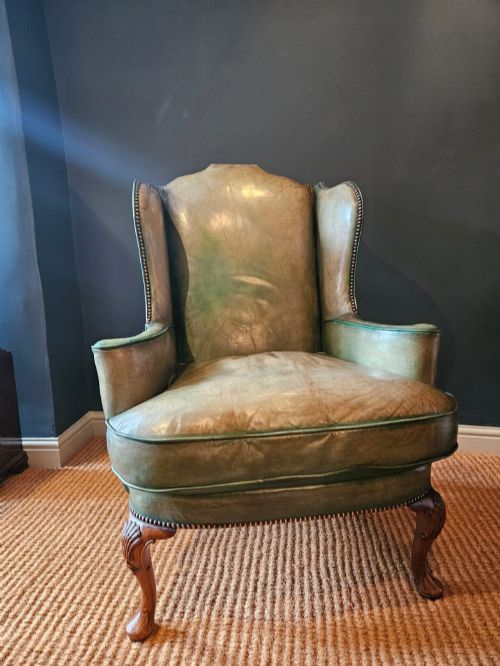
A fireside wing arm chair brings traditional seating into the living space with characteristic protective side panels designed to trap heat. The selection spans formal Georgian examples through to Edwardian interpretations, often built with high backs and scrolling arms.
Pieces from the Georgian and 18th Century periods appear alongside Edwardian and Victorian iterations. Many examples employ timber frames of mahogany, oak or walnut beneath upholstered textile surfaces.
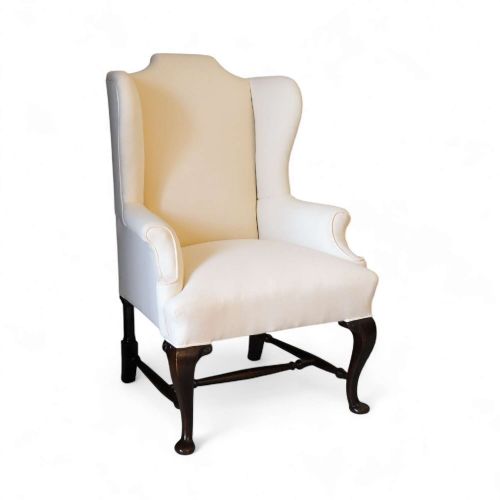
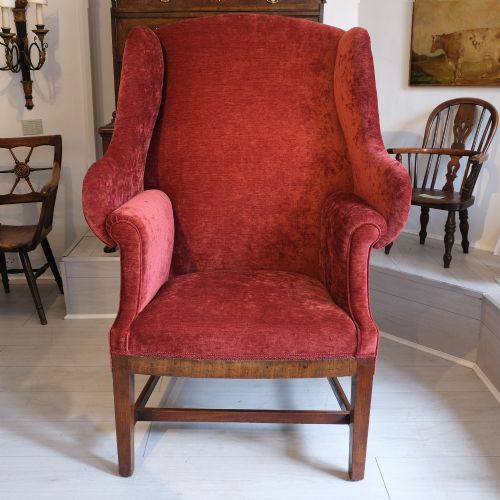
The layout includes barrel back variations and Queen Anne revival forms. Buyers frequently encounter frames set upon cabriole legs or Marlborough legs.
How they were made
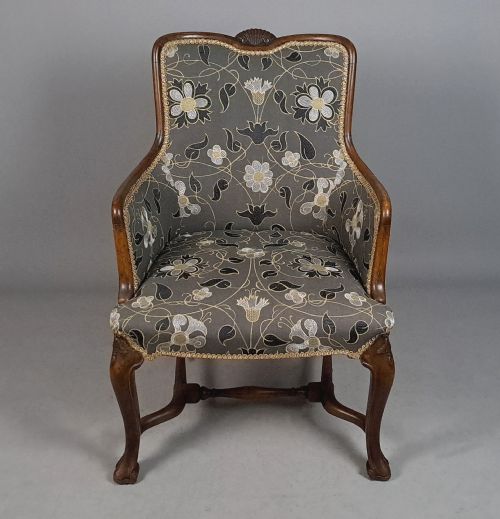
Cabinet makers utilised dense timbers such as mahogany, walnut and oak to construct the underlying structural frame. Timber components frequently received hand carving along the legs and stretchers.
Upholstery involved textile applications including velvet, damask, draylon and fabric over supportive stuffing. Brass tacks frequently secure the outer textile edge directly to the wooden framework.
Listings feature timber frames in mahogany, oak and walnut alongside textile finishes including velvet, damask and leather.
What varies in quality
The integrity of the wooden frame dictates longevity, with heavier hardwood species providing superior structural support. Detail in the timber carving, such as cabriole leg shaping, separates standard production from finer cabinet work.
Upholstery execution alters the profile, where traditional textile coverings like damask or leather demonstrate greater alignment with period standards. The proportion of the wings and the rake of the back determine the overall balance of the silhouette.
The Fireside Wing Arm Chair Glossary
- Wingback
- An upholstered armchair with projecting side panels designed to shield the occupant from draughts. These upholstered ears form an integral continuation of the arm supports.
- Cabriole leg
- A furniture leg featuring a double curve, swelling outward at the knee and tapering inward toward the foot. This shape originates from classical furniture design traditions.
- Barrel back
- A seating form where the backrest curves continuously into the arms in a rounded enclosure. This enveloping shape provides added enclosure around the seated person.
- Bergère
- An enclosed armchair with upholstered sides set into a wooden frame. The framework remains partially exposed around the perimeter of the upholstery.
- Damask
- A reversible figured fabric traditionally woven on a jacquard loom with patterns formed by contrasting warp and weft threads. This material frequently appears on formal period seating.
Fireside Wing Arm Chair: Frequently Asked Questions
What is a fireside wing arm chair?
A fireside wing arm chair is an upholstered seat featuring high protective side panels designed to block draughts from the hearth. These chairs provide deep seating with high backs intended for domestic comfort.
The form developed centuries ago to keep occupants warm by trapping heat around the head and shoulders. Variants range from compact Edwardian models to grand Georgian examples.
How do I identify a Georgian wing chair?
Georgian wing chairs typically display sturdy mahogany or walnut frames with hand-carved details on the legs. Cabriole legs with pad or ball-and-claw feet frequently indicate mid-18th-century origin.
Proportions tend to be generous, with sweeping wings that flow smoothly into the armrests. Many period pieces utilise traditional upholstery materials like leather or heavy damask.
Where should I place a wing chair?
A wing chair suits placement beside a fireplace, reading nook or living room corner where its high back creates a private seating zone. The expansive profile requires sufficient floor space to let the silhouette stand clear of surrounding furniture.
Positioning the chair away from direct sunlight helps preserve delicate textile coverings like velvet, calico and damask. Pairing the seat with a low table creates a functional spot for books or lamps.
What is an Edwardian wing chair?
Edwardian wing chairs date from the early 20th century and often incorporate lighter wood frames such as inlaid mahogany. These pieces frequently display refined proportions while maintaining the traditional high-backed silhouette.
Makers of this period occasionally utilised satinwood stringing or subtle marquetry on the exposed leg timbers. The upholstery styles reflect a transition toward more tailored domestic comfort.