


Fireside Coal Scoop
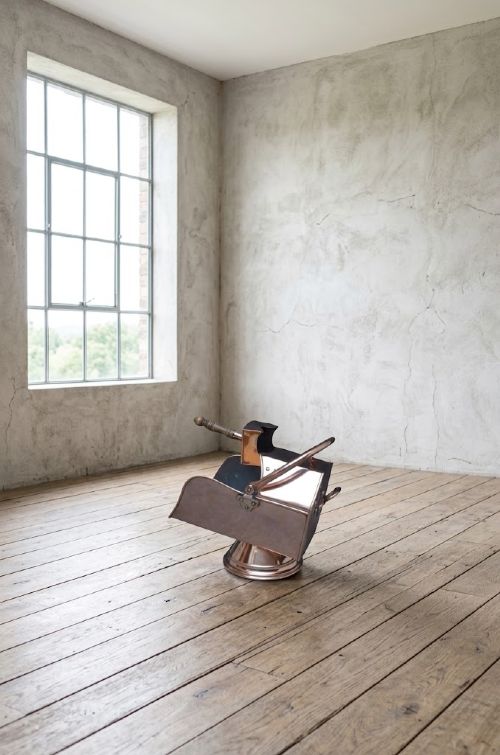
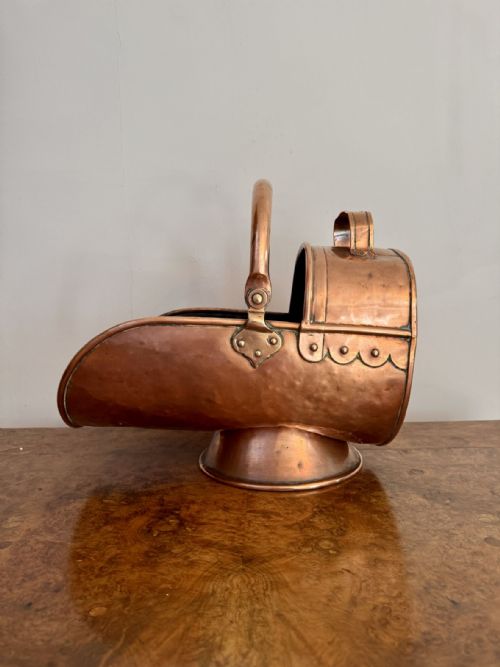
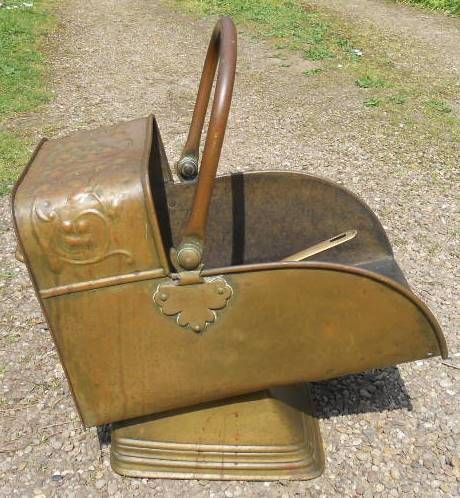
A fireside coal scoop or scuttle brings functional metalwork to the hearth, offering a practical vessel for fuel that doubles as fireside ornament.
Fireside Coal Scoop
A fireside coal scoop typically appears alongside coal scuttles, helmets, hods, and boxes designed to hold household fuel near an open fire. Buyers search for these items to equip a working hearth with period metalwork that matches traditional fireplace accessories.
The selections available on this page span the Georgian, Victorian, and Edwardian eras, with styles ranging from plain utility forms to Arts and Crafts and Art Nouveau designs. Most examples date from the nineteenth century and utilise traditional shapes like the sloping coal helmet.
Makers and workshops produced these vessels to sit beside the fender, frequently pairing them with matching coal shovels or sets of fireside tools. The forms reflect the domestic heating needs of nineteenth-century households before central heating altered the hearth.
Materials and construction
Makers fashioned these pieces primarily from brass, copper, and iron, utilising sheet metal and cast brass components to build rigid, durable containers. Metalworkers beat sheet copper into helmet and hod forms, often raising the bodies from single sheets or joining them with seams.
Artisans incorporated wood for handles and grips, turning wooden elements to provide a comfortable hold on lids, shovels, and carrying bails. Cast brass mounts, feet, and hinges reinforced the structures while introducing decorative elements suited to Victorian and Arts and Crafts interiors.
Even nineteenth-century servants needed good design, as proved by Benham and Froud stamping their orb and cross trademark firmly onto coal helmets.
Distinctions in quality
Quality in a fireside coal scoop or scuttle rests on the weight of the metal and the integrity of the construction rather than mere surface ornament. Thicker gauge copper and brass resist denting and distortion from heavy daily use, maintaining structural rigidity over generations of hearth service.
Hand-finishing distinguishes better examples, visible in neatly turned wooden handles, securely riveted seams, and well-cast hinges that support heavy lids without sagging. The presence of an original matching brass shovel or integrated tool set indicates a more complete and carefully preserved fireside ensemble.
Benham and Froud
The Fireside Coal Scoop Glossary
- Coal helmet
- A traditional coal scuttle shaped with a high, sloping back and a projecting front lip that resembles a classic helmet.
- Coal hod
- A deep, cylindrical or bucket-like container utilised for carrying and storing solid fuel beside the fireplace.
- Arts and Crafts
- A design movement prioritising honest construction, visible hand-working, and simple decorative motifs derived from nature.
- Art Nouveau
- A style characterised by flowing, organic lines and stylised plant forms popular around the turn of the twentieth century.
- Fireside tools
- Implements such as shovels, pokers, and tongs designed to manage a coal or wood fire within the hearth.
Fireside Coal Scoop: Frequently Asked Questions
What is a fireside coal scoop used for?
A fireside coal scoop or shovel serves to transfer solid fuel from a scuttle or hod directly into the grate of an open fireplace.
In period interiors, these tools were kept close to the hearth alongside pokers and tongs as functional components of daily coal fire maintenance.
How do I clean a brass coal scuttle?
Cleaning requires a soft cloth and mild soapy water to remove accumulated dust and soot without stripping the aged appearance of the metal.
Harsh metal polishes should be used sparingly, as removing all historical patination can diminish the antique character of nineteenth-century copper and brass.
Are these coal scuttles suitable for everyday use?
Many of these vessels remain structurally robust enough to hold fuel beside a modern working fireplace.
However, buyers often treat nineteenth-century copper and brass items with care, using them primarily as decorative fireside accessories rather than taking them outside for heavy loading.
How can I tell a Victorian scuttle from an Arts and Crafts piece?
Victorian examples tend to feature polished brass or bright copper surfaces with formal cast mounts, ornamental handles, and traditional helmet shapes.
Arts and Crafts pieces emphasise hand-beaten textures, simpler silhouettes, and honest construction methods that reflect vernacular metalworking traditions.
Did coal scuttles always come with a shovel?
Many surviving coal scuttles and helmets retain their original matched brass or iron shovels, often designed to slide into a rear or side pocket.
While numerous sets remain intact, finding a scuttle with its original shovel is an added bonus rather than an absolute rule for every listing.