


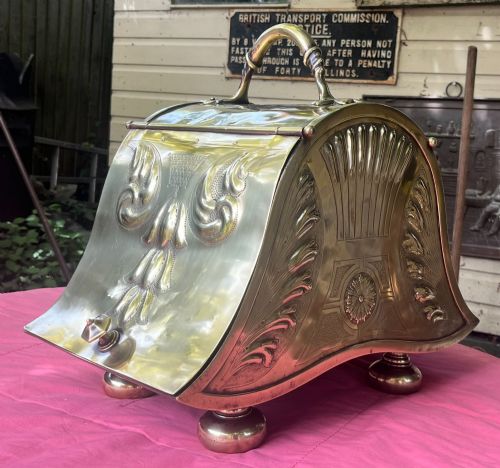


Fireside Coal Hod
A fireside coal hod holds fuel beside the hearth, combining everyday utility with metalwork or timber craftsmanship.
Fireside Coal Hod
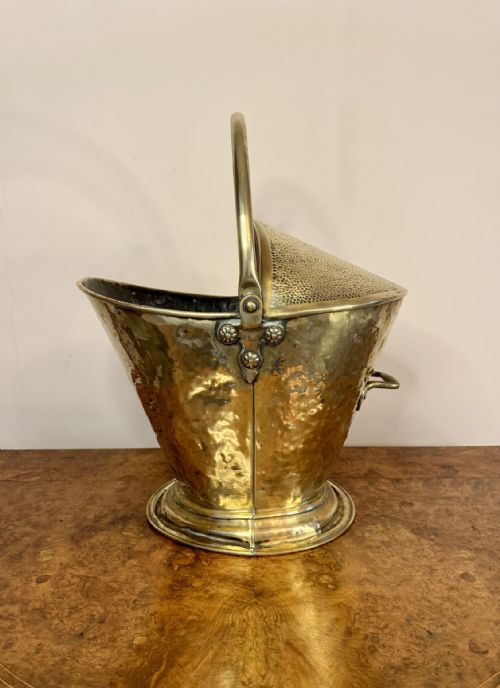
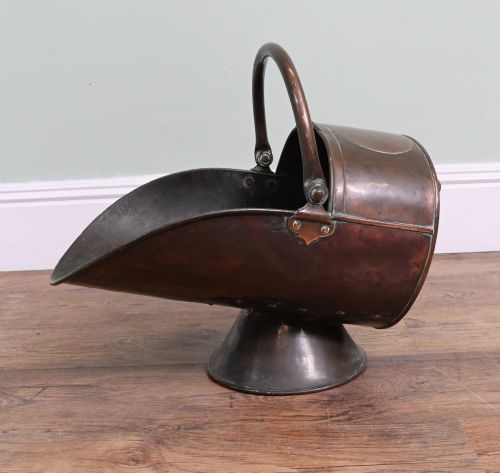
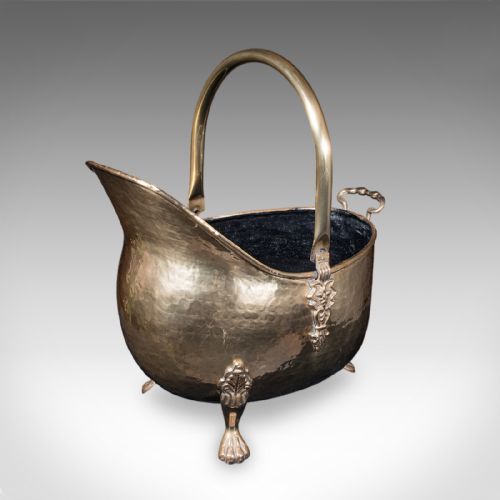
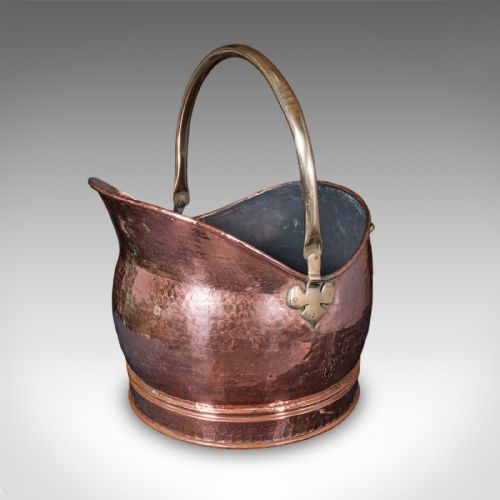
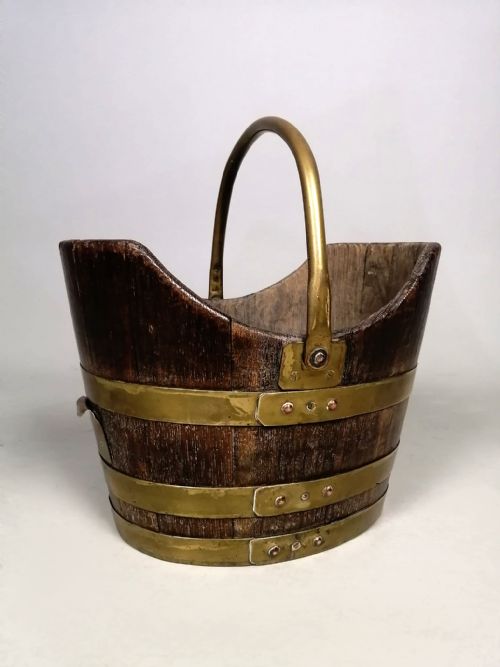
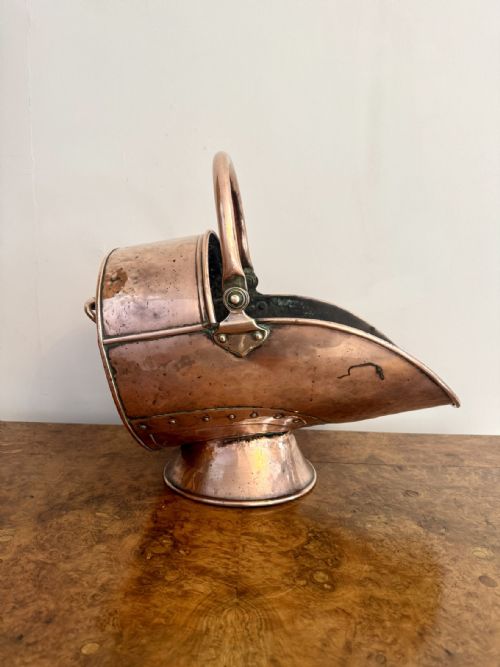
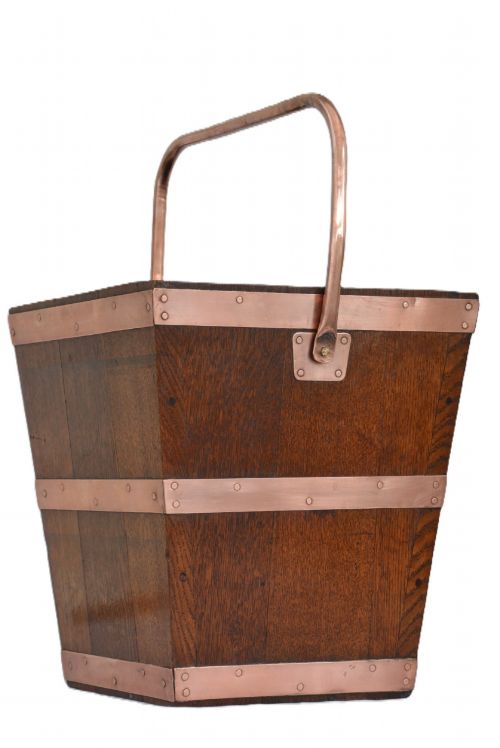
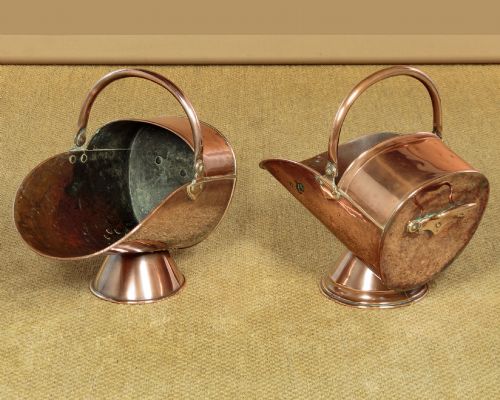
A fireside coal hod bridges practical hearth management and decorative metalwork, functioning as a receptacle for fuel by the fireplace. When you search for a fireside coal hod, you encounter forms ranging from bucket shapes to helmet scuttles and purdoniums.
The pieces on this page span the Georgian, Regency, Victorian, and Edwardian eras, alongside Arts and Crafts and Art Nouveau movements. You meet Victorian copper helmets and oak hods most frequently, alongside brass buckets from the nineteenth century.
Materials and construction methods
Metal vessels utilise sheet brass and copper, sometimes shaped with hammer beaten textures or constructed with brass banding. Workshops combined these metals with iron and wrought iron for strength, while timber examples employed oak, mahogany, and walnut.
Many containers incorporate functional elements such as metal liners, swing handles, and matched shovels. Structural joins rely on period fixings suited to holding heavy loads of coal or peat.
Fireside Coal Hod Retail Price Guide 2026
Typical asking prices for fireside coal hod among the pieces listed under this phrase on Sellingantiques today, from the lower quarter to the upper quarter. They describe what is for sale here now, not the wider market.
Listings feature brass, copper, oak, walnut, and mahogany across Georgian, Regency, Victorian, Edwardian, Arts and Crafts, and Art Nouveau styles.
Distinctions in craftsmanship and material
Quality rests upon the weight of the metal gauge and the integrity of the timber construction. Heavier brass and copper sheets resist denting, while sound joinery in oak and walnut preserves the vessel against daily hearth use.
Distinction also lies in the presence of original components, such as matched shovels, interior liners, and decorative hardware. Pieces finished with hand beaten details or stylistic flourishes from the Arts and Crafts period demonstrate higher design ambition.
BENHAM AND FROUD
The Fireside Coal Hod Glossary
- Coal hod
- A vessel designed for storing and carrying coal to the fireplace. These containers take forms ranging from open buckets to enclosed scuttles with sloping mouths.
- Coal purdonium
- A box-like cabinet for solid fuel featuring a hinged front flap or lid. This form often houses an internal metal liner to hold the coal cleanly.
- Helmet scuttle
- A container shaped with a flared rim resembling a medieval helmet, designed for pouring fuel efficiently. This silhouette appears frequently in Victorian copper and brass work.
- Liner
- A removable internal vessel that protects the outer wooden or metal body from moisture and coal dust. Original liners add utility and completeness to the piece.
- Hammer beaten
- A surface texture produced by striking metal sheets manually with a hammer. This technique appears on Arts and Crafts copper and brass receptacles.
Fireside Coal Hod: Frequently Asked Questions
What is a fireside coal hod used for?
A fireside coal hod stores solid fuel such as coal, peat, or logs beside the fireplace. It keeps fuel accessible for tending the fire while containing dust and debris.
Beyond utility, these vessels served as decorative hearth accessories that reflected the prevailing interior styles of their period.
What materials were used to make these vessels?
Metal versions utilise brass and copper, sometimes paired with iron or wrought iron for structural support. Timber examples employ hardwoods like oak, mahogany, and walnut.
Many metal designs incorporate contrasting brass bands, swing handles, and accompanying metal shovels.
How do I date a fireside coal hod?
Dating relies on stylistic markers, materials, and construction techniques associated with periods like the Georgian era, Victorian times, or the Arts and Crafts movement. Form changes, such as the prevalence of helmet shapes in the nineteenth century or wooden purdoniums later on, provide chronological clues.
Examining the fixings, metal gauge, and manufacturing methods helps place the piece within its historical context.