

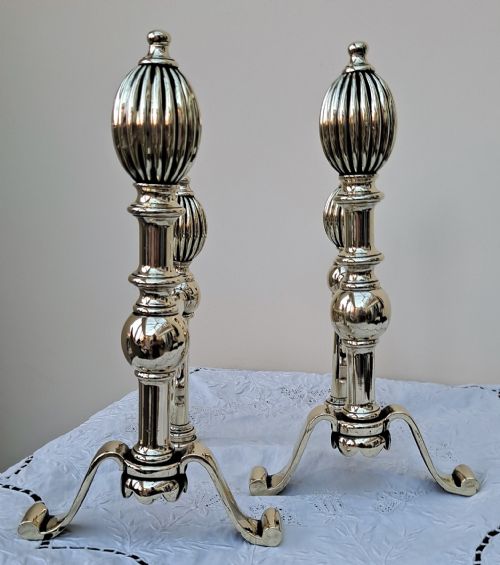


Fire Grate Accessories
Fire grate accessories anchor the hearth, bringing cast iron, brass and bronze together to support solid fuel fires.
Fire Grate Accessories
Fire grate accessories comprise andirons, fire baskets, fire backs, fenders and full fireplace sets that furnish domestic hearths. The selection on this page centres on pieces from the Georgian, Victorian and Edwardian periods, alongside early twentieth-century examples.
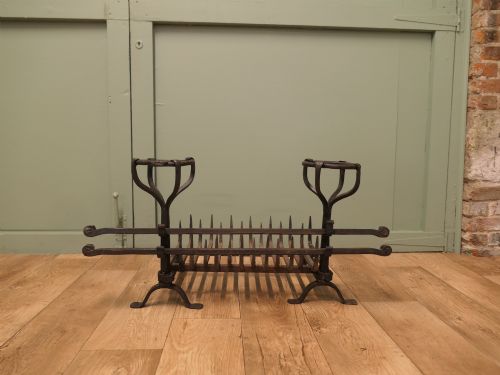
Buyers encounter heavy cast iron fire backs, brass andirons, and wrought iron fire baskets. These functional ironmongery items originate from English and French workshops, spanning styles from Neoclassical and Gothic Revival to Arts and Crafts and French Rococo.
How they were made
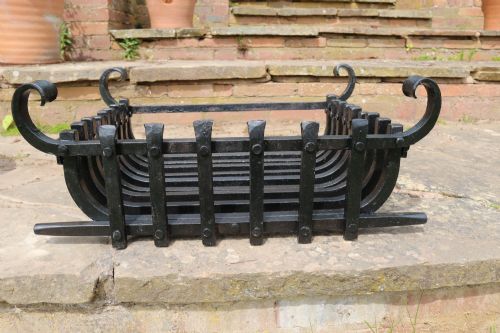
Makers utilised heavy cast iron for fire backs and grates, pouring molten metal into sand moulds to achieve robust, heat-resistant structures. Wrought iron was hammered by hand into fire baskets and grates, yielding fibrous and durable forms.
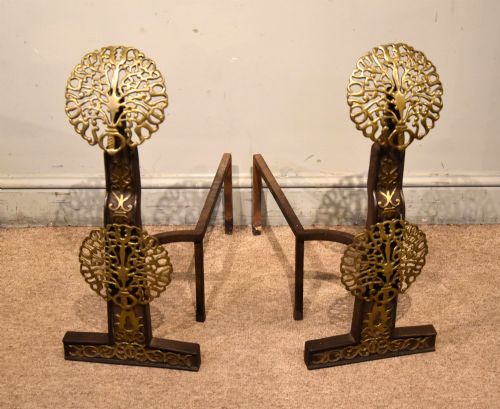
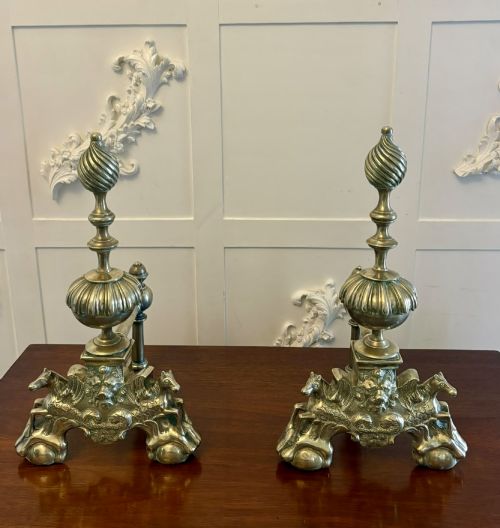
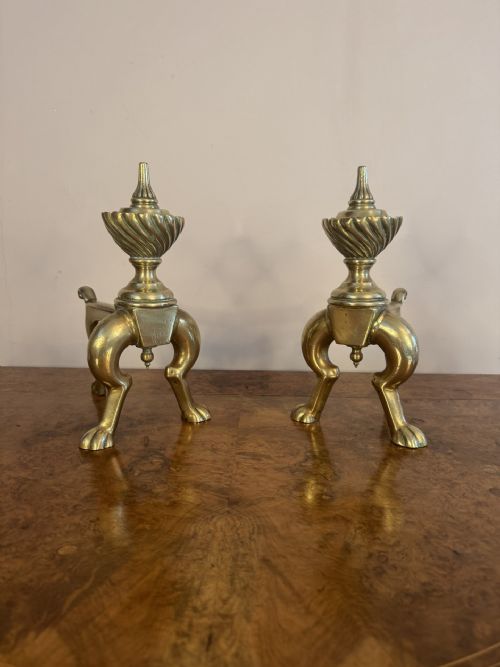
Brass, bronze and ormolu formed the decorative andirons and chenets, cast and chased with ornamental detail. Parcel gilt finishes on bronze cherub figures added contrasting metallic highlights to French fireside hardware.
Fire Grate Accessories Retail Price Guide 2026
Typical asking prices for fire grate accessories among the pieces listed under this phrase on Sellingantiques today, from the lower quarter to the upper quarter. They describe what is for sale here now, not the wider market.
Listings feature cast iron, brass, wrought iron, bronze, gilt bronze and ormolu across Victorian, Georgian and Arts and Crafts styles.
What varies in quality
The distinction in quality rests on the weight of the metal and the crispness of the casting. Heavy cast iron fire backs and massive andirons demonstrate substantial metal thickness designed to withstand intense hearth temperatures.
Artisanal execution separates standard ironmongery from finer decorative pieces. Hand-wrought joinery in Arts and Crafts baskets and chased detailing on Victorian brass andirons reveal the proficiency of the maker.
The Fire Grate Accessories Glossary
- Andirons
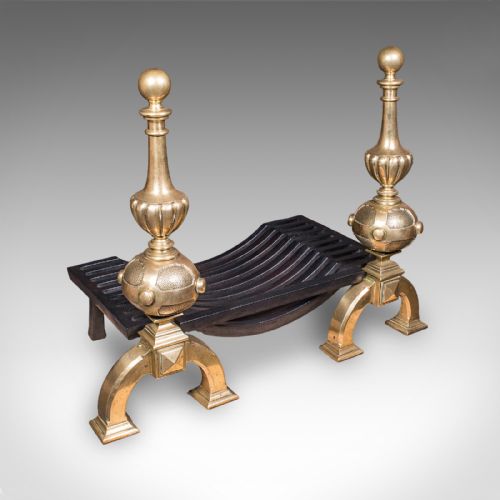
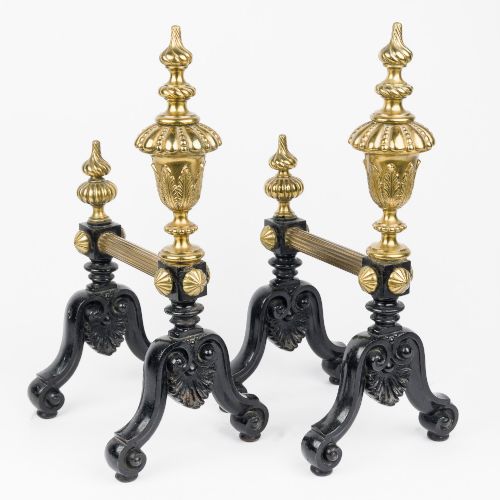
- Iron or brass supports placed in a hearth to hold logs above the floor. They often feature decorative fronts such as cast brass finials or figural bronzes.
- Fire basket
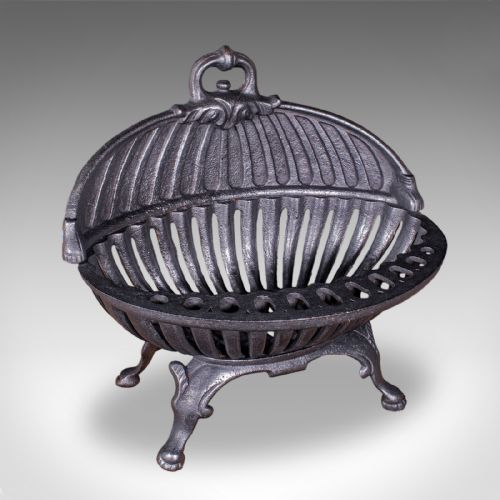
- An open metal basket designed to contain coal or wood within the fireplace. They incorporate iron bars and rest upon legs or directly onto andirons.
- Fire back
- A heavy iron plate placed against the rear wall of a fireplace. It radiates heat back into the room and protects the masonry.
- Chenet
- The French term for andiron. These pieces frequently exhibit decorative cast bronze or ormolu mounts in styles such as French Rococo.
- Fender
- A low metal guard placed in front of the hearth to contain sparks and rolling embers. They coordinate with the materials of the fire grate and andirons.
Fire Grate Accessories: Frequently Asked Questions
What do andirons actually do?
Andirons support logs above the floor of the hearth to allow air circulation underneath for better combustion. They also prevent fuel from rolling out into the room.
Front standards often carry decorative terminals, while horizontal billets bear the weight of the burning wood.
How do I date a cast iron fire back?
Dating relies on the stylistic motifs cast into the iron, such as Tudor Revival emblems or Georgian Neoclassical urns. The manufacturing technique, from early sand castings to later industrial methods, also indicates the period.
Heavier, thicker plates frequently point to earlier nineteenth-century production before mass-standardisation.
Are brass and iron pieces period matches?
Many nineteenth-century hearth settings combined cast iron baskets with bright brass andirons for textural contrast. Victorian and Edwardian makers frequently paired black iron frames with polished brass finials.
Original groupings reflect the mixed metal aesthetic popular during the nineteenth century.
Can these accessories fit modern fireplaces?
Inglenook grates and heavy fire backs require large hearth openings found in older properties. Smaller fire baskets and adjustable andirons suit more compact fireplace dimensions.
Checking the exact depth and width of the fire basket against the hearth space ensures a proper fit.