





Fine Sapphire Cluster Ring
A fine sapphire cluster ring brings together deep blue corundum and brilliant diamonds in enduring precious metal settings.
Fine Sapphire Cluster Ring
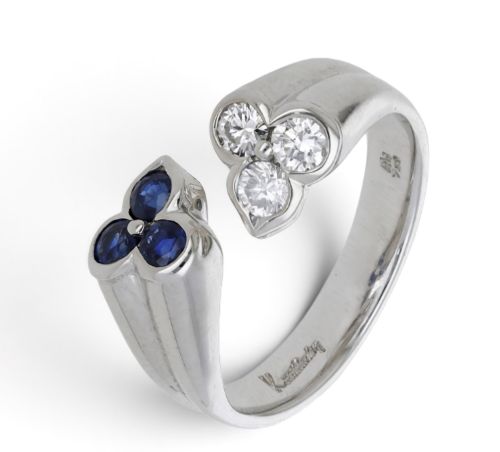
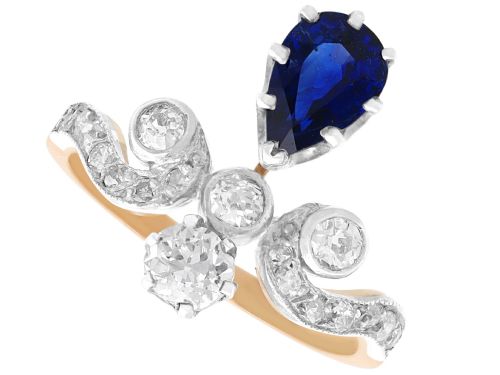
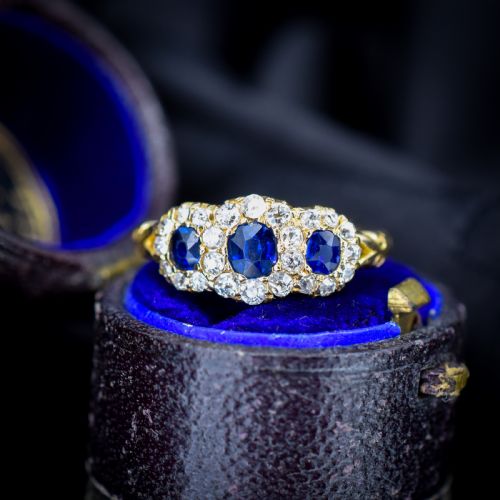
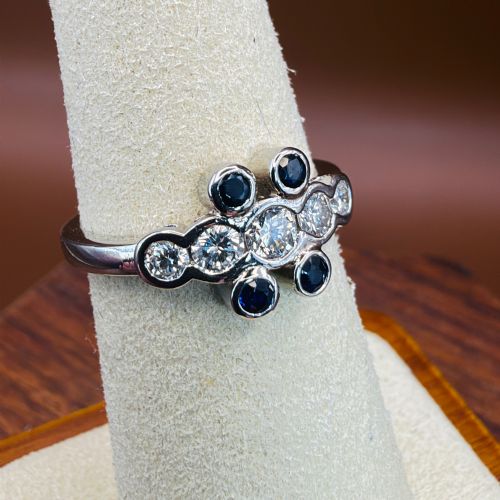
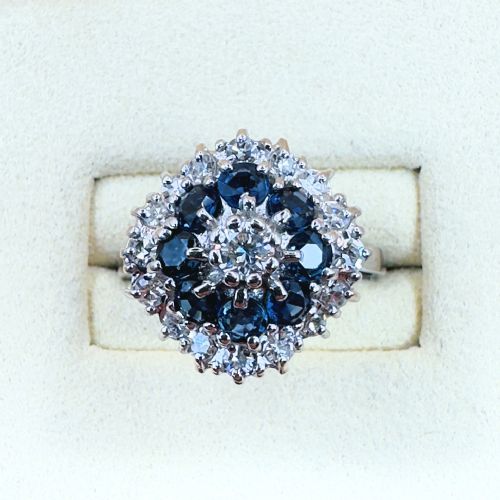
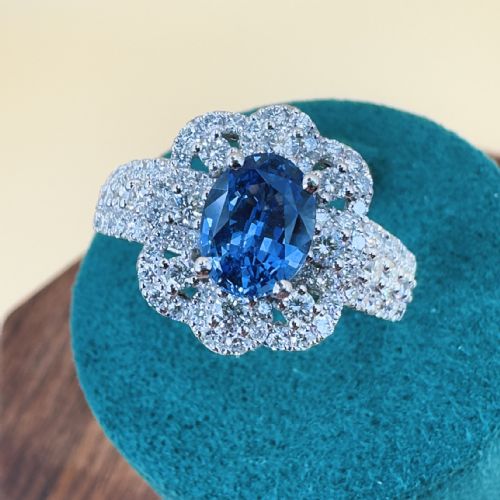
A fine sapphire cluster ring centres on a central sapphire surrounded by a border of diamonds, creating a distinct floral or geometric outline. The form spans multiple decades and eras, appearing in Victoriana, Edwardian work, and distinct Art Deco geometry.
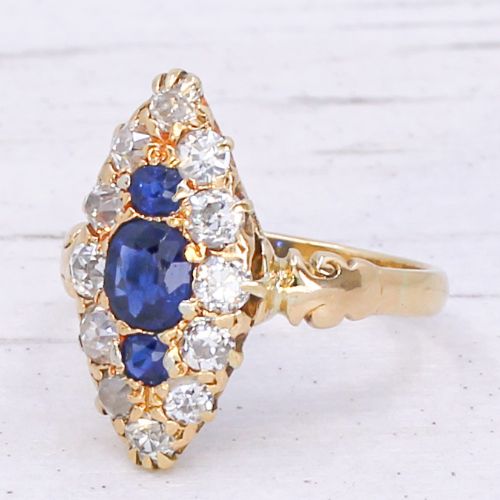
Buyers encounter varied interpretations across this selection, ranging from traditional yellow gold Victorian pieces to sleek platinum mountings from the mid-twentieth century. The configuration shifts from simple round clusters to elongated marquise silhouettes and trefoil arrangements.
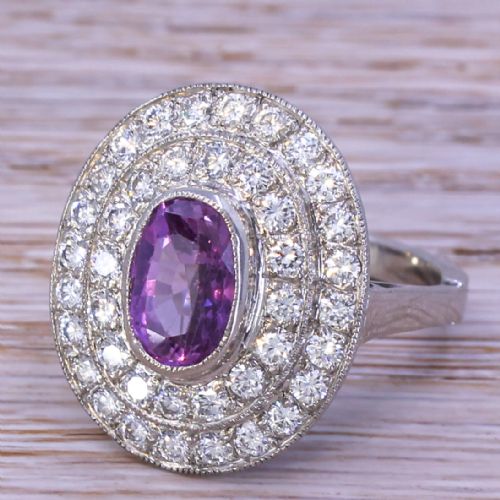
Origins stretch from British workshops to French ateliers, showing both standard commercial production and heavier bespoke weights. The sapphire itself changes character across the pieces, moving from deep standard blue to Ceylon stones and purple or pink variations.
Materials and Construction
Makers set these stones in platinum or various gold purities, including 18ct yellow gold, 18ct white gold, and occasional 9ct gold mounts. Platinum appears frequently in the twentieth-century pieces, providing a strong, bright white metal that holds small pavé-set diamonds securely around the central gem.
Goldsmiths utilised traditional claw settings, rubover techniques, and basket mounts to elevate the sapphire while keeping the surrounding diamonds flush. The structural integrity relies on substantial shank weights, with heavier gold and platinum versions offering durability for daily wear.
Some Edwardian rings hide tiny secret ventilation pierced beneath the sapphire so the stone can breathe.
Evaluating Quality and Execution
Quality rests upon the saturation and clarity of the central sapphire, alongside the cut and brilliance of the accompanying diamonds. Stones with vivid colour and minimal inclusions command attention, particularly when paired with well-matched, old-cut or brilliant-cut diamonds.
Execution shows in the precision of the metalwork, whether in the sharp geometric angles of an Art Deco mounting or the delicate claw work of an Edwardian piece. Heavier metal weights and clean hallmarks indicate superior original manufacture and careful preservation over time.
Le Vian
The Fine Sapphire Cluster Ring Glossary
- Cluster ring
- A ring design featuring a central gemstone encircled by a group of smaller stones, typically diamonds. This arrangement maximises the visual presence and sparkle on the finger.
- Ceylon sapphire
- A sapphire originating from Sri Lanka, noted for its bright and vivid blue coloration. These stones often exhibit high clarity and a distinct inner glow.
- Marquise cluster
- A boat-shaped gemstone cluster arrangement with pointed ends, popular in late nineteenth and early twentieth-century jewellery. The elongated silhouette flatters the hand.
- Trefoil cluster
- A ring configuration comprising three distinct lobes or stones grouped together to form a clover-like motif. This style appears in turn-of-the-century designs.
- Rubover setting
- A mounting style where a thin collar of precious metal is pushed over the edge of the gemstone to hold it securely in place. It offers a smooth, snag-free profile.
Fine Sapphire Cluster Ring: Frequently Asked Questions
Can I wear a sapphire cluster ring daily?
Sapphires measure nine on the Mohs scale of hardness, making them exceptionally durable for everyday wear. The surrounding diamonds also withstand regular use without losing their polish.
However, older claw settings require periodic inspection by a jeweler to ensure the stones remain secure in their mounts.
How do I identify an Art Deco sapphire ring?
Art Deco pieces display geometric symmetry, sharp lines, and frequent use of platinum alongside baguette or round diamonds. The overall silhouette often leans toward elongated or architectural shapes rather than soft floral curves.
Examining the gallery and basket under magnification reveals the precise, angular metalwork characteristic of the interwar period.
What is the difference between Victorian and Edwardian clusters?
Victorian rings often utilise yellow gold mountings, sometimes paired with silver-topped settings, featuring rich natural sapphires and old-cut diamonds. The designs lean toward warm tones and substantial, romantic forms.
Edwardian pieces introduce lighter platinum work and airier open-work filigree, creating a delicate lace-like effect around the central stones.
Do Ceylon sapphires look different from standard stones?
Ceylon sapphires typically exhibit a lively, bright blue hue with high transparency and minimal dark zoning. They reflect light freely and maintain their vivid colour under various lighting conditions.
Standard or uncertified sapphires can range from inking deep navy tones to softer cornflower shades depending on their geographic origin.