



Fine Mantel Timepiece
A fine mantel timepiece sits quietly on the hearth, marking the hours in brass, ormolu, and mahogany with steady nineteenth-century precision.
Fine Mantel Timepiece
A fine mantel timepiece is a domestic clock designed to stand on a shelf or mantelpiece, focusing purely on telling the time rather than striking hours or playing tunes. When buyers search for a fine mantel timepiece, they encounter an array of nineteenth-century examples spanning the Georgian, Victorian, and Edwardian periods.
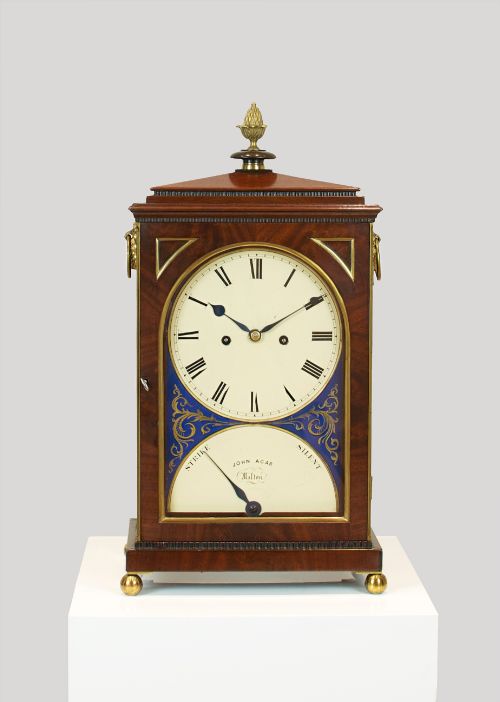
The pieces appearing here are predominantly French and British works, encompassing carriage clocks, portico clocks, bracket clocks, and four-glass models. Brass, ormolu, mahogany, and porcelain dominate the construction, reflecting the prevailing styles from French Empire and Rococo Revival to Art Deco.
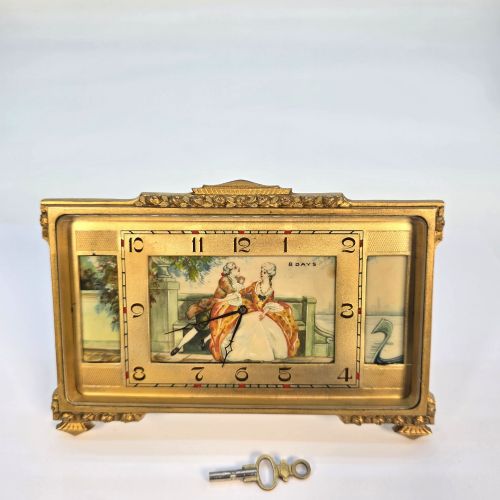
Makers and retailers range from provincial British cabinet makers to notable London and Parisian houses. The selection relies heavily on nineteenth-century craftsmanship, supplemented by early twentieth-century pieces like Art Deco strut clocks and desk timepieces.
Materials and Construction
Clockmakers constructed these timepieces using robust metal frames of brass, gilt bronze, and ormolu, often housing delicate mechanical movements driven by springs or fuses. Cabinets and porticos utilise dense timbers such as mahogany and rosewood, sometimes inlaid with lemon wood or tortoiseshell.
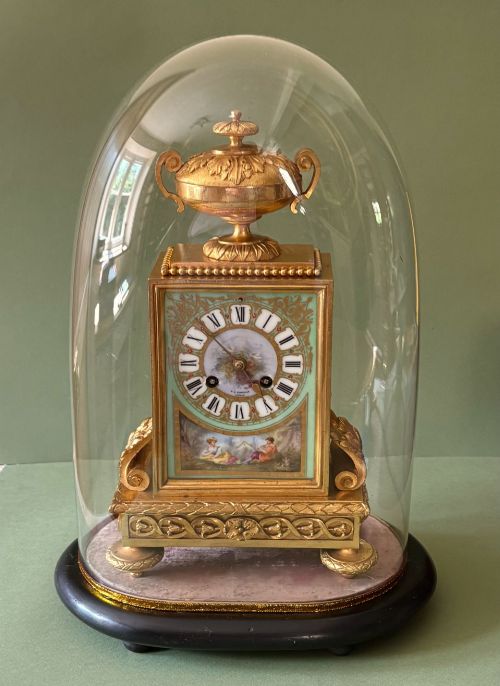
Dials frequently feature painted enamel or porcelain inserts, protected behind bevelled glass panes within brass or gilt-metal bezels. Decorative mounts cast in bronze and finished with fire-gilding give the French architectural and rococo models their characteristic metallic lustre.
Fine Mantel Timepiece Retail Price Guide 2026
Typical asking prices for fine mantel timepiece among the pieces listed under this phrase on Sellingantiques today, from the lower quarter to the upper quarter. They describe what is for sale here now, not the wider market.
The listings show nineteenth-century French and British origins, spanning Georgian, Victorian, Edwardian, and Art Deco periods across multiple materials.
Distinctions in Quality
The calibre of a timepiece is determined by the crispness of the cast ormolu mounts and the precision of the cabinetwork, where tight joints and well-executed wood inlays distinguish superior workshop production. Finer movements bear the signature of established makers or retailers, indicating careful hand-finishing of the escapement and gears.
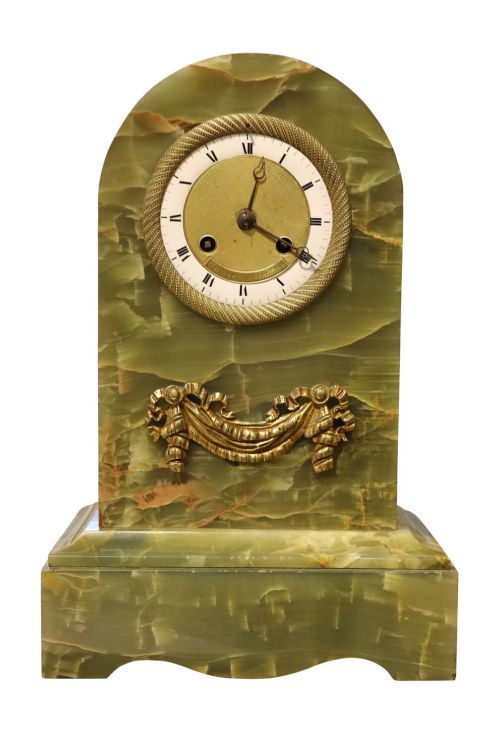
Material selection further divides the range, moving from standard brass cases to intricate green tortoiseshell and cut brass Boullework, or heavy marble and green onyx housings. The integrity of the enamel dial and the preservation of the original mercury gilding or silver plating dictate the enduring visual impact of the piece.
Agar of Malton·Charles à Orléans·Pickford of London·Tiffany·Imhof·Mappin and Webb
The Fine Mantel Timepiece Glossary
- Ormolu
- Gilded bronze, produced by applying a mixture of mercury and gold to a bronze base and heating it. This technique was widely utilised on French nineteenth-century clock cases for a rich, enduring metallic finish.
- Portico clock
- A clock featuring an architectural case supported by columns, resembling a classical portico. These symmetrical designs often house the pendulum centrally within the open space between the pillars.
- Boulle
- Marquetry technique involving tortoiseshell and brass inlay, named after the cabinetmaker André-Charles Boulle. It creates a striking contrast of dark shell and polished golden metal across the clock case.
- Fusée
- A conical pulley used in spring-driven clocks to maintain even power delivery as the mainspring unwinds. This mechanism ensures more accurate timekeeping throughout the running cycle of the clock.
- Garniture
- A set comprising a central clock flanked by matching ornamental pieces such as urns or candelabra. These decorative ensembles were designed to sit harmoniously together on a mantelpiece.
Fine Mantel Timepiece: Frequently Asked Questions
What is a timepiece?
A timepiece is a clock that measures and indicates the time without including striking trains, alarms, or musical mechanisms.
In historical horology, separating timekeeping from striking kept the internal mechanics simpler and allowed for more slender or delicate case designs.
Where should I place a clock?
Position the clock on a stable, level surface away from direct sunlight, dampness, and strong draughts that might affect the wood and metal.
Mantelpieces are traditional, provided the surface does not experience excessive heat from an active fireplace below.
How do I distinguish French and British styles?
French pieces often display decorative ormolu, architectural portico forms, or porcelain mounts inspired by Louis styles and Rococo Revival. British clocks lean towards architectural bracket forms in mahogany, rosewood, or brass-mounted woods.
Examining the dial signatures and the construction of the backplate usually confirms the origin of the workshop.