


Fine Jewellery Dangle Earrings
Fine jewellery dangle earrings catch the light with every movement, combining precious metals and gemstones in drop designs from the Victorian era to the mid-century.
Fine Jewellery Dangle Earrings
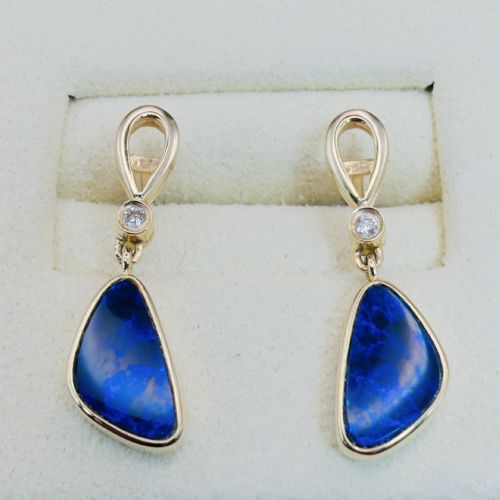
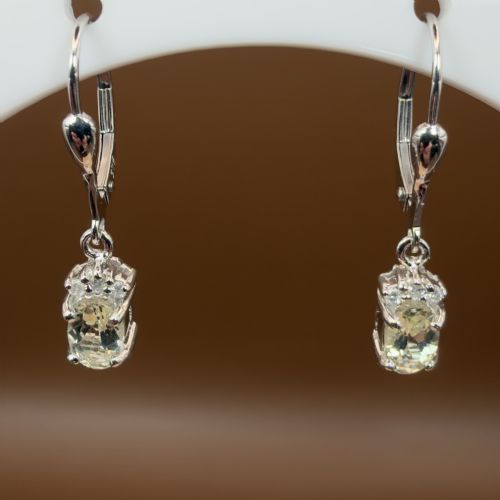
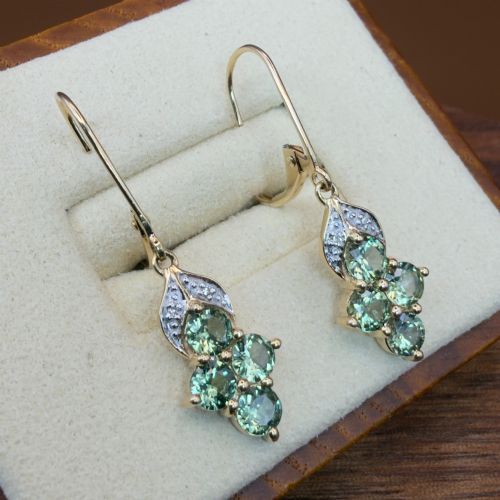
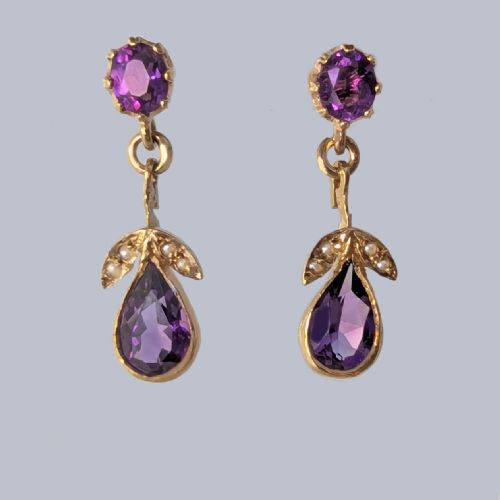
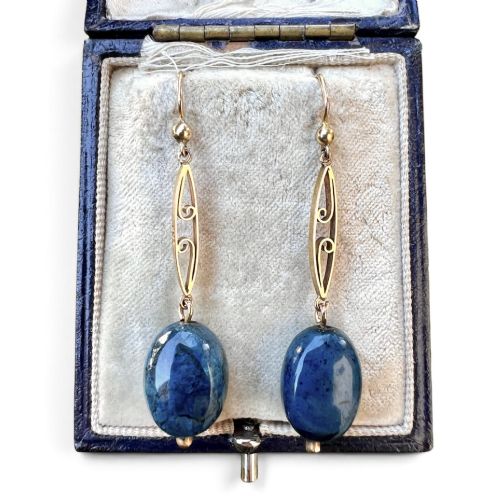
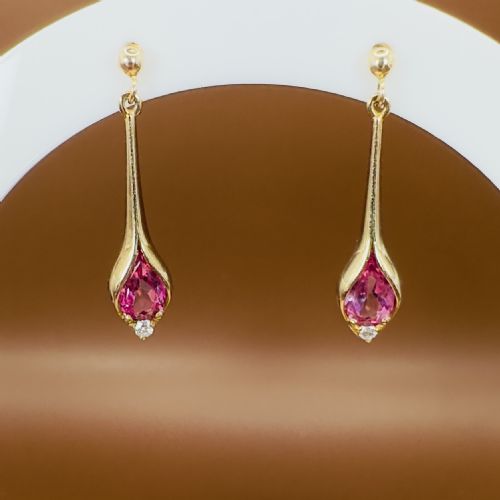
Fine jewellery dangle earrings encompass drop, dangling and pendant designs intended to sway below the earlobe. When searching for fine jewellery dangle earrings, buyers encounter pieces originating from the Victorian, Edwardian, Art Deco and mid-century periods. These items feature articulated settings that suspend gemstones and pearls beneath studs, wires or hinge backs.
The selection on this page ranges from early twentieth-century diamond clusters to mid-century coloured gemstone drops. Pieces often incorporate yellow gold, white gold, platinum or silver mounts holding stones such as amethyst, aquamarine, emerald and sapphire. Victorian and Edwardian examples lean towards delicate floral motifs and natural pearls, whilst later designs embrace geometric Art Deco lines and bolder mid-century silhouettes.
How they were made
Goldsmiths and jewellers utilised a variety of precious metals to construct these drop earrings, frequently combining 9ct or 18ct gold with platinum or silver settings to enhance the brilliance of diamonds. Stones were secured using traditional techniques including claw settings, millegrain borders and foliate mounts. Artisans shaped gold and platinum into intricate wirework, hinged backs and delicate ball or drop terminals designed for pierced ears.
Gemstones such as diamonds, opals, coral, pearls and coloured quartz were faceted into pear, oval and round cuts, or polished into smooth cabochons and baroque shapes. Natural materials like coral, jadeite, onyx and turquoise were carefully matched and mounted within gold or silver structures. The craftsmanship reflects the prevailing aesthetic of each decade, from hand-cut old European diamonds to calibrated emeralds and sapphires.
The selection spans from Victorian and Edwardian productions through to Art Deco, mid-century and 1960s designs, utilising gold, platinum, silver, diamonds and coloured stones.
What varies in quality
Quality in these earrings rests upon the purity and weight of the precious metals alongside the selection and cutting of the gemstones. Superior examples display well-matched natural stones with strong colour saturation, such as vibrant emeralds, deep sapphires or clean aquamarines, paired with lively old-cut or brilliant-cut diamonds. The precision of the metalwork, including fine millegrain edges and secure hinge mechanisms, distinguishes finer studio output from standard production.
The integrity of organic materials like natural pearls, coral and turquoise also influences overall execution, as does the preservation of original settings across Victorian and Edwardian iterations. Heavier gold gauges and robust construction ensure that articulated drop sections move fluidly without structural weakness. Pieces that retain their original hallmarks and untouched mountings demonstrate superior heritage and long-term durability.
The Fine Jewellery Dangle Earrings Glossary
- Hinge back
- A type of earring closure featuring a hinged post or lever that snaps securely behind the earlobe. This mechanism provides comfort and security for heavier drop designs.
- Millegrain
- A decorative jewellery technique involving a line of tiny raised metal beads along the edge of a setting. It was particularly popular during the Edwardian and Art Deco periods to soften metal borders.
- Parure
- A matching set of jewellery consisting of a necklace, earrings, brooch and sometimes a bracelet or ring. The listings include large turquoise and pearl parure components configured as drop earrings.
- Cabochon
- A gemstone shaped and polished with a smooth, convex surface rather than faceted. This cut is frequently utilised for opaque or translucent materials such as opal, jadeite and turquoise.
Fine Jewellery Dangle Earrings: Frequently Asked Questions
How do I care for antique dangle earrings?
Store antique earrings individually in soft pouches to prevent metal abrasion and gemstone scratching. Avoid harsh chemical cleaners, ultrasonic baths or prolonged water immersion, particularly for pieces containing pearls, coral, turquoise or opals.
Use a soft, damp cloth to gently wipe metal surfaces and stones after wearing. Periodic inspection by a professional jeweller ensures that antique settings, claws and hinge mechanisms remain secure.
Are these earrings suitable for daily wear?
Many drop and dangle designs from the twentieth century are robust enough for regular rotation, provided they are handled with care. Lighter gold and diamond studs with modest drops suit everyday use when secured with reliable fastenings.
Heavier Victorian or elaborate Art Deco pieces with delicate wirework, pearls or soft gemstones are better reserved for special occasions. Removing earrings before sleeping, bathing or exercising prevents unnecessary strain on articulated joints.
How can I tell an Edwardian earring from an Art Deco one?
Edwardian earrings typically feature platinum-topped gold, delicate foliate motifs, seed pearls and millegrain detailing. The overall aesthetic is light, lacy and romantic, often incorporating old-cut diamonds in bow or floral cluster drops.
Art Deco earrings embrace geometric symmetry, strong lines, calibrated coloured gemstones and stylised shapes. They frequently utilise white gold or platinum alongside contrasting onyx, emeralds or sapphires in sharp, architectural configurations.
What is a hinge back earring?
A hinge back earring utilises a pivoting post or lever mechanism that clicks into a small notch behind the earlobe. This design provides a snug, enclosed fit that supports the downward pull of dangling pendants.
Jewellers employed this closure across various mid-century and vintage styles to ensure heavier cluster and drop earrings remained properly aligned during wear without relying solely on standard butterfly backs.