
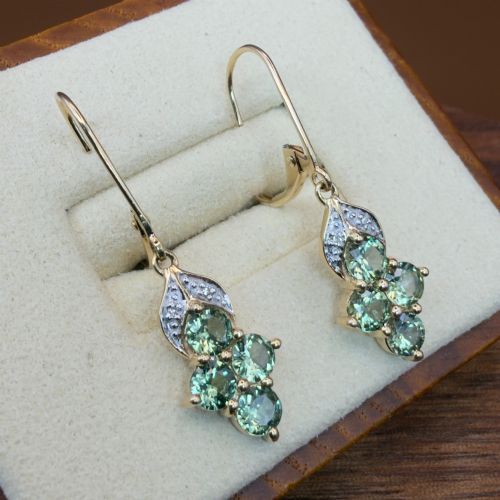
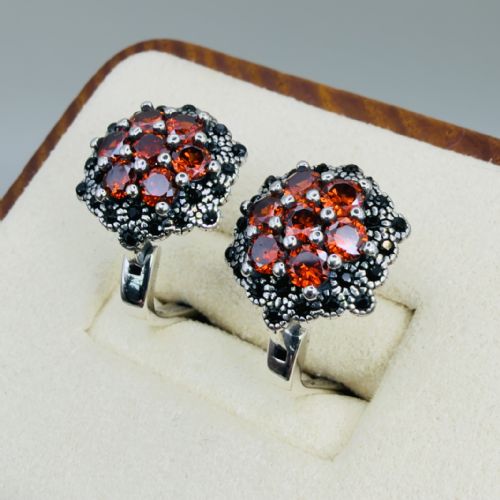


Cluster Gemstone Drop Earrings
These cluster gemstone drop earrings combine central stones with surrounding borders, offering enduring elegance for daily wear.
Cluster Gemstone Drop Earrings
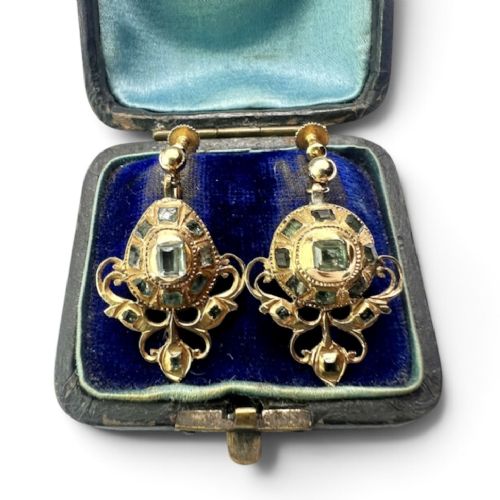
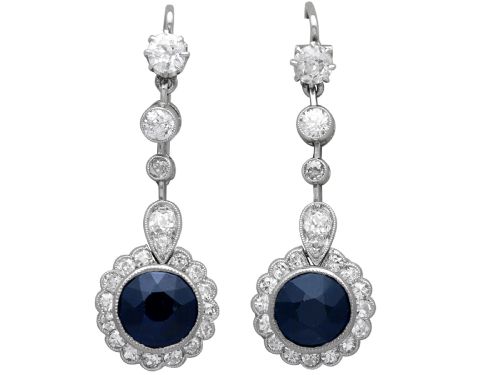
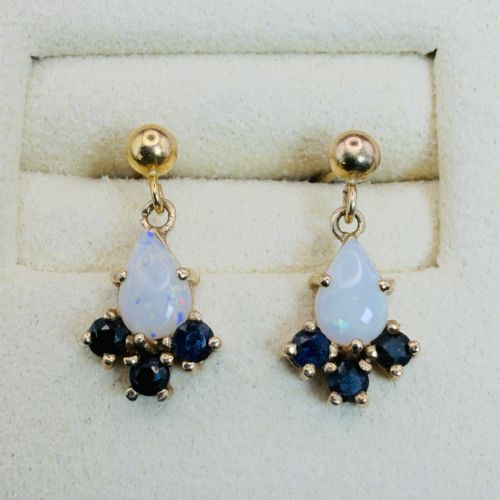
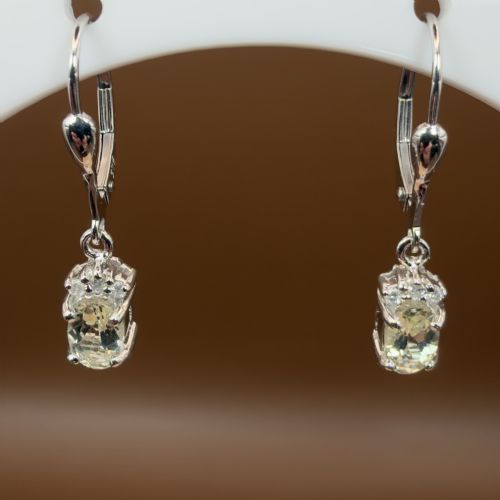
Cluster gemstone drop earrings feature a central stone framed by smaller gems, suspended to hang below the earlobe. When buyers search cluster gemstone drop earrings, they encounter a range of forms spanning from the eighteenth century to the late twentieth century. Mid-century gold pieces and Victorian revival designs appear frequently across the selection.
The assortment includes precious and semi-precious stones such as sapphire, garnet, emerald, and diamond set in gold, white gold, and silver. Drop formats include hinged backs, studs, and screwbacks that suspend the cluster below the ear. These pieces reflect diverse aesthetics, including Georgian, Victorian, Art Deco, and contemporary classic styles.
How they were made
Makers utilised precious metals like nine-carat and eighteen-carat gold, rose gold, white gold, and sterling silver to form secure settings for the stones. Platinum also appears alongside gold in earlier twentieth-century pieces.
Gems including diamonds, sapphires, garnets, emeralds, tourmalines, and amethysts are arranged in tight clusters, often surrounding a larger focal stone. Fastening methods vary from traditional hinge backs and screwbacks to modern drop studs.
Listings feature periods spanning from the eighteenth century through Victorian, Art Deco, and mid-century eras, utilising gold, silver, and platinum.
What varies in quality
Quality rests upon the selection and matching of the gemstones, where uniform colour saturation and clarity elevate the piece. The precision of the surrounding cluster arrangement and the security of the metal settings also determine the standard of craftsmanship.
The choice of metal, from sterling silver up to eighteen-carat gold and platinum, defines the structural foundation and historical integrity of the earrings. Heavier gauge metals and intricate mounting techniques distinguish finer examples from standard production.
The Cluster Gemstone Drop Earrings Glossary
- Cluster
- A stone setting where a central gem is encircled by a border of smaller stones. This arrangement maximises visual impact and light reflection.
- Hinge back
- A fastening mechanism featuring a hinged wire that clicks securely into a notch behind the ear. This closure ensures stability for drop earrings.
- Screwback
- An adjustable mechanical fastener tightened by a small screw behind the lobe. It allows non-pierced ears to wear heavy drop earrings safely.
- Rose gold
- An alloy of gold and copper creating a warm reddish hue. It gained popularity during the Victorian era and returned in later revivals.
Cluster Gemstone Drop Earrings: Frequently Asked Questions
How do I clean cluster gemstone drop earrings?
Clean these earrings using warm soapy water and a soft brush to remove dust from behind the stone clusters. Avoid harsh chemical dips, especially on softer organic gems like pearls.
Dry them thoroughly with a lint-free cloth before storing them in a lined box to protect the metal settings.
Can I wear drop earrings every day?
Drop earrings set in durable metals like nine-carat or eighteen-carat gold suit regular wear if handled with care. Secure fastenings such as hinge backs provide added safety during daily movement.
Remove them before sleeping, swimming, or exercising to prevent strain on the drop mechanism and delicate stone settings.
What is the difference between stud and drop earrings?
Stud earrings sit directly on the earlobe without hanging below it. Drop earrings incorporate a suspended element that moves beneath the ear.
Cluster drop earrings combine the tight stone grouping of a cluster with this dangling movement, catching the light from multiple angles.
How do I date a pair of antique drop earrings?
Dating relies on examining the metal alloys, stone cuts, and fastening mechanisms used in construction. Screwbacks often indicate early twentieth-century manufacture, while closed-back foils point towards eighteenth or nineteenth-century origins.
Stylistic cues like Victorian ivy motifs or Art Deco geometric layouts also provide clear chronological markers.