


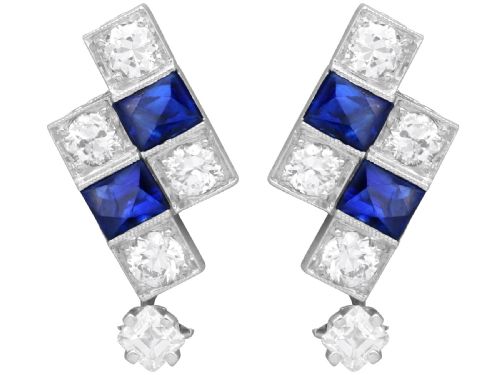


Diamond and Sapphire Earrings
Diamond and sapphire earrings combine enduring precious stones in classic cluster, stud, and drop forms that span over a century of fine jewellery design.
Diamond and Sapphire Earrings
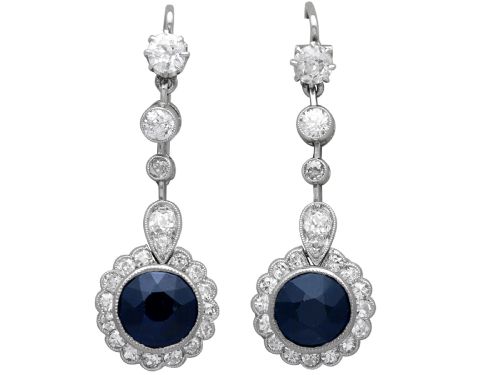
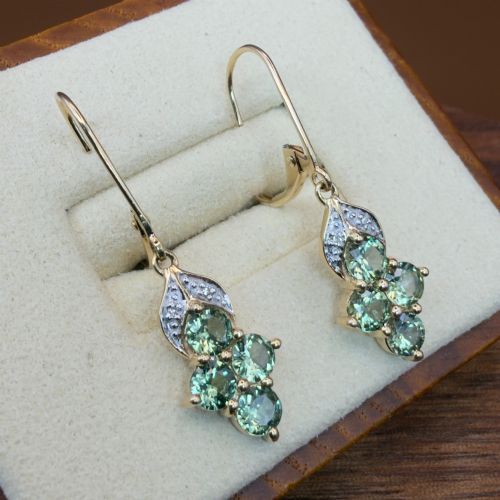
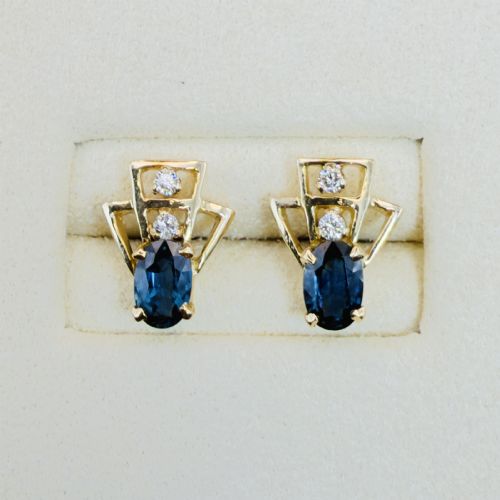
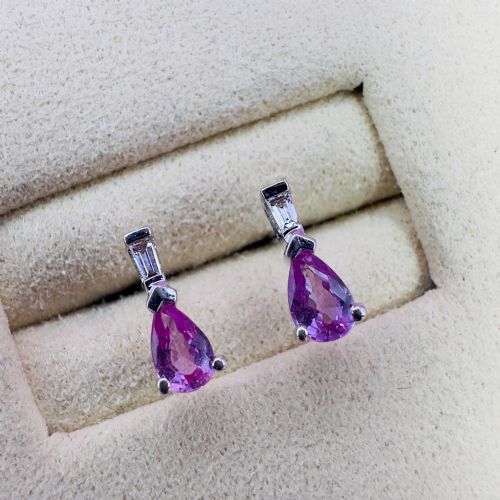
Diamond and sapphire earrings bring together deep blue, pink, teal, and padparadscha sapphires with brilliant white diamonds in configurations shaped by changing decades of design. Buyers encounter styles ranging from Edwardian and Art Deco geometric arrangements to mid-century clusters and modern variations.
Cluster earrings dominate the available forms, alongside drop, hinge back, and stud configurations. These pieces utilise metals including platinum, 18ct white gold, 18ct yellow gold, and 9ct gold to set the stones securely.
The archive records frequent examples from the nineteen twenties, thirties, and nineteen sixties alongside Edwardian and Victorian pieces. This variety gives a buyer access to both antique milestones and mid-century classics.
How they were made
Goldsmiths set diamonds and sapphires in platinum and high-carat gold, employing white gold and yellow gold depending on the period. Platinum offered exceptional strength for delicate Edwardian and Art Deco settings, allowing intricate wirework and secure claw or bezel mounts.
Cut styles evolved from old cut and rose cut diamonds in earlier eras to brilliant, oval, pear, marquis, and trapezoid cuts in later decades. Sapphires similarly appear in varied shapes, matched closely to the geometric demands of the mounting.
Some antique earrings arrive tucked inside their original velvet-lined presentation boxes from historic Parisian jewellers.
What varies in quality
The quality of diamond and sapphire earrings rests on the saturation and origin of the sapphire, the cut and clarity of the diamonds, and the integration of the metalwork. Hand-fabricated platinum mountings from the early twentieth century demonstrate superior metal manipulation compared to later mass-produced settings.
The proportional balance between the central sapphire and surrounding diamonds defines the visual success of a cluster. Superior stones display lively light return in the diamonds and even colour distribution across the sapphire.
The Diamond and Sapphire Earrings Glossary
- Cluster earring
- A central gemstone surrounded by a perimeter of smaller stones, typically diamonds encircling a sapphire. This format maximises overall brilliance and presence on the ear.
- Rose cut diamond
- An antique stone cut with a flat base and a domed crown faceted with triangular planes. This style produces a soft, shimmering reflection rather than the sharp brilliance of modern cuts.
- Hinge back
- A fastening mechanism that uses a hinged wire clicking securely into place behind the earlobe. It provides reliable security for drop and cluster designs.
- Basaltic sapphire
- A sapphire originating from alkali basalt terrains, often noted for deep, saturated blue hues. These stones anchor traditional cluster earrings from the early twentieth century.
Diamond and Sapphire Earrings: Frequently Asked Questions
How do I date antique earrings?
Dating relies on identifying the metal types, stone cuts, and construction techniques characteristic of specific eras like Edwardian or Art Deco. Platinum usage alongside old cut diamonds typically indicates the early twentieth century.
Later mid-century pieces shift toward brighter yellow gold settings and standardised brilliant cuts. Examining the reverse of the setting often reveals hand-pierced gallery work distinct to older periods.
What is a cluster earring?
A cluster earring groups multiple smaller stones around a prominent central gemstone, most often a sapphire encircled by diamonds. This arrangement amplifies the visual impact of the centre stone.
Jewellers utilised this configuration heavily during the Victorian, Edwardian, and Art Deco periods to create floral or geometric motifs.
Are all sapphires blue?
Sapphires occur in a wide spectrum of colours beyond traditional blue, including pink, teal green, and padparadscha pinkish-orange varieties. The listings record numerous examples featuring these alternative natural hues.
Each colour variant offers a different aesthetic when paired with white diamonds and yellow or white gold.
How should I store fine earrings?
Fine antique earrings require separate compartments or padded boxes to prevent metalwork scratching and stone abrasion. Storing them individually protects delicate platinum claws and older gold settings.
Keeping them away from moisture and cosmetic chemicals preserves the integrity of both the gold and the gemstones.