
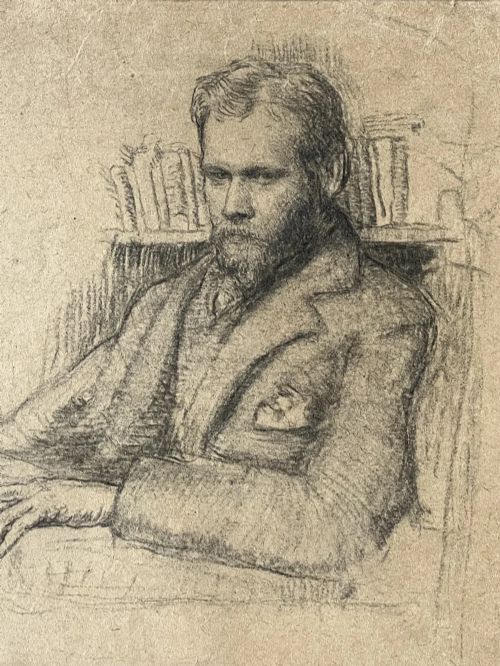
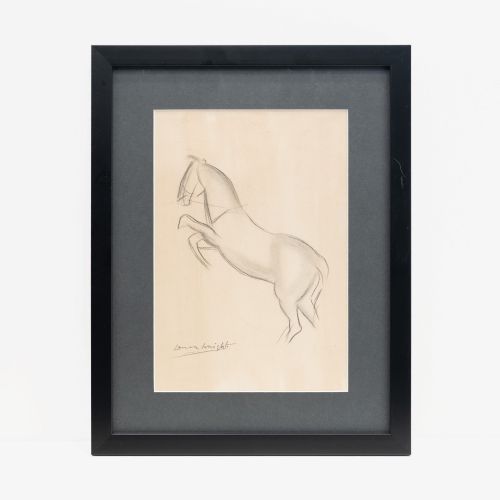


Fine Art Paper Sketch
A fine art paper sketch captures the immediate touch of the artist's hand through graphite, charcoal, and ink.
Fine Art Paper Sketch
When you search for a fine art paper sketch, you encounter original works on paper spanning from the eighteenth century through the twentieth century. These pieces encompass portraits, figure studies, landscapes, and theatrical figures executed in various dry and wet media.
The selection ranges from early nineteenth-century academic studies and Georgian ink sketches to Modern British compositions and French Art Deco works. You will frequently find framed drawings and loose sheets preserved behind glass in wood frames.
Many of these works serve as preliminary studies for larger paintings or finished portraits of notable historical figures. The forms span intimate cabinet pieces and larger scale charcoal studies originating from British and continental workshops.
Materials and technique
Artists executed these works directly onto paper supports using traditional media such as graphite pencil, charcoal, sanguine chalk, and pen and ink. Some pieces combine multiple mediums, layering pastel over lithograph or incorporating watercolour washes into ink drawings.
Framing materials typically involve period wood mouldings paired with protective glass to preserve the delicate paper surfaces from atmospheric damage. The physical support relies entirely on the durability and quality of the historic paper stock utilised by the draughtsman.
Listings feature works executed in charcoal, graphite, chalk, ink, and pencil on paper, dating from the eighteenth century through the twentieth century.
Evaluating the work
Quality rests upon the sureness of the draughtsmanship and the expressive economy of the line, distinguishing a master's confident study from a rigid academic exercise. The vitality of a portrait or the dynamic tension in a figure study reveals the direct observational skill of the artist.
The preservation of the paper surface and the clarity of the medium without excessive fading or disruption dictate the visual impact of the piece. Works retaining their crisp original contrast in charcoal or ink command greater attention from collectors.
Augustus John·Dame Laura Knight·Lucien Gibert·Thomas Rowlandson·George Richmond·Henri Joseph Harpignies
The Fine Art Paper Sketch Glossary
- Sanguine
- A reddish-brown chalk used extensively for portraiture and figure drawings during the eighteenth and nineteenth centuries. This iron oxide material produces warm, lifelike skin tones.
- Academic study
- A rigorous drawing executed from life or plaster casts, often part of formal art school training in the nineteenth century. These pieces emphasise anatomical accuracy and tonal modelling.
- Charcoal
- A dry drawing material made from burnt organic matter that yields deep rich blacks and broad tonal gradations. It allows artists to rapidly capture light and shadow on paper.
- Lithograph
- A planographic printmaking technique based on the antipathy of oil and water. Artists sometimes apply pastel or watercolour directly over these printed bases.
Fine Art Paper Sketch: Frequently Asked Questions
What is the difference between a sketch and a study?
A sketch is typically a rapid exploratory drawing meant to capture a quick impression or composition idea. A study is a more deliberate and detailed examination of a specific subject, such as a hand or a full figure.
Both forms offer direct insight into the working methods of artists before they committed to finished canvas paintings.
How do I identify the period of an antique drawing?
Examine the watermark on the paper stock if visible, alongside the framing style and the characteristic clothing or hairstyles of portrait sitters. Stylistic conventions of the nineteenth century or Art Deco era also provide strong chronological clues.
Handwritten inscriptions on the reverse or contemporary framing labels frequently confirm the exact date and attribution of the draughtsman.
Are antique drawings fragile to live with?
Paper sketches require sensible placement away from humid environments like kitchens or bathrooms, and protection from intense direct sunlight. With proper framing behind glass, they remain stable and durable for daily enjoyment.
Routine care simply involves maintaining stable indoor temperatures and checking the sealed backing boards periodically.