


Georgian Ink Sketch
These georgian ink sketch works capture the immediacy of eighteenth and nineteenth-century draftsmanship on paper, offering buyers a direct window into historical hand-drawn art.
Georgian Ink Sketch
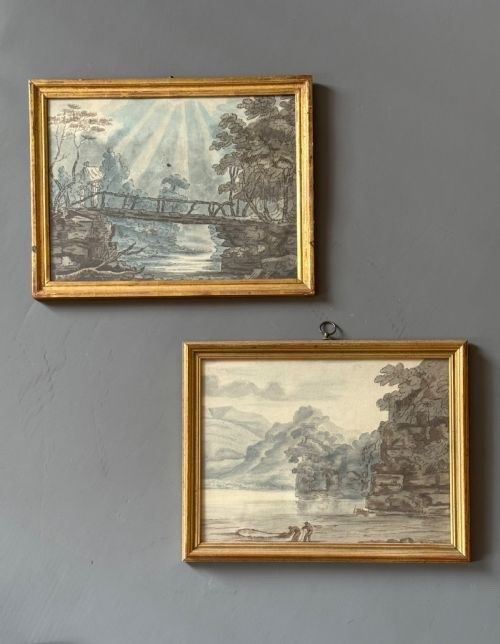
A georgian ink sketch encompasses original works on paper produced during the eighteenth and nineteenth centuries, spanning landscape studies, architectural views, and figurative compositions. Buyers on this page most frequently encounter framed original drawings executed in pen and ink, often combined with wash or watercolour on paper.
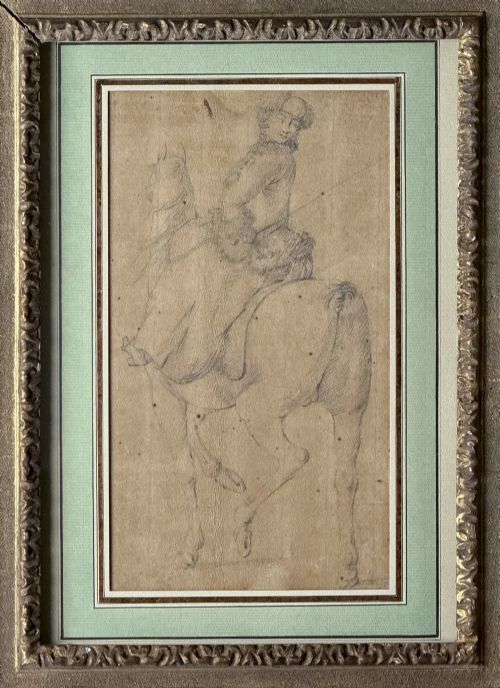
The material selection ranges from early eighteenth-century Northern European equestrian studies to English countryside scenes housed in period frames such as late eighteenth-century gilt rectangular scroll mounted examples. These pieces document both British and continental artistic practices, reflecting styles from the early Georgian period through to the nineteenth century.
Materials and Technique
Artists utilised iron gall or carbon-based ink applied with a quill or pen directly onto handmade paper, establishing the primary linear framework of the composition. This foundational drawing was frequently augmented with monochrome wash or transparent watercolours to create depth, shadow, and tonal variation across the surface.
Framing played a significant role in the presentation and preservation of these works, with many pieces housed in period wood or giltwood frames. The interaction between the ink, wash, and paper substrate defines the physical character of each surviving artwork.
Tailors and trotting horses alike found themselves immortalized by eighteenth-century ink.
Assessing Quality and Execution
The distinction between works rests on the confidence of the line and the subtlety of the wash application, which reveals the hand of a skilled draftsman versus a more rudimentary practitioner. Strong compositional structure and expressive economy in the penwork elevate certain landscape and figurative studies above standard examples.
The condition of the paper surface and the preservation of the original ink tones heavily influence the overall merit of a piece. Furthermore, the presence of period framing, such as giltwood surrounds, adds contextual integrity to the artwork.
William Marshall Craig·Edward Dayes·Richard Leech·Thomas Rowlandson·Johan Noah Bemmel·Peter Tillemans·Dr Thomas Monro
The Georgian Ink Sketch Glossary
- Pen and wash
- A drawing technique combining linear ink work with diluted watercolour or ink applied with a brush to create tonal depth. This method was widely used by artists to build shadow and atmosphere before applying colour.
- Wash
- A thin, transparent layer of pigment or ink applied with a brush to paper. It creates smooth areas of tone and models form behind the primary ink lines.
- Giltwood
- Wood carved and coated with a thin layer of gold leaf or gilt preparation. It commonly forms the decorative frames associated with eighteenth and nineteenth-century fine art.
- Equestrian study
- An artwork focused on the depiction of horses and riders. These pieces frequently test the draftsman's ability to render complex animal anatomy and movement.
Georgian Ink Sketch: Frequently Asked Questions
What is a georgian ink sketch?
A georgian ink sketch is an original hand-drawn work on paper executed with pen and ink during the eighteenth or early nineteenth century. These pieces often incorporate wash or watercolour to develop the tonal qualities of the subject.
They serve as direct historical records of contemporary landscapes, figures, and architectural subjects, produced by both amateur and professional artists of the era.
How should I display these drawings?
Works on paper require careful placement away from direct sunlight to prevent the fading of ink, wash, and paper fibres over time. UV-filtering glass and professional framing help protect the delicate surface.
Maintaining stable indoor humidity levels ensures the paper substrate does not warp or degrade while hanging in a domestic interior.
Are these works original art?
Yes, the listings comprise original hand-drawn artwork created directly by the artist rather than modern mechanical reproductions or prints. Each piece represents a unique historical drawing on paper.
Signatures, inscriptions, and paper characteristics help differentiate these one-of-a-kind sketches from later printed editions.
How do I identify the period?
Dating relies on stylistic conventions, paper characteristics, framing details, and any contemporary inscriptions or attribution notes associated with the piece. Eighteenth-century works often display specific handling of line and wash distinct from later nineteenth-century examples.
Comparing the hand to documented masters of the era provides further chronological context for unsigned drawings.